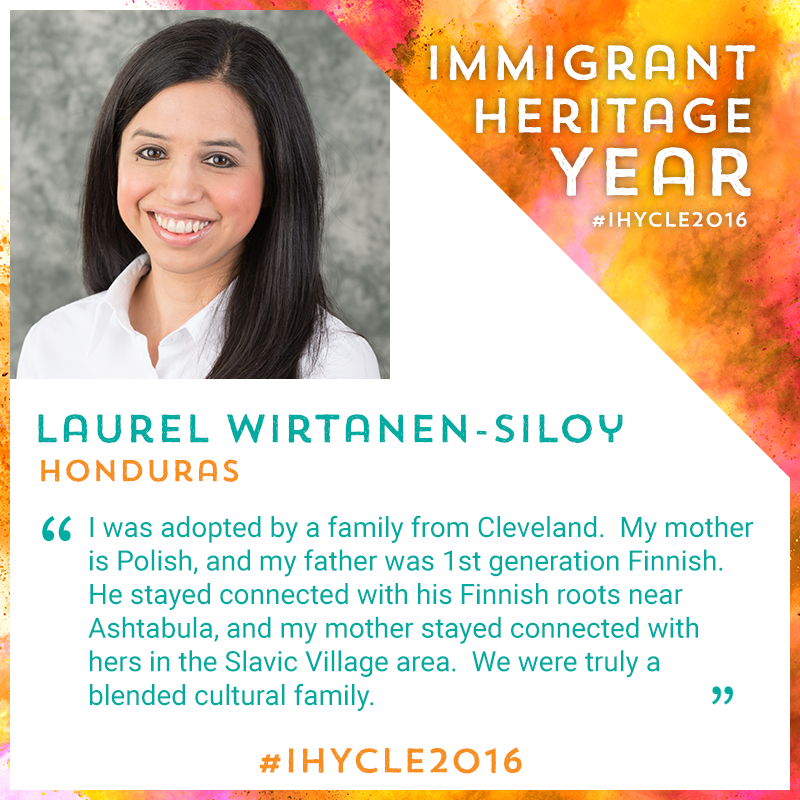
Laurel Wirtanen-Siloy
Where are you from?
Santa Rosa de Copan, Honduras
What was it like growing up?
I was abandoned in a small town in Honduras called Santa Rosa de Copan, and very ill. I was hospitalized for 6 weeks and once I was stabilized they could begin the adoption process. I later learned that in an infant ward that had a capacity of 30 babies, that 30 babies would die each month and most babies needed to be hospitalized for at least one month. During the adoption process, I lived with a foster family in Tegucigalpa. Thankfully everything went smooth with the adoption process, and I came home to Cleveland during the worst snowstorm ever, but it was nice to have my forever family as my Christmas gift.
I grew up in the suburbs of Cleveland and attended private schooling. My father passed away when I was young, so I was raised by a single mom who had to work very hard to provide for us. She believed education unlocks doors of opportunity and encouraged me to go to college. I would eventually wind up at Ashland University and also gain a master’s.
What brought you to Cleveland?
I was adopted by a family from Cleveland. My mother is Polish, and my father was 1st generation Finnish. He stayed connected with his Finnish roots near Ashtabula, and my mother stayed connected with hers in the Slavic Village area. We were truly a blended cultural family, also appreciating the US/pop culture of the 1980s and 1990s!
What were your first thoughts about coming to America? Did those change?
I escaped a country that would undergo a lot of strife. My hometown did not have access to clean drinking water. There were wars and severe political unrest. Not having a birth certificate I would not have access to a public school education. It was customary to see military carrying assault rifles through the streets in Honduras, which can be unsettling. So, I was very fortunate to come to the USA. While I was basically the only Latina in grade school, my mother always taught me to be proud of myself and see value in myself.
What challenges did you face as an International Newcomer transitioning here?
Sometimes especially in my early years it was challenging to be the only “brown” skinned child from Central America. Other than my adoption groups, I did not know any other Latinos in the Southwest suburbs of Cleveland. Also, even at a young child people inquired why I looked so different than my parents, but we explained to them that I was a special chosen baby and love knows no skin tones.
What is your occupation?
Fundraiser
How have other Clevelanders made you feel welcomed?
The city is incredibly welcoming to me, particularly the civic and volunteer groups that are abundant in this town. As a Latina Vegan, I really felt at home with the Cleveland Vegan Society and got involved with animal rescue activities. Also, Esperanza made me feel so proud of my heritage, my country, and the person whom I am today.
What traditions or customs do you continue to practice?
We celebrate Honduran Independence Day which is September 15th, the start of Hispanic Heritage Month and my mother would give me a special meal and cupcake. A Scandanavian Custom from my father is Saint Nick’s Day, where I would leave a pair of shoes out and cinnamon powdered cookies for Santa Claus. And even though I am vegan, my mother makes me stuffed cabbages AKA Galumpkis and we enjoy monthly family dinners with those.
What do you love about Cleveland?
I love the urban flair, the food, the ease in getting around the city. The commute time is great, and I like how all the different neighborhoods have their own flair, from Ohio City to Collinwood. And you cannot beat the affordability of the real estate!
Why is it so important to welcome International Newcomers and Displaced Personss?
People with different backgrounds can bring so much to the table in terms of diverse points of view. When you have access to International Newcomers and Displaced Personss, you see the world from another viewpoint. You recognize that while our nation may have its issues, there are more intense issues going around globally- from families witnessing horrific genocides to only having access to “drinking” water filled with high levels of bacteria and parasites. Welcoming International Newcomers and Displaced Personss helps with problem-solving because of the different perspectives, values and viewpoints. From a humanitarian viewpoint, I think we have to demonstrate a universal love and compassion to our fellow brothers and sisters- who may have different skin tones than us, may practice different religions than us (or none at all), and may speak of different tongues- but we have a human obligation to extend a helping hand during times of crisis. Namaste- the divine in me recognizes the divine in you; treat others as you would like to be treated.
Why is it important to travel abroad?
To see the world from another viewpoint. There are different landscapes- from the deserts of the Sahara, the mountains of Pakistan, to the fjords of Norway- and we can appreciate the beauty of other nations. You can make new friendships, and see how life is different and how life can work in other nations. You may even pick up some new vocabulary!

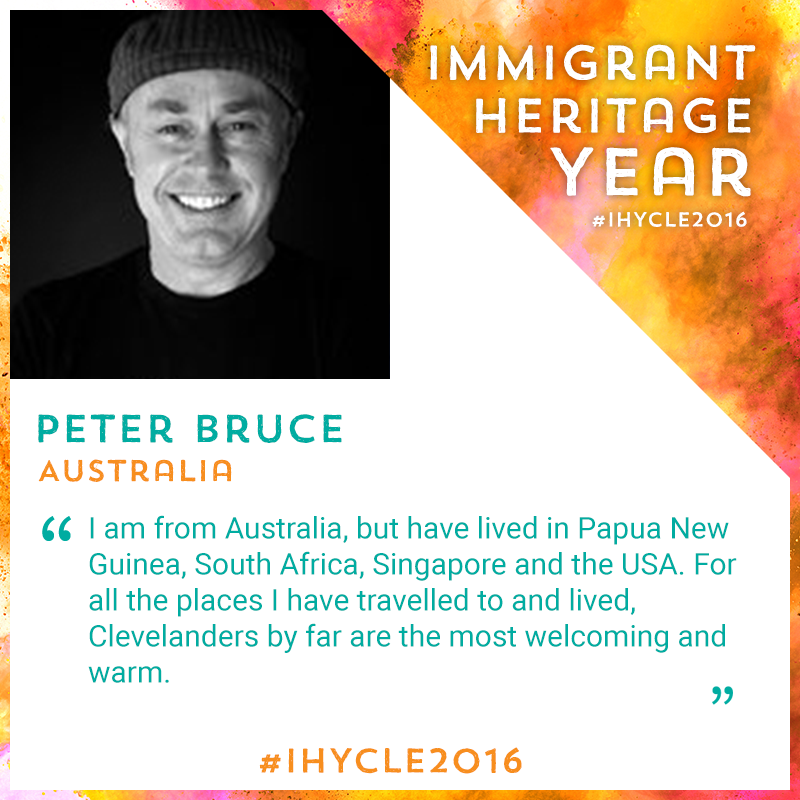
Peter Bruce
Where are you from?
I am from Australia, but have lived in Papua New Guinea, South Africa, Singapore and the USA.
What was it like growing up?
Australia back then was utopia, it was a clean,safe, cheap,beautiful just what you dream of. Clean beautiful ocean. Great school which were free and good. College was free, the best medical system. A dream place to grow up. I was so lucky!
What brought you to Cleveland?
I moved to Cleveland by choice, it has everything going for it. Affordable, safe ,arts, food, sports, lake, nice people and more. I was living in San Francisco and the cost of living was killing me. I joke that paying $51,000 a year for a two bedroom apartment with that I would be eating cat food at the age of 60.
What were your first thoughts about coming to America? Did those change?
Well I was on holiday here, and fell in love and as they say the rest is history. I remember when I got off the plane and was trying to call a contact in LA and the phone would not work, after about 30 mins some nice person ( yes in LA) showed me that you have to put a 1 in front of the 818 area code. I was blown away by the amount of food on a plate when you eat out. It took me awhile to get use to miles and inches. And the traffic OMG so much traffic and did a mention the traffic. Thus love Cleveland. Also the gun thing was hard to get use to. I don't think I am use to it still.
What challenges did you face as an International Newcomer transitioning here?
One thing was both countries speak English but no one could understand me. All you Americans talked so funny. I was pre 911 so not so much, my kids who became Aust citizen after 911, that was hard. I took the test was asked some questions and done. I guess Australia is not much of a threat to USA.
What is your occupation?
Self employed photographer.
How have other Clevelanders made you feel welcomed?
For all the places I have travelled to and lived, Clevelanders by far are the most welcoming and warm !!!
What traditions or customs do you continue to practice?
Australia day Jan 26, Melbourne cup ( horse race) first thursday in Nov & Ozzie football. I still love to BBQ Ozzie style and of course drink beer FOSTERS. And not taking life too serious :-)
What do you love about Cleveland?
Everything.... sorry Mid west drivers, aggressive tail gating drivers i don't like so if you see me please don't do it
Why is it so important to welcome International Newcomers and Displaced Personss ?
Is that a trick question ? They bring new cultures, foods, art, history, ideas. A new and fresh look at the world we get to see the world through their eyes.
What suggestions do you have to make Cleveland a more welcoming ?
WOWSA well I think that is happening slowly. I think native clevelanders need to have higher self esteem of Cleveland. And we need to get the negative monkey of the back. But any place that invented Superman and rock & roll can't be all bad. But like clevelanders have been to me, be open,warm and welcome and if people come here on holiday, just show them the cost of real estate, that will do it. If people come here on a holiday and see it they are more likely to move here
Why is it important to travel abroad?
Why does a dog put there head out the car window ? Travel is the one thing that opens you up to see things new & different. As said by Mark Twain ...".nothing so liberalizes a man and expands the kindly instincts that nature put in him as travel and contact with many kinds of people."

May Chen
Close to fifty years ago our whole family immigrated from Hong Kong to America. My parents had experienced the life of both Displaced Persons, having fled the communists in China and International Newcomer here in the United States. Life in Hong Kong was secure, stable and comfortable. Both my parents held high ranking administrative positions in educational institutions. They had attended prestigious graduate schools in the United States and believed coming to America would not present a difficult adjustment. Because my parents displayed great hopes and confidence, I too felt the same. However a different reality was experienced. My father faced institutional racism, unable to find gainful employment in higher education even with an Ivy League Masters and Doctorate in education. It was the fifties and mainstream was not as accepting of an International Newcomer Asian educating their students to become future teachers. Three years my father was unemployed. A historically black college was my father's first employer.
I found it difficult to fit in with mainstream peers even though many of them were Asians but were native born. Not many reached out to help or support a school child from Hong Kong to fit and adjust. So a constant task was how to fit at school and at home where my parents discouraged my siblings and me from being too Americanized. Also living in the South there were strict rules and boundaries for white and blacks. So as an Asian being neither white nor black how do you navigate in that type of environment and culture?I have lived in San Francisco, Boston, Texas, Tennessee where I experienced living as one of five Chinese families in the city to one of hundred of thousands families in the city. There are pros and cons with living in both of these situations.
I came to Northeast Ohio after I got married and my husband found a teaching job at University of Akron. That was close to 50 years ago. At that time we were not actively engaged with the Asian community that was rather loosely organized. We were so pre-occupied with work and raising a family, we did not conduct an environmental scan of friendliness towards International Newcomers.
It was not until I started working as a professional( Licensed Professional Clinical Counselor) in an International Newcomer serving community that I began to be more scrutinizing of this region's acceptance/support of International Newcomers. I believe that there are many factors that contribute to the experience of being welcomed as an International Newcomer. How authentic and committed is the welcome? How inclusive are International Newcomers when it comes to resources for services, education and leadership roles? How are International Newcomers helped to be contributing citizens? These questions and my personal International Newcomer experience were the driving force for the founding of Asian Services in Action 20 years ago.
Our work started in Akron, Ohio. To advocate for International Newcomers, especially Asian American International Newcomers is a challenge and continues to be a challenge. When ASIA, Inc invited to Cleveland to replicate our programs, ASIA experienced stronger and greater support for its work. The growth of International Newcomers in Cleveland was increasingly more visible. More advocacy, awareness and attention to their living here occurred. In this respect ASIA's work was welcomed and respected.
International Newcomers and Displaced Personss are the foundation and cornerstone of America. If America is to embark on a path of purpose and success for its future, America must know where she came from to know where she is going. Aside from the many festivities and celebrations of the International Newcomer culture, I believe global education, cultural diversity and demographics must be introduced and incorporated in our K-12 curriculum to increase the students' understanding of the International Newcomer experience during their formative years. However, this education needs to start from the top with leaders, administrators, policy makers and educators. If we are committed to embark on this endeavor, Cleveland will become known as a city that many International Newcomers would want to call home.
Why is it important to travel abroad?
Traveling abroad deepens our understanding of ourselves and others . The sun does not rise in Akron/Cleveland. It helps nurture our own humanity. I travel three to four times overseas annually. Each and every time I learn so much, appreciate my life in America , increases my respect and strengthens my compassion for the people I encounter daily when over there.
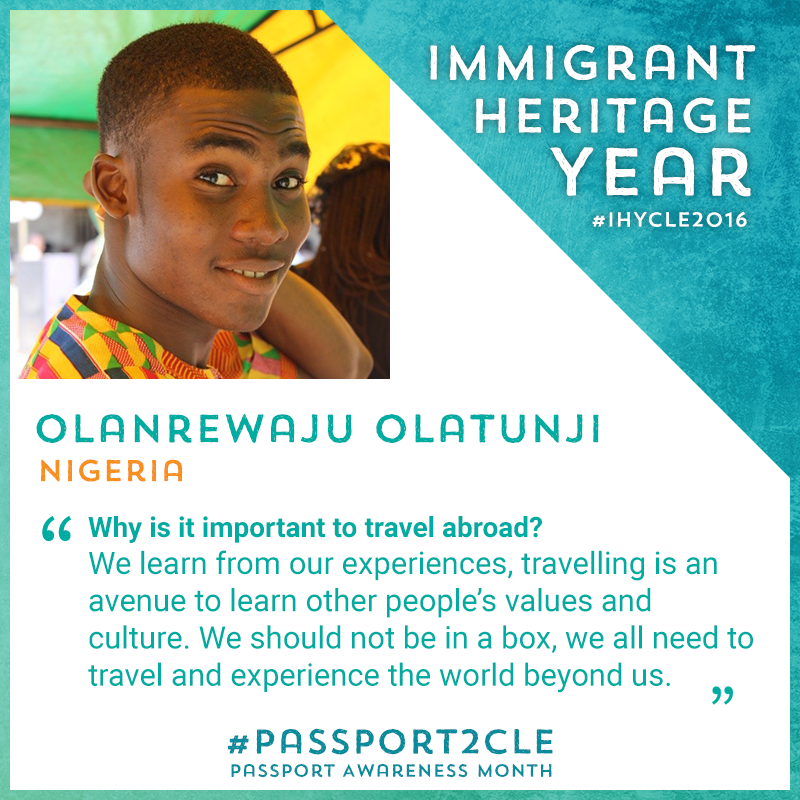
Olanrewaju Olatunji
What is your name?
Olanrewaju Olatunji but am often called Lanre for short.
Did you grow up outside the US? If so, what was it like growing in your native country?
I am Nigerian, I grew up in Lagos which is the business center of Nigeria. Growing up in Lagos was fun and exciting, people are really nice and friendly. I found myself growing up in a very cultural setting where people hold certain values and beliefs in high regard. Respect was part of our daily lives, I had to greet anybody that was older than me in a certain way just to show respect. Regardless, I miss my city, it was always popping.
How did you decide to attend a university outside of your native country?
I never thought I was going to study abroad but as time went by I started considering the possibility. Initially I thought of studying in England but then I realized the States had more courses, Universities and that it was relatively cheaper to study in the U.S
What were your first thoughts about coming to The United States? Did those change?
I always thought the USA as a land flowing with milk and honey, I thought life was going to be real easy to make money once you are in the States and that one’s troubles were over. After a few weeks here that perception changed, I came to realize that it was my picture of the U.S is flawed. Just like everywhere else, you need money to survive.
Did you face any challenges transitioning to the U.S or to Cleveland?
One of the challenges I faced was the cold weather because I came during winter. The weather on average in Lagos is 80®F, it was a huge weather change for me. One other thing was the food, I am used to eating hot and spicy food back home but when I got here all the food tasted so sweet and I didn’t like it. I survived on Pizza and Asian food for the few weeks before I started getting used to the food around me.
Why is it so important to welcome International Newcomers and Displaced Personss?
International Newcomers and Displaced Personss leave their families and friends for one reason or the other to come to a country that is strange to them. They arrive to see a different culture and way of life, welcoming them would make them feel loved thereby aiding a smooth transition into their new found society.
Why is important to travel abroad?
We learn from our experiences, travelling is an avenue to learn other people’s values and culture. We should not be in a box, we all need to travel and experience the world beyond us.
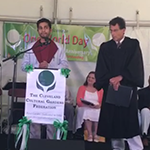
Global Cleveland Welcomes New Americans during One World Day
The Cleveland Cultural Gardens, a string of 29 gardens, are amongst the greatest gems of our great city, located along Martin Luther King Jr. Blvd and the adjacent East Blvd. On August 28, 2016, the 71st annual One World Day Celebration was held, presented by Cleveland City Councilman Kevin Conwell. Throughout the day thousands of people gathered to see the parade of flags (featuring colorful costumes of dozens of nationalities), take trolley tours of every garden, watch cultural performances, and sample amazing ethnic food.
The Global Cleveland team was happy to participate in all of these experiences, but we were most excited to welcome our newest American citizens who were sworn in during the Naturalization Ceremony. During the Celebration, following the parade, there is special a Naturalization Ceremony to welcome and celebrate community members who have completed the requirements to become citizens of the United States.
Naturalization ceremonies are typically held every other Friday, at the Federal Courthouse, and for the past three months Global Cleveland has been welcoming our newest Citizens with welcome packets. These packets include welcome letters from Mayor Frank Jackson, County Executive Armond Budish, and Global Cleveland staff. The packets also include a certificate from Global Cleveland Board Chair David Fleshler, President Joe Cimperman, and Founder Albert Ratner; along with resources to help connect our newest citizens get connected to social and economic opportunities in the region.
Nearly 2500 individuals are naturalized annually in Cuyahoga County and about 95% of them reside in the Greater Cleveland area. It is important for us to welcome our newest American citizens because we understand the civic and economic impact that result from increased rates of citizenship.
There are many reasons why an International Newcomer chooses to become a naturalized United States citizen. People come to America from all over the world in the hopes of attaining a better life for themselves and their families and to call this great land of ours home. Cleveland is a state with a rich heritage of International Newcomers and their families contributing to make our state special.
Global Cleveland was a proud sponsor of the One World Day Celebration and the naturalization that took place that day, and those that take place every other Friday. For more information or to volunteer to attend a naturalization ceremony with us visit us at https://globalcleveland.org/volunteer/naturalization where you’ll find a full list of ceremonies taking place this year.
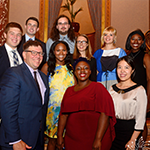
Who We Are
Often when I come to work and encounter Clevelanders who have travelled thousands of miles and 3 lifetimes to get here the words of Winston Churchill come to the fore: "You will make all kinds of mistakes, but as long as you are generous and true and also fierce, you cannot hurt the world or even seriously distress her. She was meant to be wooed and won by youth."
The people we serve daily, whether native born or from one of over a hundred twenty nations represented in Cleveland are risk takers, deep believers, compassion sharers, job creators, shelter providers, fellow journeyers.
They come with a wisdom too often with a high price but full of hope and common sense and a generosity that is bottomless. I start to think it's because they left their first or second homes to come here and make it work. I think maybe they had some experience on the flight or road in. Maybe it's because they have that entrepreneurial spark and steel will that helps them make it. But then I am reminded that what our International Newcomers have is what we all have, theirs is just closer to the surface.
We celebrated Passport Awareness Month with a great gathering at Market Garden Brewery in Ohio City. Over 200 people from 48 nations and many citizens of the United States came to share their journey stories and encourage more people to get a passport and use it. We met some amazing people and yet they would be the first to remind us that they in so many real ways are no different than us.
Tonight our community at Global Cleveland bid a fond and grateful farewell to CJ Mosure, one of the first and longest serving staff members of our organization. While born in these United States, CJ in so many ways served our international community and our region as a volunteer, employee, and friend. He proved to all of us that it is possible to do great good for people from around the globe by focusing on who and what is right here in front of us, giving it your all and being kind to who you encounter.
Good thoughts for all of us in whatever field we choose. Good practice for us to recognize the world in Cleveland and the Cleveland in the world. To all of our collaborators and friends, thank you for believing in the welcome of our community, regardless of whose passport you hold. To CJ, thank you for being a champion for so many with your heart and brilliance. We'll all try to be more generous, true and fierce as you were for so many. Thank you.
Written By: Joe Cimperman, president of Global Cleveland

7th Annual Chagrin Documentary Film Festival: 76 Films From 24 Countries!
The Chagrin Documentary Film Festival, will be held Oct. 5- 9 in Chagrin Falls. Founded in 2010 to honor the filmmaking spirit of local filmmaker David Ponce, the Festival is designed to create a family-friendly and educational environment within the backdrop of beautiful Chagrin Falls.
Global Cleveland is the proud sponsor of the short film, Kansuksa, Directed by Bryce Cyrier. Join us Thursday, October 6th at 1:30 pm or Sunday, October 9th at 11:00 am at Chagrin Valley Little Theatre to see this film. Below is a brief summary:
Kansuksa
Directed by Bryce Cyrier
USA, Laos, 18 minutes
Deep in the mountains of northern Laos, children travel far from home to get an education. One woman works tirelessly to help these kids gain access to school and get an education. She is stymied by a lack of support.
The Festival program guide and online schedule include information on all films, programs and events. Festival ticket options include: Individual tickets $10; Festival Opening event $20; Closing Event $10; Havana Nights $30; and an All-Fest Pass, including five days of films, for $75. Festival membership packages are also available at www.chagrinfilmfest.org.
Here are a few special film related events:
Dinner at Swingos - World Premiere
Radius Restaurant at South Franklin Circle will host a “Dinner at Swingos” for the world premiere of the documentary, The Swingos Celebrity Inn, directed by Andrew Marquard on Tuesday, Oct. 5 from 5:00pm to 7:00pm at South Franklin Circle. Dinner is $45, reservations to be made at 440-247-1300. Film follows at 7:00pm - $10.
Film ticket and dinner are separate.
Film Background: From Elvis to Led Zeppelin, Swingos Celebrity Inn served as the stomping ground for many famous celebrities and musical acts in Cleveland, Ohio. From the odd requests to the crazy parties, Jim Swingos reflects on a long legacy of providing great food and rooms to some of the most famous people of all time.
Havana Nights
Step into a night in old Havana with the film Craving Cuba, Cuban food, rum drinks and music by the Foreigners Three. Friday, October 7 at 6:00 pm Chagrin Falls Township Hall, 87 N. Main St. An outdoor cigar tasting curated by JoVann's Tobacco Shop
Film Background: Excitement over Cuba is at an all-time high, with this forbidden paradise on everyone’s mind. As beautiful, passionate and alluring as Cuba is, it is also very complicated. The film shares a powerful story about the American Dream and yearning – for freedom, for country, and for identity across four generations on both sides of the Florida Straits.
Hungarian Film and Food
Enjoy Hungarian refreshments courtesy of the Northeast Ohio Hungarian community following to the screening of Condemned to Live, directed by by Noemi Veronika Szakonyi and Mate Artur Vincze. The screening is Friday, Oct. 9 at 7:00 PM at the Chagrin Valley Little Theatre River Room.
Film Background: Imagine being sentenced to death for what you think. Following the failed Hungarian Revolution of 1956, scores of innocent people who didn’t see eye to eye with the Soviet-backed government were sentenced to death or thrown in jail. The film offers a shocking portrait of the impossibility of processing this trauma and the survivors’ incessant compulsion for remembrance.
To learn more about the Festival, see full schedule and tickets, visit www.chagrinfilmfest.org, call the Festival office at 440-247-1591 or look for us on Facebook and Twitter.
Legal Aid Helps Diverse Audience
Since 1905, The Legal Aid Society of Cleveland has provided high-quality free legal services to low-income clients. Legal Aid has met the changing needs of clients over the past 111 years.
All of Legal Aid’s clients are low-income and vulnerable. Among those clients, Legal Aid has a long history of representing International Newcomer and non-English speaking clients. Some of our first clients in 1905 were recent International Newcomers from Ireland, Italy, and Poland. The assistance provided to International Newcomers and non-English speakers is not just focused on family Migration issues and citizenship. In fact, most of the help provided is advice and counsel related to shelter, safety and economic security. Migration law matters Legal Aid handles for individual clients include deportation, naturalization, citizenship, Visa processing, and family petitions, among others. Legal Aid provides Migration help to domestic violence survivors, victims of trafficking and other serious crimes, and detainees. The Migration law practice also advocates for clients with limited English skills, such as advocating for a client’s legal right to an interpreter in court.
Legal Aid is also working towards creating systematic solutions and conducting community outreach. Legal Aid has 40 full time staff attorneys and hundreds of volunteer – pro bono – attorneys who assist International Newcomers and non-English speakers with matters related to housing, safety and economic security. Volunteers help Legal Aid hold two adjustments of status clinics yearly for Displaced Personss, and also work with Legal Aid to participate in Citizenship Day, an annual “citizenship drive” for lawful permanent residents. This year, the Cleveland Foundation invested in Legal Aid’s efforts to do more outreach to non-English speaking communities.
For those looking for help with issues of shelter, safety and economic security, the next three legal advice clinics are scheduled for: Saturday, October 1 from 10:00 – 11:30 am at the West Side Catholic Center (3135 Lorain Avenue, Cleveland), Saturday, October 15 from 9:30 – 11:00 am at the Fulton Branch of the Cleveland Public Library (3545 Fulton Road, Cleveland), and Tuesday, October 18 from 4:30 – 6:00 pm at the West Side Catholic Center (3135 Lorain Avenue, Cleveland).
Additionally, Legal Aid has a special clinic for Displaced Personss on Saturday, October 29 from 9:30 – 11 am at Catholic Charities Office of Migration and Displaced Persons Services (St. Augustine Towers, First Fl., 7800 Detroit Avenue, Cleveland).
If you have questions about another civil legal matter, you can also call the Legal Aid office at 888-817-3777. If you would prefer to speak to someone in person about your Migration law issues, you can stop into Legal Aid’s downtown office during intake hours on Tuesdays and Thursdays from 9 AM to 1 PM. If you do not speak English, you can call the following numbers:
- Spanish dial: 216-586-3190
- Arabic dial: 216-586-3191
- Mandarin dial: 216-586-3192
- French dial: 216-586-3193
- Vietnamese dial: 216-586-3194
- Russian dial: 216-586-3195
- Swahili dial: 216-586-3196
- Any other language dial: 888-817-3777
Written By Olivia Milne and Amy Vavra
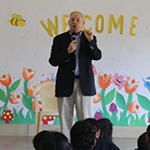
Traveling Internationally for Student Recruitment
Global Cleveland caught up with George Burke, who is currently traveling abroad and working to connect international students to opportunities to study in the United States.
Where will you be traveling?
I am traveling from Sept 11-Sept 30. I will be in Chennai, Bangalore, Ahmedabad, and Mumbai, India; Dhaka, Bangladesh; and Kathmandu, Nepal
What meetings or activities do you have planned for this trip?
I will be meeting with Education USA Representatives in Chennai, Mumbai, and Dhaka. I will be visiting international schools, some local high schools, attending a couple of Educational Fairs and International Education Recruitment Partners. I also visit in a couple cities with students who have either studied at CSU or CWRU that I have personally known over the years.
When you are working to promote studying in the United States to international students, what have you found to be the most common questions or concerns?
The parents’ number one concern is safety and expenses, while the students are most interested in both their academic and non- academic activities. They are interested in what work options and internships are available. I find the biggest challenge is having everyone recognize how different the US environment is, both academic and non –academic, from their own country. Something in the US that is not offered in other countries is the concept of almost limitless choices. But the options and choices are entirely dependent on taking the risk to explore and discover new things and new people. They often expect there is one perfect answer and one perfect school or perfect major. Trying to get someone to understand that even if an institution is not ranked number 1, higher education in the US actually opens the door to use their own initiative to get what they want, and that even though you start on one path once you arrive in US new options are always available that they don’t expect. Consistent with that is explaining US learning philosophy. In the US it is not the teacher’s responsibility to give you the answers but equip you with becoming a self- learner.
What are some changes you have seen in international student enrollment over the years?
After 40 years of involvement in international higher education, changes are varied. When I first became involved in the mid 70’s was the first explosion of oil money around the world. That meant students from Algeria, Iran (many personally financed), Libya, all countries of Mideast, Venezuela, and Nigeria where being sent on huge government scholarships. During that time period, the Chinese and Indian students were almost just graduate students who received graduate assistantships or specialized international scholarships. Then there was the oil crisis and Iranian revolution, which closed off many of those individuals. Then in the 80’s and 90s the world economics shifted toward Southeast Asia and students from Japan, Korea, Taiwan, Thailand, Indonesia, and Malaysia. That lasted until the financial crisis in the 90’s. But interestingly enough the world was becoming wealthy and international student numbers continued to grow in the US. Now of course when the Chinese and Indian currencies became useable on the international market it has lead to increased numbers of undergrad Chinese students and the last 3 years’ double digit % increase in undergrad Indian students.
The biggest change I have seen over the years has been among US universities. In the early years, international students were either key to scientific research or an added plus. But very few US universities had a comprehensive integrated approach to international education and international students. For many schools, it has now become a way to offset declining US domestic high school populations and balance their budgets; the importance of integration and diversity is lost. Recruitment is to meet enrollment and economic goals.
Are there particular fields that are more popular with international students?
As far as majors are concerned, of course the STEM fields and business make up 80% of the demand, but with the growth in numbers over those 40 years from 150,000 to over 1 million, you will find increases in all fields. Of particular interest for countries like China and India, which have gone from third world to economic and population leaders, they are interested in fields like psychology, communication, and fine arts. There continues to be a demand for Community Colleges to help offset the ever-increasing extreme expensiveness of both Private and Public 4 year institutions.
What was one unexpected experience you had on this trip?
When I landed in Chennai on Tuesday at 4am after traveling 36 hours, I took a nap in my hotel got up at 10am I heard there were riots in Bangalore and it might impact my second stop. So I spent part of my first 24 hours in country working with travel agents, and diverting my travel to other cities not originally on my schedule. But by the time Wednesday hit all had normalized and under control so my next stop Bangalore went on as scheduled.
Traveling through South Asia this time I faced two interesting challenges: riots over water rights in Bangalore, India and a sense in the west that Dhaka, Bangladesh is a dangerous place to go. After experiencing both places I found the fears we have about unfamiliar countries do not really exist in reality.
My thoughts while sitting in the Bangladesh airport waiting to go to Kathmandu made me think about whether you see life as a glass half full or a glass half empty. This made me realize that since 2001, America has been a country tending to the belief that the glass is half empty. And worse, we act as if the glass will break and there will be no more water. We look more backward rather than forward and we think it is more important to protect than to explore and look to the future. I have found in the eyes of many that I meet that the less they have, the more each day they have hope.
My wish for all Americans is to be thankful and feel they are fortunate to be in a country that is not over crowded, that has good water and most important the likelihood to move forward is truly in our own hands and heart. Many people of the world have bigger hearts and more dreams where there are fewer opportunities. They wake up every morning thinking they will find a way to fill the glass, while too many Americans wake up fearing the glass will be broken.
How can Cleveland most benefit from international students coming to Northeast Ohio?
Northeast Ohio has and continues to benefit. Not only adding to student enrollments it opens up Cleveland to be a destination for companies, increasing a highly skilled work force, it adds to the faculties at the universities and colleges. They are definitely a benefit to expand all facets of the economy.
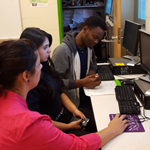
Dan Hanson and CAP donates computers to Thomas Jefferson International Newcomers Academy
The volunteers of Computers Assisting People (CAP) were happy to donate 30 PCs to International Newcomers Academy at Thomas Jefferson. Since the mid-90’s, CAP volunteers have donated almost 20,000 PCs (and countless printers, routers, scanners, etc.) to almost 500 Cleveland non-profits and schools.
CAP realizes that the information technology age has divided the world into two separate classes – the technology “haves” and “have-nots” aka the Digital Divide. Information is power and computer technology is the means to acquiring that information and hence, that power. Employment opportunities and even everyday life are dependent on computers.
The mission of CAP Inc. is to reach those elements of society that may not have the opportunity to benefit from the technology that many of us take for granted. Thus we have focused on assisting the urban poor, senior citizens, shelters, children, schools, the disabled, returning felons, veterans and similar groups that can really be empowered by technology. And we have the success stories to prove it. For more information visit www.capinc.org
From Thomas Jefferson International Newcomers Academy:
We are very grateful for the generous donation of 30 computers made by Dan Hanson and the volunteers of Computers Assisting People, Inc. This has been a great benefit for our International Newcomer students. Our student body grows so quickly throughout the year and our computer labs tend to be booked regularly for standardized testing. The donation has made it possible for our middle school and high school students to have the ability to access computers in their classrooms daily for learning purposes. With the extreme need for our students to acquire 21st century skills, access to technology is imperative. Our students and staff greatly appreciate this new partnership!
We have found that many types of connections with the community have been essential to the success of our school. We are extremely grateful, but not only for donations of technology, school supplies and much needed uniforms. Just as important, have been the human connections that have been made. We are so lucky to have wonderful adult volunteers for tutoring, mentoring, and career information sharing; as well as other students from Cleveland area schools (such as Hawken, Bay Village H.S., St. Joseph Academy, etc.) who have built friendships and shared wonderful opportunities speaking English and engaging with our newcomer Displaced Persons and International Newcomer students.
So far, Cleveland has demonstrated itself to be an extremely welcoming city to our newcomers!
Written By: Dan Hanson (Computers Assisting People) and Maria Bozak (Thomas Jefferson)