Migration, 'My Kind of Town' and a Rose Garden
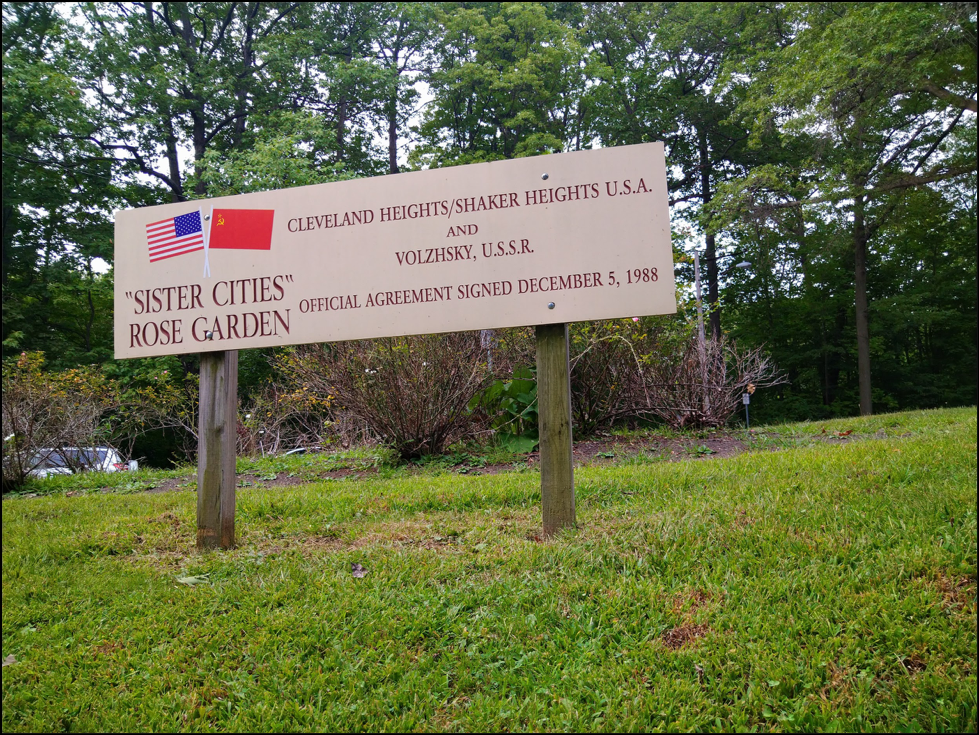
Pictured Above is a sign commemorating the sister city relationship between Volzhsky, Shaker Heights, and Cleveland Heights; this relationship was eventually merged with the Volgograd-Cleveland sister city program to form the Greater Cleveland - Volgograd Oblast Alliance
Migration, 'My Kind of Town' and a Rose Garden
- By Ezra Ellenbogen
Cleveland has many sister cities, in fact, Cleveland has 23 sister cities.[1] To put that in perspective, Washington DC has 15 sister cities[2], Detroit has 11 sister cities[3], and Boston has 11.[4] In short, we have a lot of sister cities. Despite this, one sister city stands out among Cleveland’s many: Volgograd, Russia. Not only has the sister city relationship flourished, even going on to include Shaker Heights, Cleveland Heights, and Volzhsky (Russia), but the relationship between the cities has helped the Russian culture in Northeast Ohio thrive, making our Russian population[5]feel at home. Recently, the Gagarin Gala helped highlight the numerous Russian cultural contributions to Cleveland as well as celebrating our long-standing partnership with the Volgograd Oblast.
Cleveland and its partnership with Volgograd have made historic strides in the past towards bringing the US and Russia (which was engulfed in the USSR throughout most of the relationship) together. Early Migration to Cleveland included many Russians, and their initial settlement was accompanied by other Eastern European groups (Finns, Poles, etc.).[6] Soon, Cleveland’s Russian International Newcomers were a major part of the city’s ethnic composition.
Russian cultural influence in Cleveland picked up in the early 1900s, with famous Russian performers like Anna Pavlova coming to visit. Cleveland’s large Russian population meant that the 1917 Revolution had an effect on Cleveland itself. The political disagreements in Cleveland had to do with Russia’s Bolshevik Revolution and rising interest in anarchism. Cleveland’s May Day Riots came at a time of great unrest in the city. This all was caused not only by the disagreement on the political situation back in Russia but also as a result of the First Red Scare and the US’s legal actions taken against many activists. The combination of labor activism and new interests in socialism saw Charles Ruthenberg gain 30% of the mayoral vote in Cleveland. As a result of the May Day riots, Russian Migration to Cleveland increased, and as the events began to blow over, it was clear that the cultural impact of the new Russian population was significant.[7]
Despite the rising tensions between the US and the USSR, culture from Cleveland traveled to Russia and culture from Russia traveled to Cleveland. These exchanges helped ease tensions between the two countries. After the US began to work more with the USSR, two of Cleveland’s leading engineering companies -Arthur G. Mckee & Co. and the Austin Company- contributed to the construction of new Soviet projects, namely the creation of a new industrial city (Magnitogorsk) and an idealist worker’s paradise (Avtozavod), accompanied by the construction of a large automobile factory. This collaboration between the US and the USSR helped encourage their later partnership in World War II and helped to delay Cold War tensions. However, during the Cold War, Cleveland gained minor missile bases.[8]
As the Soviet Union expanded into Eastern Europe, Displaced Personss fled worldwide, and many of them came to Cleveland. The most notable group were the Hungarians, who contributed to Cleveland’s culture greatly. As worry increased about the Cold War, people in Cleveland began to call for an easing of relations. Cleveland capitalists began to influence the USSR, helping to influence Krushchev towards cooperation with the US. Krushchev and his advisors gave a gift (specifically, a troika - a Russian sleigh pulled by three horses) of appreciation to Cyrus Eaton, the Cleveland activist who helped spur the movements to cooperate with the USSR. A famous moment occurred when Anastas Mikoyan, Krushchev’s top advisor, became emotional at the sight of Cleveland’s Terminal Tower when he was visiting the city and stated: “Now you’re talking! This is my kind of town!” Cleveland culture was brought to places all throughout the USSR, mostly through the Cleveland Orchestra’s Eisenhower-approved concerts. The Soviet Union returned the favor by offering the rights to a reportedly outstanding opera, which was performed by the Cleveland Orchestra in Severance Hall in 1935.
In 1985, Cleveland established a sister city partnership with Volgograd, Russia as a result of the cultural contributions of the Russian population in the area had already made and the many collaborations between Russia and Cleveland.[9] Then, a wondrous architectural feat was accomplished, namely: Tremont’s St. Theodosius Russian Orthodox Cathedral. This cathedral is an architectural masterpiece and is one of the best representations of Russian cultural contributions to major cities in the United States. The new structure highlighted the capabilities of the Russian population in Cleveland and helped move the sister city relationship forward.
Then, as Shaker Heights and Cleveland Heights began to worry about the Cold War and what effects it could have if it was not de-escalated, they signed an agreement with Volzhsky, Russia as sister cities in 1988 (both suburbs were sister cities to Volzhsky). A sign and rose garden were placed at the East end of Horseshoe Lake in Shaker Heights to celebrate the momentous development in Cleveland’s history of cooperating with Russia and helping the US do the same, specifically the involvement between Shaker Heights, Cleveland Heights, and Volzhsky. The sign and the rose garden are living legacies of this historic sister city relationship. The sign and the garden still stand today right next to the very popular Horseshoe Park - (the “Sister Cities” Rose Garden is pictured at the top of the article).
Ten years later, Cleveland’s partnership with Volgograd, Shaker Heights’ partnership with Volzhsky, and Cleveland Heights’ partnership with Volzhsky were combined to form the Greater Cleveland Volgograd Oblast Alliance (GCVOA).
The GCVOA provided much more than just a sister city relationship. The GCVOA established not only humanitarian aid, professional training, and mutual infrastructure help as services for Volgograd and Volzhsky, but also a Free Speech Forum for the Russian population. The Volgograd-based Free Speech Forum in Russia was patterned after the City Club of Cleveland. Medical help and aid were provided to the region in Russia, mostly through instruction and some visits. Cultural exchange was also important to the program.[10]
This year has seen many great developments in the sister city relationship. From May 1-3rd, Global Cleveland hosted their Inaugural Sister Cities Conference, with the largest delegation there coming from Volgograd. The GCVOA has made plans to re-engage the relationship between Greater Cleveland and the Volgograd area, including free speech discussions and a delegation from Cleveland visiting Volgograd.
On May 3rd, 2019, the city of Cleveland, in cooperation with the Russian population, held the first Russian Community Day. Not only did this celebration help highlight Russian culture thrive once again, but it will also be an annual endeavour. Russian music, ballet, and food was celebrated in Cleveland City Hall. The event did an amazing job of embracing the GCVOA’s goals as well as creating a demonstration of the thriving Russian cultural presence in Cleveland. Mayor Frank Jackson’s idea for “Russian Community Day” will continue on as a legacy for Cleveland’s culture.
And most recently, the Gagarin Gala was hosted by the Russian Cultural Garden group at Great Lakes Science Center, in celebration of a new Yuri Gagarin sculpture in the Russian Cultural Garden and historical contributions made by Cleveland’s Russian population. Pietro Shakarian spoke about the history of Cleveland’s Russian population and brought attention to the many achievements of Cleveland’s partnerships with Russia over the years. Events like this bring Cleveland together, letting our many ethnic groups flourish. The sister city program and its ambitions will allow for Cleveland’s Russian population to feel at home. This historic sister city relationship will continue to have major political and cultural implications in the future and will help Cleveland and its Russian population thrive.
The Russian population of Cleveland has contributed immensely to the local culture and our sister city relationship that came as a result of this helped to provide real political dialogue between the US and the USSR. Events like this show how Migration can shape the world.
Ezra's blog: One Page Stories
[1] https://www.clevelandfoundation.org/2019/05/inaugural-sister-cities-conference-welcomes-23-international-communities-to-cleveland/
[2] https://os.dc.gov/service/dc-sister-cities
[3] http://en.sistercity.info/sister-cities/Detroit.html
[4] https://www.boston.gov/economic-development/sister-cities
[5] http://worldpopulationreview.com/us-cities/cleveland-population/
[6] https://case.edu/ech/articles/cleveland-russian-relations
[7] https://case.edu/ech/articles/m/may-day-riots
[8] https://case.edu/ech/articles/n/nike-missile-bases
[9] Gagarin Gala Event Handout
[10] http://www.oocities.org/gcvoa/projects.htm

Reconnecting Bratislava and Cleveland
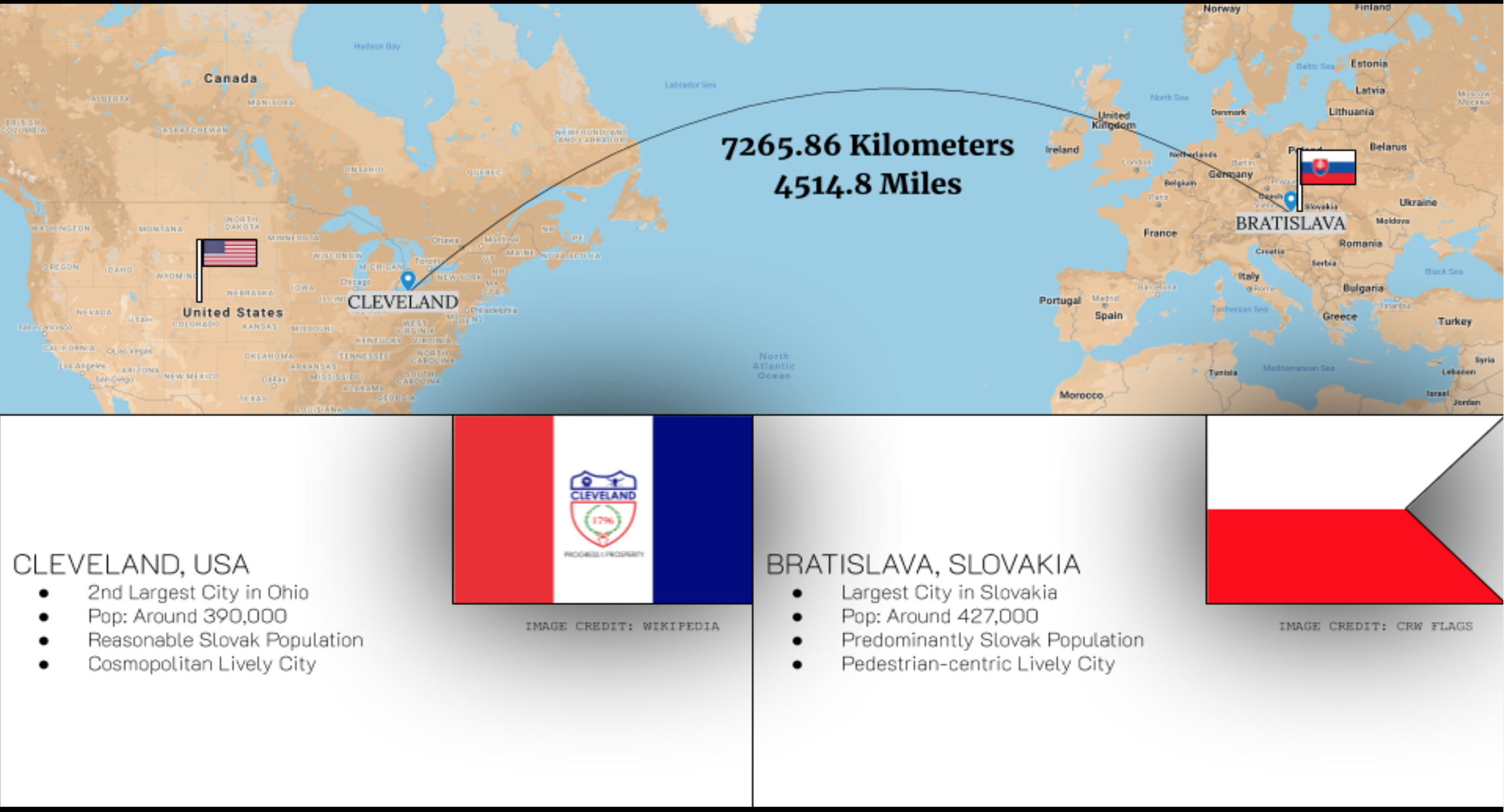
Infographic made with the help of Google My Maps
Reconnecting Bratislava and Cleveland
- By Ezra Ellenbogen
Cuyahoga County has a reasonably large Slovak population; in fact, it has the highest of any county in Ohio, and Ohio is the state with the second-highest Slovak population overall.[1] In short, Cleveland and surrounding areas have a significant Slovak population.
Among Cleveland’s many great sister cities, there is Bratislava, which is the capital of and largest city in Slovakia. Cleveland and Bratislava have been sister cities since 1990[2], but the commitment to helping each other and creating an international dialogue has fallen off track. The most recent involvements were in 2015 when the Cleveland Philharmonic performed in Bratislava and a major meeting was held in Cleveland.[3] These programs proved beneficial and successful and could most likely have such an effect again today. The 2010-2014 mayor of Bratislava, Milan Ftáčnik, stated[4] that “this document [the sister city agreement], which was written by both mayors, was unfortunately not so much fulfilled by concrete activities.” In spite of his efforts at reconnecting the cities, we have become distant neighbors yet again. Nowadays, both sides are looking for chances to reconnect; mayors from both cities have attempted to revive the ‘sister city attitude’ that would help them thrive. However, the two cities are barely connected, despite sharing heritage; communications and flights between them are difficult.
Since then, most relations have been on a higher level between Slovakia and the US instead of between Bratislava and Cleveland, though in unrelated contexts. While this may have provided firm relations between the two countries - which are now friendly - the use of the sister city program to focus on countries at a local level makes it easier to share skills. One such example was Cleveland’s work with Bahir-Dar, Ethiopia, when they shadowed Cleveland’s medical transport to improve the efficiency of their own systems. These types of partnerships could easily help the entire country when applied and can be reciprocal, especially with large cities or capital cities. Even these specialized relations can be considered diplomatic, as they open paths for Slovakia and the United States to exchange ideas and people through local programs. With the two culturally rich cities in question, it seems that such a project would be wondrous.
The reasons for re-opening relations between Cleveland and Bratislava include diplomacy, population similarities, Slovak heritage pride, and, as Milan Ftáčnik expressed when he tried to re-open relations last time: “because we believe that the cities of equal size and equal problems and have to learn from each other how to solve them.” This was greatly relevant when he said this in 2012, but even more so now with the friendliness of the two nations and the similarity of our local issues.
The similarities between Cleveland and Bratislava are numerous. First, the population counts are less than 50,000 people apart and the large Slovak population in the Cleveland area makes up for other demographic discrepancies.[5] Secondly, there are other similarities in the demographic makeup of both cities, which include Czech and German populations. Also, they are both western nowadays despite formerly being on opposing sides of the Iron Curtain. On a local level, they have similar political values. For instance, both have liberal Migration views as well as a growth in urban activism. Both cities are also pedestrian-based and rather unique in terms of available culture. However, because of Bratislava’s role as the capital of Slovakia, most of the politics of the city are nationally-inclined, although economic growth and infrastructure are prospects for both cities.
Bratislava and Cleveland are over 4,500 miles (or over 7,000 km) apart[6], but that is not the only thing that differentiates them. Even though many Clevelanders may speak Slovak at home, Bratislava is indisputably more Slovak than Cleveland. The obvious things set the cities apart, including timezones, continents, and languages. Through new-age technology, these cities are able to transcend these barriers as shown with the digital conferences hosted by Global Cleveland. The persistence of these efforts has paid off through cultural exchange and understanding as well as increased connections for the Slovak population in Cleveland; differences do not divide us.
On a related topic, it is important to note that Bratislava as a city is very internationally-inclined within the context of the city’s relations. Bratislava has many sister cities, including some that overlap with Cleveland’s, but Bratislava’s relations with Vienna and possibly Hungary could lead to Cleveland getting close to these cities and countries. Cleveland has not built a very strong relationship with their Hungarian sister city (Miskolc), so perhaps Bratislava’s geographic and ethnic closeness to Hungary, especially the general north, could help improve that relationship. Vienna and Bratislava are often considered to be the closest capital cities in the world, though this is disputed, and are arguably the closest-together (in terms of relations) sister cities. Bratislava could teach Cleveland a thing or two on how to stay close and maybe even help Cleveland to establish better relationships with their other sister cities. Bratislava is the only national capital to border two countries[7], so it is no surprise that they are adept about connecting with other cities internationally.
This brings us back to the main point of Bratislava-Cleveland relations. Cultural exchange is an important idea and could entail literary exchange or educational possibilities and even bring diplomatic opportunities. Cleveland’s Slovak population would feel at home and their heritage would contribute to the hopeful bond between Cleveland and Bratislava. Tourism is another good idea for getting cooperation back on track but is hard considering Cleveland is losing its role as an airspace hub. But if Bratislava and Cleveland were to cooperate, this could prompt increased travel between them and improve the economies of both areas. Businesses could do this as well, and because of the positive relations with Hungary and Austria, expanding opportunities from Cleveland to Bratislava could potentially lead to even more expansion, and the relationship would be good for businesses as well as economically beneficial to both cities. No matter what we do, the need for an improved Bratislava-Cleveland connection is there and Cleveland must not ignore its own Slovak population. Celebrating our heritage and connections as a city will help us thrive in these uncertain times and will not only bring people together internationally but will also set the stage for other sister city relations.
Ezra's blog: One Page Stories
[1] Taken from Census Bureau Public Data Records From 2017 Estimates
[2] https://www.sistercities.org/sites/default/files/Cleveland,%20OH%20-%20Bratislava,%20Slovakia.pdf
[3] https://www.imwong.com/out-and-about/out-and-about-cleveland-bratislava-sister-cities/ and http://blog.cleveland.com/slovakia/2007/05/clevelandbratislava_sister_cit.html
[4] https://www.youtube.com/watch?v=R8oXfatUp58
[5] Population counts from WorldPopulationReview
[6] A rough estimate calculated using Google Earth
[7] http://blog.timeforslovakia.com/did-you-know-bratislava-the-only-capital-bordering-2-countries/

The Story of Cleveland and Beit She'an: A Week Long Trip to a 25-Year-Old Sister City Relationship - Ezra Ellenbogen
The Story of Cleveland and Beit She'an: A Week Long Trip to a 25-Year-Old Sister City Relationship
- Written by Ezra Ellenbogen
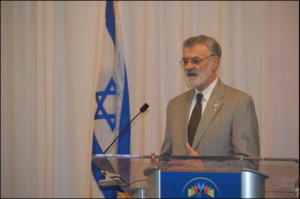
The Honorable Mayor Frank G. Jackson speaking during the 2019 Inaugural Sister Cities Conference as he welcomed Beit-She’an as Cleveland’s newest sister city - Image from CJN Photos/Ed Carroll
Beit-She’an, a beautiful city in Northern Israel, is the newest sister city of Cleveland, Ohio. On Day Two of the 2019 Inaugural Sister Cities Conference (May 2nd), Beit-She’an was named as the 23rd sister city of Cleveland and as the second of those in Israel (the first being Holon, which was made a sister city in 1977). The event was attended by representatives of the Jewish Federation of Cleveland*, J. David Heller (president and CEO of NRP Enterprises), the Honorable Mayor Frank G. Jackson of Cleveland, the Honorable Mayor Eddy Kraus of Solon, the Honorable Judge Daniel Polster (a Judge for the Northern District of Ohio), the Honorable Kevin Kelly (the President of the Cleveland City Council), the Honorable Dani Dayan (the deputy Consul General of Israel in New York), and a significant number of community members. Unfortunately, the Israeli mayors involved were unable to attend but they recorded a video message to be shown at the event. By looking at those attending, one can see that this was a highly anticipated event.[1] However, while it may only now be official, Beit-She’an and Cleveland, as well as Valley of Springs*, have been working together since 1996. In fact, the Jewish Federation of Cleveland has been working closely with Beit-She’an/Valley of Springs continuously for nearly 25 years!
In 1995, a group of people associated with the Jewish Federation of Cleveland visited Beit-She’an. This trip sparked a sister city relationship that has actively lasted over 20 years and has developed the cities involved as well as bettered their international reputations.[2]
At the time, the Jewish Agency for Israel* was encouraging many international cities to cooperate with Israeli cities for the purpose of development between cities. The Jewish Federation of Cleveland was then inspired by the Jewish Agency for Israel to create a sister city relationship with an Israeli city. Three locations were visited, and Beit-She’an was chosen. “We thought about which place would have an attraction for people from Cleveland. The archeological site had begun to be developed there and it had a very grand Roman amphitheater, so we thought that would be a special attraction,” stated Stephen Hoffman, the former President of the Jewish Federation of Cleveland. The Federation attendees enjoyed their time there, engaging with the people they met and the sights they saw. They were further impressed with Beit-She’an’s efficient government and thought that Cleveland could help in the development of the city. In 1996, the partnership between the Jewish Federation of Cleveland and Beit-She’an/Valley of Springs was started.
Two people were instrumental in the partnership’s success, especially early on. Arthur Naparstek and Robert Goldberg are credited with being the people who played the largest roles in the partnership’s success. Naparstek, a professor of social work and former dean of the Mandel School of Applied Social Sciences at Case Western Reserve University, used his expertise to help develop the community and housing. He promoted the cooperation of the local community members as well as the overall cooperation between Cleveland and Beit-She’an. Goldberg was very involved in the development and progress of Beit-She’an and its partnership with Cleveland. Both helped to get Beit-She’an and regional governments to work together, which allowed Valley of Springs to benefit concurrently with Beit-She’an. The sister city relationship also helped the region create better rapport with their two adjacent nations (Jordan and State of Palestine), such as when Jordanian and Israeli veterans from the Six-Day-War came together for a peaceful meal in Beit-She’an. The partnership, with the help of Goldberg and Naparstek, was able to encourage regional cooperation not only within Israel but also between Valley of Springs/Beit-She’an and Jordan and State of Palestine.
Within the long existence of the relationship, many initiatives have been formed. For instance, the Jewish Federation founded a choir group to accompany the Cleveland HaZamir and the two have worked together extensively. Projects like the HaZamir choir group helped create a cultural connection between Beit-She’an and Cleveland, which has provided great learning experiences to people from both cities. Moreover, modern initiatives, while they may be focused on helping Beit-She’an, are also helping Cleveland. One great example of this is the “Volunteer Beit-She’an” program, which allows for Clevelanders who are 50 or older to volunteer in Beit-She’an. Not only does this help Beit-She’an, but it also provides unique experiences to many Clevelanders.[3] Another example (one that has been in the news recently) is the Jewish Federation’s investment in STEM education opportunities in Israel with an emphasis on Beit-She’an.[4] And even then, Beit-She’an has helped develop Cleveland. A very memorable example of this was when the CEO of the Cleveland Public Library was inspired by Beit-She’an’s unique and community-building library. In the library, the children run the programs of the library, allowing for them to create clubs and activities that they know will interest the community. The CEO then planned to make Cleveland’s own Public Library have a similar system.[5] The sister city relationship has provided empowerment and development to Beit-She’an, Valley of Springs, and Cleveland as well as unique travel experiences for Clevelanders.
What makes Clevelanders’ travels to Beit-She’an and Valley of Springs so special is not only how amazing the country is, but also the many similarities between Cleveland and Beit-She’an. Joe Cimperman (the President of Global Cleveland), who called his trip there “life changing,” was reminded of Cleveland’s West Side Market when he visited markets in Israel.[6] Both Cleveland and Beit-She’an are lead with strong civil leadership (itself as a result of the sister city relationship) and most Clevelanders who visit Beit-She’an note that the cities have “a million similarities,[7]” especially with the friendliness of the people from both cities. Furthermore, the two cities have similar histories full of triumphs and downfalls and a similarly large amount of diversity. For these reasons, it is likely that any of the over 500 Northeast Ohioans who visit Beit-She’an/Valley of Springs annually could tell you that the two cities were made to be partnered.
Now, with the official ceremony of the sister city relationship between Cleveland and Beit-She’an/Valley of Springs, one cannot imagine what wonders lie ahead. From possible library innovation to continued civic cooperation, it seems nothing is beyond reach. Cleveland benefits from the relationship, Beit-She’an benefits from the relationship, Valley of Springs benefits from the relationship, and the citizens of the areas benefit from the relationship. Truly, the Beit-She’an/Valley of Springs-Cleveland sister city relationship has been one of Cleveland’s most successful and influential partnerships.
Ezra's blog - One Page Stories
*Glossary of Terms
Beit-She’an - A city in northern Israel
Valley of Springs - The Regional District that surrounds Beit-She’an, but does not include the city
The Jewish Federation of Cleveland - A group that is, according to them: “the only organization in Cleveland that focuses on the health and vitality of the entire Jewish community[8]”
Jewish Agency for Israel - An international organization that has been vital in the success of the global Jewish community and that has “been securing a vibrant Jewish future for generations to come” since 1929[9]
[1] http://www.jewishcleveland.org/news/blog/sister_city_celebration_takes_place_at_cleveland_public_library_louis_stokes_wing/
[2] https://www.clevelandjewishnews.com/news/local_news/jewish-federation-of-cleveland-sister-city-beit-shean-celebrate-/article_942d960c-f113-11e5-821a-0705cb853636.html
[3] http://www.jewishcleveland.org/news/blog/volunteer_in_beit_shean/
[4] https://www.clevelandjewishnews.com/news/local_news/supporting-israel-s-economic-growth-through-stem/article_73cea6f2-d950-11e9-a402-3bb28233b230.html
[5] https://www.clevelandjewishnews.com/news/local_news/beit-shean-library-inspires-change-at-cleveland-public-library/article_cace9910-2336-11e9-8fb2-27747237ce98.html
[6] https://globalcleveland.org/theres-much-land-can-learn-holy-land/
[7] Quote from Joe Cimperman; http://www.jewishcleveland.org/news/blog/travel_blog_civic_leaders_israel_mission/
[8] http://www.jewishcleveland.org/who-we-are/about-us/
[9] https://www.jewishagency.org/who-we-are/

Blessed are the Candle Bearers
 .
.
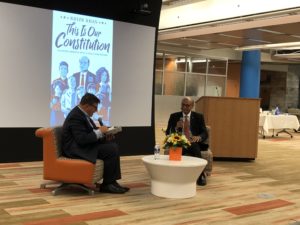
Everyone has ‘linguistic markers’. Sometimes they mark where you are from geographically, like ‘Baah Haaaabah” for Bostonians. Sometimes they mark what religion you are, like saying ‘mashallah’. Sometimes it’s just your signature word, like Ray Bradbury’s ‘cinnamon’.
Mr. Khizr Khan has three linguistic markers I picked up on during the two days I spent with him at talks in venues around Cleveland: ‘blessed’, ‘uplift’, ‘and candle bearer’. I don’t know what words Mr. Khan uses most often in everyday conversation, but his message featured these at much higher rates than any others.
It’s not surprising that ‘candle bearer’ is a signature phrase, given that he glows with the inner peace of a man doing his God-given work. But it is a challenging and inspiring phrase. Mr. Khan describes the path as dark, and the candle bearers must walk front and center to lead the way. Mr. Khan challenged every single person to harness their light and use their platform for change, be it waking up early to vote, taking someone who cannot drive to the polling station, standing up and saying one person, one vote does matter. Whatever your platform, use it. Mr. Khan reminded us that history shows us one person’s voice can change the world. “Give me liberty or give me death” is a political reality that many around the world contend with, but we in America are not forced to consider it when we send a tweet or state our opinion. Mr. Khan, however, has lived through it, and that is why he is so passionate about our United States’ Constitution.
Mr. Khan recounted how he first fell in love with the US Constitution--yes, in love. That is how deeply Mr. Khan values the words that form this idea of a More Perfect Union. It was during a comparative law class that put constitutions from around the world side by side and compared the merits or each. Nothing compared, in his mind, to the 4,543 words that make up this ‘blessed document’. The fire that was lit inside him eventually took him to America to get not one, but two LL.M. degrees from the University of Missouri Law School and Harvard Law School. It gave him a career in and a passion for law that he spreads as a doctrine of freedom and justice. And like many newcomers to the United States, Mr. Khan is deeply patriotic and grateful to this country. He spoke passionately about the 1st and 14th amendments in each talk he gave.
Pop quiz: how many rights are enshrined in the 1st amendment? How are Plessy v. Ferguson and Brown v. Board related?
You probably cannot answer those questions unless you are in 10th grade civics. And that is just Mr. Khan’s point. We take our freedom of speech for granted. We take for granted the fact that inhumane court decisions can be overturned when our mistakes have been made clear.
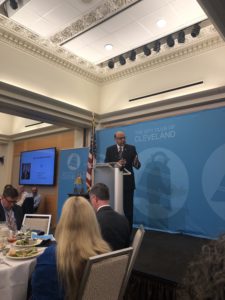
Mr. Khan spoke with the passion of Martin Luther King Jr., but at the level of Mother Teresa. He cried on stage, pausing to ask the crowd forgiveness for losing his composure. He openly acknowledged that each speech he gives tears open the wound left by the death of his middle child, Captain Humayun Khan, who was inspired by the service of President Thomas Jefferson to enroll in the ROTC program at the University of Virginia. Mr. Khan notes that he lives at the bottom of the mountain where Monticello sits, and that it was a total coincidence that he should live in the shadow of the Founding Father’s home and legacy, and that to his home are delivered bags full of letters, some only addressed “Mr. Khizr Khan, United States of America.” This man single-handedly made the United States Constitution the the best selling book in the world on Amazon, which runs out of it regularly since Mr. Khan took to the speaker circuit 3 years ago. This is also a man who was warned to stay inside during the protests in Charlottesville where, as Mr. Khan said, “our daughter, Heather Heyer, was killed”, but he saw firsthand the heavily-armed protesters and heard their ugly chants. People like this man were the aim of their ire, and yet he continues to speak. He continues to bear the light. He continues to uplift the best in us and to defend that which allows the best in us to thrive-- the rule of law, checks and balances, an independent judiciary, and a government by the people, for the people.
I could share many more stories of Mr. Khan’s, but I encourage you to see him when he visits you, or invite him to do so yourself. I will leave you with a story Mr. Khan’s grandfather in Pakistan would share with him after the sun had set, the dinner was eaten, dishes washed, homework completed, and the stars shone in the sky: A thirsty man is blocked from the river by a high wall, so high the man cannot climb it. The man, desperate in his thirst, throws a rock from the wall over it and into the river. The sound of the rock in the water fills the man with joy and hope. The man forgetting his thirst continues to throw rocks into the water. The water asks the man, ‘Why do you throw stones into the water you cannot drink?” The man replies, “Because the beautiful sound of its splashing fills all living things with joy, it is like the sound of the guard’s keys to a prisoner, the sound of rain in the desert, and every stone I throw makes the wall a little lower.” Mr. Khan encouraged us all to be like that man: joyous in our struggle, passionate in the pursuit of our goals, and hungry for the sweet drink of redemption.
“I have seen the sunrise on the other side of the mountain and it is just moments away.”
I would take Mr. Khan at his word. The night is darkest before the dawn, but that is why we are candle bearers.

Migration, “My Kind of Town,” and a Rose Garden - Ezra Ellenbogen
Migration, “My Kind of Town,” and a Rose Garden
- Written by Ezra Ellenbogen
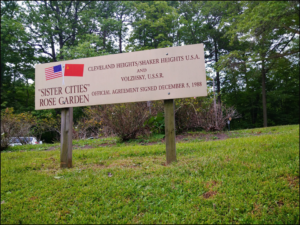
Pictured Above is a sign commemorating the sister city relationship between Volzhsky, Shaker Heights, and Cleveland Heights; this relationship was eventually merged with the Volgograd-Cleveland sister city program to form the Greater Cleveland - Volgograd Oblast Alliance
Cleveland has many sister cities, in fact, Cleveland has 23 sister cities.[1] To put that in perspective, Washington DC has 15 sister cities[2], Detroit has 11 sister cities[3], and Boston has 11.[4] In short, we have a lot of sister cities. Despite this, one sister city stands out among Cleveland’s many: Volgograd, Russia. Not only has the sister city relationship flourished, even going on to include Shaker Heights, Cleveland Heights, and Volzhsky (Russia), but the relationship between the cities has helped the Russian culture in Northeast Ohio thrive, making our Russian population[5] feel at home. Recently, the Gagarin Gala helped highlight the numerous Russian cultural contributions to Cleveland as well as celebrating our long-standing partnership with the Volgograd Oblast.
Cleveland and its partnership with Volgograd have made historic strides in the past towards bringing the US and Russia (which was engulfed in the USSR throughout most of the relationship) together. Early Migration to Cleveland included many Russians, and their initial settlement was accompanied by other Eastern European groups (Finns, Poles, etc.).[6] Soon, Cleveland’s Russian International Newcomers were a major part of the city’s ethnic composition.
Russian cultural influence in Cleveland picked up in the early 1900s, with famous Russian performers like Anna Pavlova coming to visit. Cleveland’s large Russian population meant that the 1917 Revolution had an effect on Cleveland itself. The political disagreements in Cleveland had to do with Russia’s Bolshevik Revolution and rising interest in anarchism. Cleveland’s May Day Riots came at a time of great unrest in the city. This all was caused not only by the disagreement on the political situation back in Russia but also as a result of the First Red Scare and the US’s legal actions taken against many activists. The combination of labor activism and new interests in socialism saw Charles Ruthenberg gain 30% of the mayoral vote in Cleveland. As a result of the May Day riots, Russian Migration to Cleveland increased, and as the events began to blow over, it was clear that the cultural impact of the new Russian population was significant.[7]
Despite the rising tensions between the US and the USSR, culture from Cleveland traveled to Russia and culture from Russia traveled to Cleveland. These exchanges helped ease tensions between the two countries. After the US began to work more with the USSR, two of Cleveland’s leading engineering companies -Arthur G. Mckee & Co. and the Austin Company- contributed to the construction of new Soviet projects, namely the creation of a new industrial city (Magnitogorsk) and an idealist worker’s paradise (Avtozavod), accompanied by the construction of a large automobile factory. This collaboration between the US and the USSR helped encourage their later partnership in World War II and helped to delay Cold War tensions. However, during the Cold War, Cleveland gained minor missile bases.[8]
As the Soviet Union expanded into Eastern Europe, Displaced Personss fled worldwide, and many of them came to Cleveland. The most notable group were the Hungarians, who contributed to Cleveland’s culture greatly. As worry increased about the Cold War, people in Cleveland began to call for an easing of relations. Cleveland capitalists began to influence the USSR, helping to influence Krushchev towards cooperation with the US. Krushchev and his advisors gave a gift (specifically, a troika - a Russian sleigh pulled by three horses) of appreciation to Cyrus Eaton, the Cleveland activist who helped spur the movements to cooperate with the USSR. A famous moment occurred when Anastas Mikoyan, Krushchev’s top advisor, became emotional at the sight of Cleveland’s Terminal Tower when he was visiting the city and stated: “Now you’re talking! This is my kind of town!” Cleveland culture was brought to places all throughout the USSR, mostly through the Cleveland Orchestra’s Eisenhower-approved concerts. The Soviet Union returned the favor by offering the rights to a reportedly outstanding opera, which was performed by the Cleveland Orchestra in Severance Hall in 1935.
In 1985, Cleveland established a sister city partnership with Volgograd, Russia as a result of the cultural contributions of the Russian population in the area had already made and the many collaborations between Russia and Cleveland.[9] Then, a wondrous architectural feat was accomplished, namely: Tremont’s St. Theodosius Russian Orthodox Cathedral. This cathedral is an architectural masterpiece and is one of the best representations of Russian cultural contributions to major cities in the United States. The new structure highlighted the capabilities of the Russian population in Cleveland and helped move the sister city relationship forward.
Then, as Shaker Heights and Cleveland Heights began to worry about the Cold War and what effects it could have if it was not de-escalated, they signed an agreement with Volzhsky, Russia as sister cities in 1988 (both suburbs were sister cities to Volzhsky). A sign and rose garden were placed at the East end of Horseshoe Lake in Shaker Heights to celebrate the momentous development in Cleveland’s history of cooperating with Russia and helping the US do the same, specifically the involvement between Shaker Heights, Cleveland Heights, and Volzhsky. The sign and the rose garden are living legacies of this historic sister city relationship. The sign and the garden still stand today right next to the very popular Horseshoe Park - (the “Sister Cities” Rose Garden is pictured at the top of the article).
Ten years later, Cleveland’s partnership with Volgograd, Shaker Heights’ partnership with Volzhsky, and Cleveland Heights’ partnership with Volzhsky were combined to form the Greater Cleveland Volgograd Oblast Alliance (GCVOA).
The GCVOA provided much more than just a sister city relationship. The GCVOA established not only humanitarian aid, professional training, and mutual infrastructure help as services for Volgograd and Volzhsky, but also a Free Speech Forum for the Russian population. The Volgograd-based Free Speech Forum in Russia was patterned after the City Club of Cleveland. Medical help and aid were provided to the region in Russia, mostly through instruction and some visits. Cultural exchange was also important to the program.[10]
This year has seen many great developments in the sister city relationship. From May 1-3rd, Global Cleveland hosted their Inaugural Sister Cities Conference, with the largest delegation there coming from Volgograd. The GCVOA has made plans to re-engage the relationship between Greater Cleveland and the Volgograd area, including free speech discussions and a delegation from Cleveland visiting Volgograd.
On May 3rd, 2019, the city of Cleveland, in cooperation with the Russian population, held the first Russian Community Day. Not only did this celebration help highlight Russian culture thrive once again, but it will also be an annual endeavour. Russian music, ballet, and food was celebrated in Cleveland City Hall. The event did an amazing job of embracing the GCVOA’s goals as well as creating a demonstration of the thriving Russian cultural presence in Cleveland. Mayor Frank Jackson’s idea for “Russian Community Day” will continue on as a legacy for Cleveland’s culture.
And most recently, the Gagarin Gala was hosted by the Russian Cultural Garden group at Great Lakes Science Center, in celebration of a new Yuri Gagarin sculpture in the Russian Cultural Garden and historical contributions made by Cleveland’s Russian population. Pietro Shakarian spoke about the history of Cleveland’s Russian population and brought attention to the many achievements of Cleveland’s partnerships with Russia over the years. Events like this bring Cleveland together, letting our many ethnic groups flourish. The sister city program and its ambitions will allow for Cleveland’s Russian population to feel at home. This historic sister city relationship will continue to have major political and cultural implications in the future and will help Cleveland and its Russian population thrive.
The Russian population of Cleveland has contributed immensely to the local culture and our sister city relationship that came as a result of this helped to provide real political dialogue between the US and the USSR. Events like this show how Migration can shape the world.
Blog: Ezra's blog
[1] https://www.clevelandfoundation.org/2019/05/inaugural-sister-cities-conference-welcomes-23-international-communities-to-cleveland/
[2] https://os.dc.gov/service/dc-sister-cities
[3] http://en.sistercity.info/sister-cities/Detroit.html
[4] https://www.boston.gov/economic-development/sister-cities
[5] http://worldpopulationreview.com/us-cities/cleveland-population/
[6] https://case.edu/ech/articles/cleveland-russian-relations
[7] https://case.edu/ech/articles/m/may-day-riots
[8] https://case.edu/ech/articles/n/nike-missile-bases
[9] Gagarin Gala Event Handout
[10] http://www.oocities.org/gcvoa/projects.htm
Naturalization Ceremony August 16th, 2019
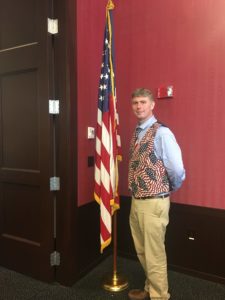
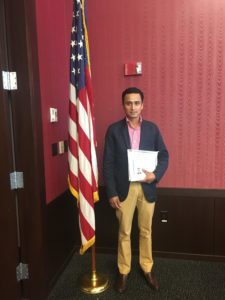
Welcome to America!
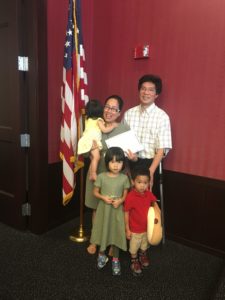
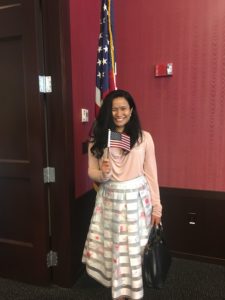
This is what an American looks like.
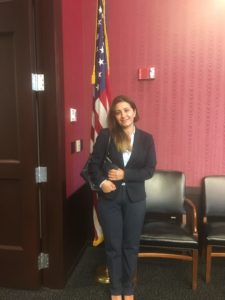
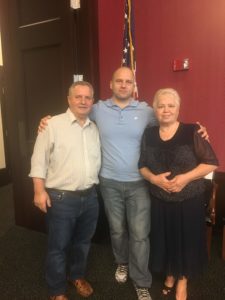
Families, students, professionals, dreamers, workers.
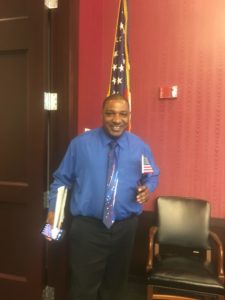
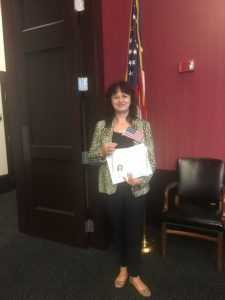
There is nothing like watching humanity join together is swearing their allegiance to this beautiful, messy, country.
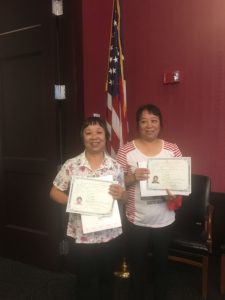
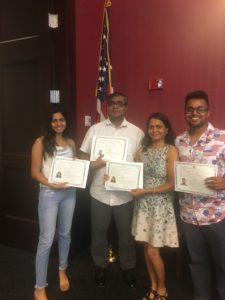
Global Cleveland offers every single new American a welcoming packet full of information about resources in our area that we hope makes them see how much we value them and their incredible efforts along this journey.
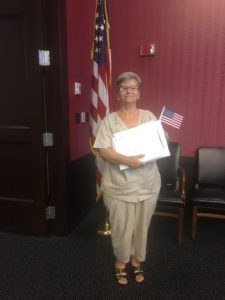
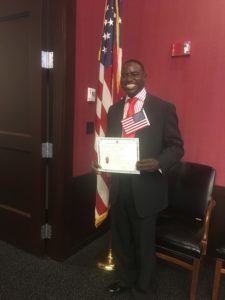
Next time you have a Friday free, come join us at the Stokes Federal Court House for a morning you will not soon forget.
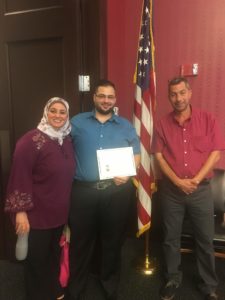
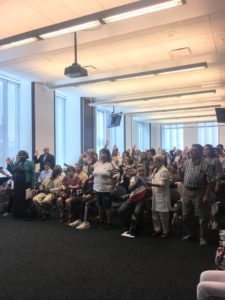
From war zones and wealth, Caribbean Islands, and frozen tundras, here in Cleveland we have people from every walk of life choosing to make this their home.
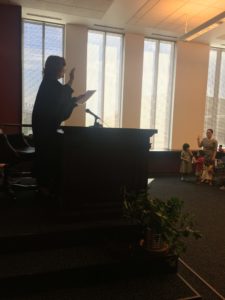
God Bless America and each person that helped our newest citizens on their path to citizenship.
Global Cleveland's Position on New White House Rule to Limit Legal Migration
While it has been in effect since 1882, the term “public charge” was never defined and therefore has meant different things over time. Different standards have been applied. It is a nebulous set of standards that can be adjusted to fit a particular climate or set of principles, depending on the current President’s views and value of International Newcomers.
Today’s change is straightforward: the government is trying to stop Migration, not illegal Migration, but all Migration. Full stop.
As of October 15, 2019, when these changes will go into full effect, applicants for admission, adjustment of status, and non-International Newcomer visa holders trying to extend their stay will have to prove by unreasonable standards they will not become a public charge at any time in the future. This means they cannot have used public benefits such as SNAP, WIC, Medicaid, Section 8 housing, or TANF for 12 months in a 3-year period -or- will need to earn annually more than 250% above the federal poverty guidelines. For millions of families, native-born or newcomer, these benefits have been a lifeline in the short-term, and a ladder to economic success in the long-term.
There is no difference between a Mexican International Newcomer coming to the U.S., working, saving money to bring his family over, and creating a better life for his children than what our grandparents did when they came from Slovenia or Poland or Greece 100 years ago. How many of our grandparents earned the equivalent of $63,000 when they came here? They would have been ineligible to enter the United States, and we wouldn’t be here. Are we going to deny other families that same opportunity? Are we going to deny native-born Americans the ability to benefit from the thousands of companies started by International Newcomers, now employing major sectors of our total workforce?
International Newcomers use federal benefits at a lower rate than native-born Americans. 32.5% of native-born citizen adults receive SNAP benefits and 29% of noncitizen adults receive SNAP benefits. The benefit being, according to the USDA, every dollar in new SNAP benefits results in $1.80 in total economic activity in Ohio. There are more than 37,000 households receiving SNAP benefits in Ohio, and the average benefit per person is $124.12 – that’s a huge stimulus of roughly $8 million a year. The downside being that disenrollment in public benefits creates a disproportionate economic loss: if there were a 25% disenrollment in SNAP nationally there would be an economic loss of $24.1 billion and 164,00 jobs lost. In food security terms, this will also stress an already stressed-out food bank system, pushing more families to hunger.
The changes to the public charge will create a chilling effect, and already has, which is affecting International Newcomers. Enrollment rates are dropping. Parents are being forced to choose between applying for a green card or using SNAP benefits to feed their family or take their sick children to the doctor. In what world is that right? In what nation is that acceptable?
Public benefits are a safety net that help families get ahead when times are good and help families stay out of abject poverty when times are bad. They allow people to go to school to become better educated and earn more instead of working just to make ends meet. The public charge changes will now use that to deny an International Newcomer the right to stay here or the right to adjust their status and get on track to become full citizens. As it stands, 1/3 of U.S. citizens would fail the public charge criteria if it were applied to everyone. Do we want every third neighbor forced out simply because they do not earn enough money? What about the International Newcomer student who has a degree from a great university but doesn’t earn a high enough salary? Shouldn’t they be allowed to stay?
Ohio has the most educated International Newcomers in the country, but Cleveland’s median income is $27,800 – nearly half of the state’s median income. And 13.6% of International Newcomers speak a second language, compared to 6.9% statewide.
This means the new changes will significantly affect Cleveland and Northeastern Ohio at a disproportionate rate. However, Migration has helped mitigate the population loss is Cuyahoga County and International Newcomers fill jobs in the high demand sectors like professional services, healthcare, and manufacturing. We cannot forget that 44% of American Fortune 500 companies were founded by an International Newcomer or child of an International Newcomer. Jeff Bezos and Steve Jobs’ parents were International Newcomers. Big Lots was started by a Russian International Newcomer, Capital One was founded by a British International Newcomer. Like the Heinen’s on East 9th and Euclid? Thank an International Newcomer. Feel good about the world-class healthcare we have at the Cleveland Clinic? The CEO is an International Newcomer.
International Newcomers stabilize our economy and population. They bring new blood and fresh ideas into our communities. We are imposing a wealth test on our newcomers through these new standards – a standard 1/3 of Americans couldn’t pass, a standard most of our ancestors couldn’t pass, a standard my own mother wouldn’t pass when she came here from former Yugoslavia, but a standard The President of the United States thinks will keep out “the tired, the poor and the huddled masses yearning to be free.
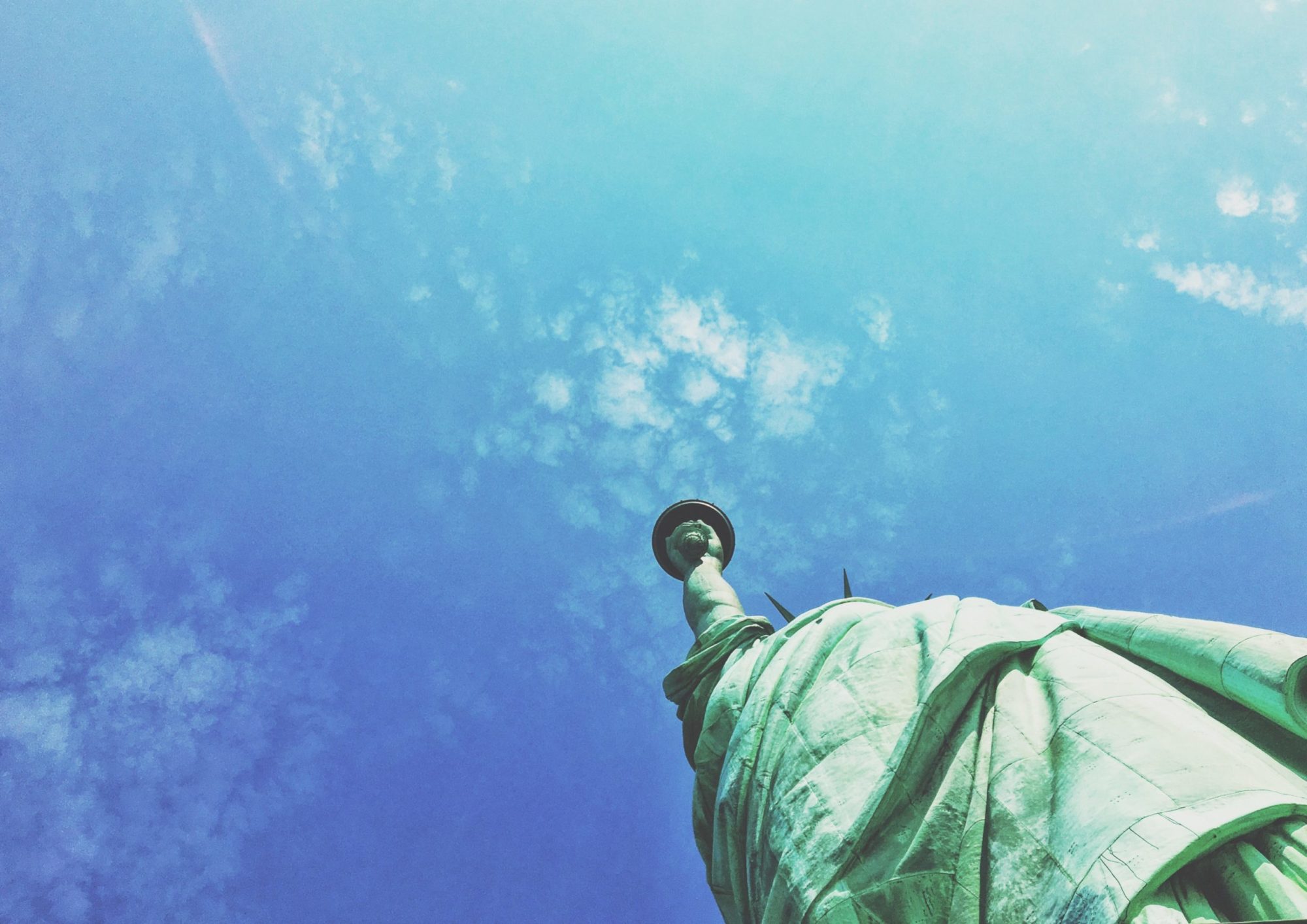
On the beloved door of our nation, at the Statue of Liberty are these words:
The New Colossus
Not like the brazen giant of Greek fame,
With conquering limbs astride from land to land;
Here at our sea-washed, sunset gates shall stand
A mighty woman with a torch, whose flame
Is the imprisoned lightning, and her name
Mother of Exiles. From her beacon-hand
Glows world-wide welcome; her mild eyes command
The air-bridged harbor that twin cities frame.
“Keep, ancient lands, your storied pomp!” cries she
With silent lips. “Give me your tired, your poor,
Your huddled masses yearning to breathe free,
The wretched refuse of your teeming shore.
Send these, the homeless, tempest-tossed to me,
I lift my lamp beside the golden door!”
This anti-“what it is to be American,” and this anti-free market growth policy must be reversed. The soul of our nation is at stake.
Bratislava-Cleveland
Bratislava - Cleveland
Written by Ezra Ellenbogen
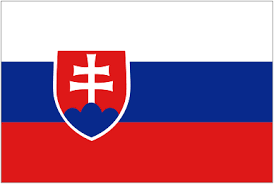
Cuyahoga County has a reasonably large Slovak population; in fact, it has the highest of any county in Ohio, and Ohio is the state with the second-highest Slovak population overall.[1] In short, Cleveland and surrounding areas have a significant Slovak population.
Among Cleveland’s many great sister cities, there is Bratislava, which is the capital of and largest city in Slovakia. Cleveland and Bratislava have been sister cities since 1990[2], but the commitment to helping each other and creating an international dialogue has fallen off track. The most recent involvements were in 2015 when the Cleveland Philharmonic performed in Bratislava and a major meeting was held in Cleveland.[3] These programs proved beneficial and successful and could most likely have such an effect again today. The 2010-2014 mayor of Bratislava, Milan Ftáčnik, stated[4] that “this document [the sister city agreement], which was written by both mayors, was unfortunately not so much fulfilled by concrete activities.” In spite of his efforts at reconnecting the cities, we have become distant neighbors yet again. Nowadays, both sides are looking for chances to reconnect; mayors from both cities have attempted to revive the ‘sister city attitude’ that would help them thrive. However, the two cities are barely connected, despite sharing heritage; communications and flights between them are difficult.
Since then, most relations have been on a higher level between Slovakia and the US instead of between Bratislava and Cleveland, though in unrelated contexts. While this may have provided firm relations between the two countries - which are now friendly - the use of the sister city program to focus on countries at a local level makes it easier to share skills. One such example was Cleveland’s work with Bahir-Dar, Ethiopia, when they shadowed Cleveland’s medical transport to improve the efficiency of their own systems. These types of partnerships could easily help the entire country when applied and can be reciprocal, especially with large cities or capital cities. Even these specialized relations can be considered diplomatic, as they open paths for Slovakia and the United States to exchange ideas and people through local programs. With the two culturally rich cities in question, it seems that such a project would be wondrous.
The reasons for reopening relations between Cleveland and Bratislava include diplomacy, population similarities, Slovak heritage pride, and, as Milan Ftáčnik expressed when he tried to re-open relations last time: “because we believe that the cities of equal size and equal problems and have to learn from each other how to solve them.” This was greatly relevant when he said this in 2012, but even more so now with the friendliness of the two nations and the similarity of our local issues.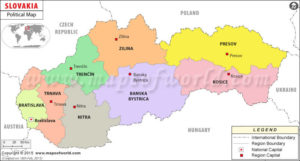
The similarities between Cleveland and Bratislava are numerous. First, the population counts are less than 50,000 people apart and the large Slovak population in the Cleveland area makes up for other demographic discrepancies.[5] Secondly, there are other similarities in the demographic makeup of both cities, which include Czech and German populations. Also, they are both western nowadays despite formerly being on opposing sides of the Iron Curtain. On a local level, they have similar political values. For instance, both have liberal Migration views as well as a growth in urban activism. Both cities are also pedestrian-based and rather unique in terms of available culture. However, because of Bratislava’s role as the capital of Slovakia, most of the politics of the city are nationally-inclined, although economic growth and infrastructure are prospects for both cities.
Bratislava and Cleveland are over 4,500 miles (or over 7,000 km) apart[6], but that is not the only thing that differentiates them. Even though many Clevelanders may speak Slovak at home, Bratislava is indisputably more Slovak than Cleveland. The obvious things set the cities apart, including timezones, continents, and languages. Through new-age technology, these cities are able to transcend these barriers as shown with the digital conferences hosted by Global Cleveland. The persistence of these efforts has paid off through cultural exchange and understanding as well as increased connections for the Slovak population in Cleveland; differences do not divide us.
On a related topic, it is important to note that Bratislava as a city is very internationally-inclined within the context of the city’s relations. Bratislava has many sister cities, including some that overlap with Cleveland’s, but Bratislava’s relations with Vienna and possibly Hungary could lead to Cleveland getting close to these cities and countries. Cleveland has not built a very strong relationship with their Hungarian sister city (Miskolc), so perhaps Bratislava’s geographic and ethnic closeness to Hungary, especially the general north, could help improve that relationship. Vienna and Bratislava are often considered to be the closest capital cities in the world, though this is disputed, and are arguably the closest-together (in terms of relations) sister cities. Bratislava could teach Cleveland a thing or two on how to stay close and maybe even help Cleveland to establish better relationships with their other sister cities. Bratislava is the only national capital to border two countries[7], so it is no surprise that they are adept about connecting with other cities internationally.
This brings us back to the main point of Bratislava-Cleveland relations. Cultural exchange is an important idea and could entail literary exchange or educational possibilities and even bring diplomatic opportunities. Cleveland’s Slovak population would feel at home and their heritage would contribute to the hopeful bond between Cleveland and Bratislava. Tourism is another good idea for getting cooperation back on track but is hard considering Cleveland is losing its role as an airspace hub. But if Bratislava and Cleveland were to cooperate, this could prompt increased travel between them and improve the economies of both areas. Businesses could do this as well, and because of the positive relations with Hungary and Austria, expanding opportunities from Cleveland to Bratislava could potentially lead to even more expansion, and the relationship would be good for businesses as well as economically beneficial to both cities. No matter what we do, the need for an improved Bratislava-Cleveland connection is there and Cleveland must not ignore its own Slovak population. Celebrating our heritage and connections as a city will help us thrive in these uncertain times and will not only bring people together internationally but will also set the stage for other sister city relations.
Written by Ezra Ellenbogen
Blog: Ezra's blog
[1] Taken from Census Bureau Public Data Records From 2017 Estimates
[2] https://www.sistercities.org/sites/default/files/Cleveland,%20OH%20-%20Bratislava,%20Slovakia.pdf
[3] https://www.imwong.com/out-and-about/out-and-about-cleveland-bratislava-sister-cities/ and http://blog.cleveland.com/slovakia/2007/05/clevelandbratislava_sister_cit.html
[4] https://www.youtube.com/watch?v=R8oXfatUp58
[5] Population counts from WorldPopulationReview
[6] A rough estimate calculated using Google Earth
[7] http://blog.timeforslovakia.com/did-you-know-bratislava-the-only-capital-bordering-2-countries/
Guest Blog: Experiencing a Traditional Congolese Wedding
A Malaysian walks into a traditional Congolese wedding in Cleveland...
...no it’s not the beginning of a joke. This is my experience at my first African wedding.
By Samantha Chow
When I left Malaysia for the States for a six-week professional fellowship with Global Cleveland, I anticipated experiencing different cultures and meeting new people. After all, Cleveland is home to a diverse population including Displaced Personss and International Newcomers of various nationalities. However, never did I once imagined I’d be able to witness a traditional African wedding.
I was first introduced to Crispin as part of my fellowship experience to learn his life story as a Displaced Persons from Congo. He has eight children, and all of them except one daughter live in a house with him and his wife. Yes - it’s a family of 10! We spoke about his family, how he escaped to Rwanda as a Displaced Persons and his life in the United States.
The biggest challenges for them as Displaced Personss in the US, said Crispin, are the language barrier, cultural differences, and the lack of familiarity with American laws. Luckily, his family is settling in well due to the strong community support in Cleveland. Crispin also founded a church in 2017, called the Shekinah Apostolic Ministries International. “It means ‘tangible glory of God’ in Hebrew,” he explained. Before we left the coffee shop, Crispin kindly invited me and a guest to his daughter’s traditional wedding that weekend.
A traditional African wedding in Cleveland, Ohio? It would be crazy for me to pass up such an opportunity, so I very gratefully accepted and invited my housemate Farah as my guest.
Traditional African wedding ceremonies will see the exchange of dowries and are culturally symbolic to mark the union of the two families. Both the bride and groom knew each other from the church where Crispin is a pastor, and their friends and guests such as myself are also invited to cheer them on. The traditional wedding ceremony is not formal and the couple isn’t expected to live as husband and wife together yet. In this couple’s case, they have planned the formal church wedding ceremony for next year.
It’s slightly different from Malaysian Chinese culture, where we would hold the “traditional” wedding ceremony as the actual formal ceremony or a symbolic “tea presentation” to the elders of the family -- all which would usually be on the same day.
Farah and I arrived at the venue, a church hall, in anticipation of the evening. The tables and chairs were decked in blue and gold, and the groom’s family wore beautiful gowns and suits of blue. It was a lovely, warm spring evening as families and friends greeted each other. I received a few curious looks which quickly turned into friendly smiles and even a few requests for photos!
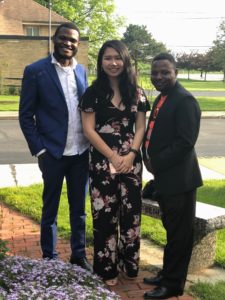
As the sole Malaysian at the wedding, I received a few inquiries about my country and some requests for photos.
The evening started off with music and greetings from the two emcees, who spoke English and Swahili. A traditional African wedding ceremony is known as a “dot”, where they exchange dowries and get to know each other’s families better. The emcees invited a representative from each side of the family up to the front, where they began sharing about their families.
As upbeat music started playing, all heads turned to the back of the room. The groom’s younger family members danced into the room while holding gifts such as woven baskets, rice, and cooking oil. It was an entire process, and everyone knew their roles. They handed some gifts over to the bride’s aunt, and it was a moment of anticipation as she took them to her table and inspected them one by one. The crowd loudly cheered every time she returned and deemed the gifts good enough to be accepted.
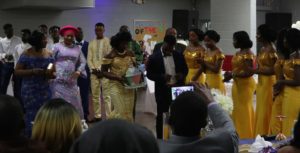
The dowry ceremony is a success, and the bride’s father gives his blessings to the couple, who take an embrace.
My new friends at my table were kind enough to translate, as the English-speaking emcee could not manage to explain everything that was happening. Even so, I wished I could understand everything that was said because there was just so much happy banter throughout the night.
“I’ve brought my ‘cow’, now you bring yours,” an uncle jokingly said to his new family member, as the crowd exploded in laughter. According to my new friend sitting to my right, there were many cow-related jokes made that night. It was all in good fun, and the guests made Farah and I feel so welcomed as they introduced themselves and asked questions about our countries and cultures.
The ceremony came to an end after more than two hours, and a delectable buffet including jollof rice, lamb, and tapioca leaves was served. When we finally left for home, it was on a high note. It’s always an amazing experience to make new friends and witness a new culture, and we are glad it was with Crispin and his beautiful friends and family.
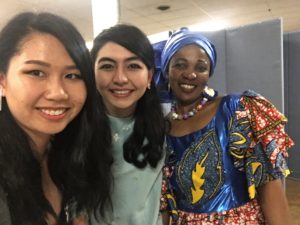
Me, Farah and the chef who helped prepare the excellent buffet spread for the wedding.
Guest Blog: Reflections on My Internship at Global Cleveland
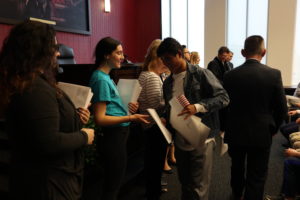
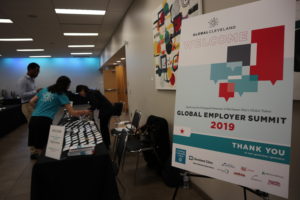
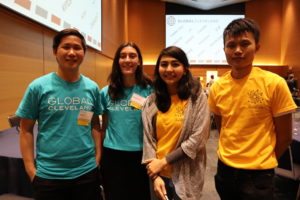
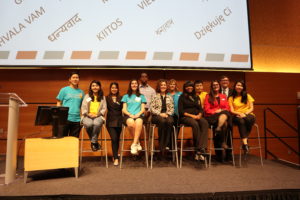
My name is Marta Bono, and for my school’s senior project I was supposed to do an internship for a month wherever I wanted. I decided to contact Global Cleveland because I heard a little bit about what they do with International Newcomers and Displaced Personss, which really interested me since I want to study international relations next year in college. Global Cleveland soon contacted me back and gave me the opportunity to do the internship with them. I was a little bit nervous because I have never had a real job before, so to be exposed to such a professional environment was out of my comfort zone. Nevertheless, since day one, the Global Cleveland staff has integrated me as part of their team and has made me feel welcomed.
I was lucky to be doing this internship during the month of May because so many things happened. Global Cleveland held the first Sister Cities Conference in Cleveland. Then, there was an event with all the board members in which I was allowed to attend. It was very educational for me to hear all the speaker's presentations because now I feel like I have a better understanding on how a business of such high-level works, and the whole purpose of Global Cleveland. Soon after that event, Global Cleveland took me to the courthouse to observe how a naturalization ceremony works. People from every part of the world were seated in the same room in pursuit of the same objective, to become a US citizen. This was such an amazing experience for me to see in person. People were full of relief and emotion to be able to leave their citizenship behind and give up their country, to become an American. I participated in another event called, the Global Employer Summit, also organized by Global Cleveland. I talked to a few people who attended the event, and they all had awesome things to say. The best part though was listening to every speaker’s story and research on why it is so necessary to hire International Newcomers and Displaced Personss. Studies really do prove how companies that hire more International Newcomers and Displaced Personss, who hire international talent, help improve companies’ productivity.
Even though I am an intern, Global Cleveland gave me some highly responsible jobs. For example, Global Cleveland supports an organization called Sister Cities. I was asked to conduct research about the history of each Sister City member. Therefore, I was taken to the beautiful Case Western Reserve Library and was allowed to look through any document about Sister Cities. I have to say that Sister Cities has further made me realize the importance of cultural exchanges in order to improve and expand communities. Since I speak Italian, Global Cleveland gave me the huge responsibility of encouraging Vicenza, our Italian Sister City. I wrote the mayor of Vicenza an email in which his secretary responded. Every time that I accomplished something, the Global Cleveland staff acknowledged it and congratulated me. This behavior encouraged my motivation to do my best here.
In terms of success, Global Cleveland has taught me that behind every successful company there is an incredible team, and above all, great leadership, in this case, conducted by Joe Cimperman. So thank you so much Global Cleveland for being so open to gratefully accept me to work with you for a month, and teaching me a life lesson that I will remember for when I will get my future, professional job.