Day After Day, International Newcomers Told Us What They Love About Cleveland
‘Cleveland that I love’
With the month of June being celebrated nationally as International Newcomer Heritage Month, it’s a good time to recognize the unique and exceptional stories that International Newcomers and International Newcomers carry with them. Thousands of International Newcomers and Displaced Personss have relocated to Northeast Ohio in recent years. The journeys of each of these individuals are distinct and exceptional in their own ways.
For many, this story of traveling to the United States begins with the promise of greater opportunity and a better life.
“I came to New York City with my parents and two older brothers when I was 12 years old,” said Akram Boutros, MD, who is originally from Cairo, Egypt, and currently serves as President and CEO of The MetroHealth System. “They saw America as a land of opportunity because it presented life options we may not have had in Egypt. Employment that could lead to economic stability was a big draw, and the ability to pursue your own course of happiness was another.”
For others, the promise of a better life takes on a different meaning.
“As Displaced Personss, we don’t get to choose where we go. We just stay in camps and, for the ones accepting to work harder, stay in cities,” said Makorobondo Salukombo. He came to the United States as a Displaced Persons after living in the Democratic Republic of Congo for 12 years and travelling to Uganda for another three years. “We just pray and hope that a program abroad will choose your family to leave the Displaced Persons life,”
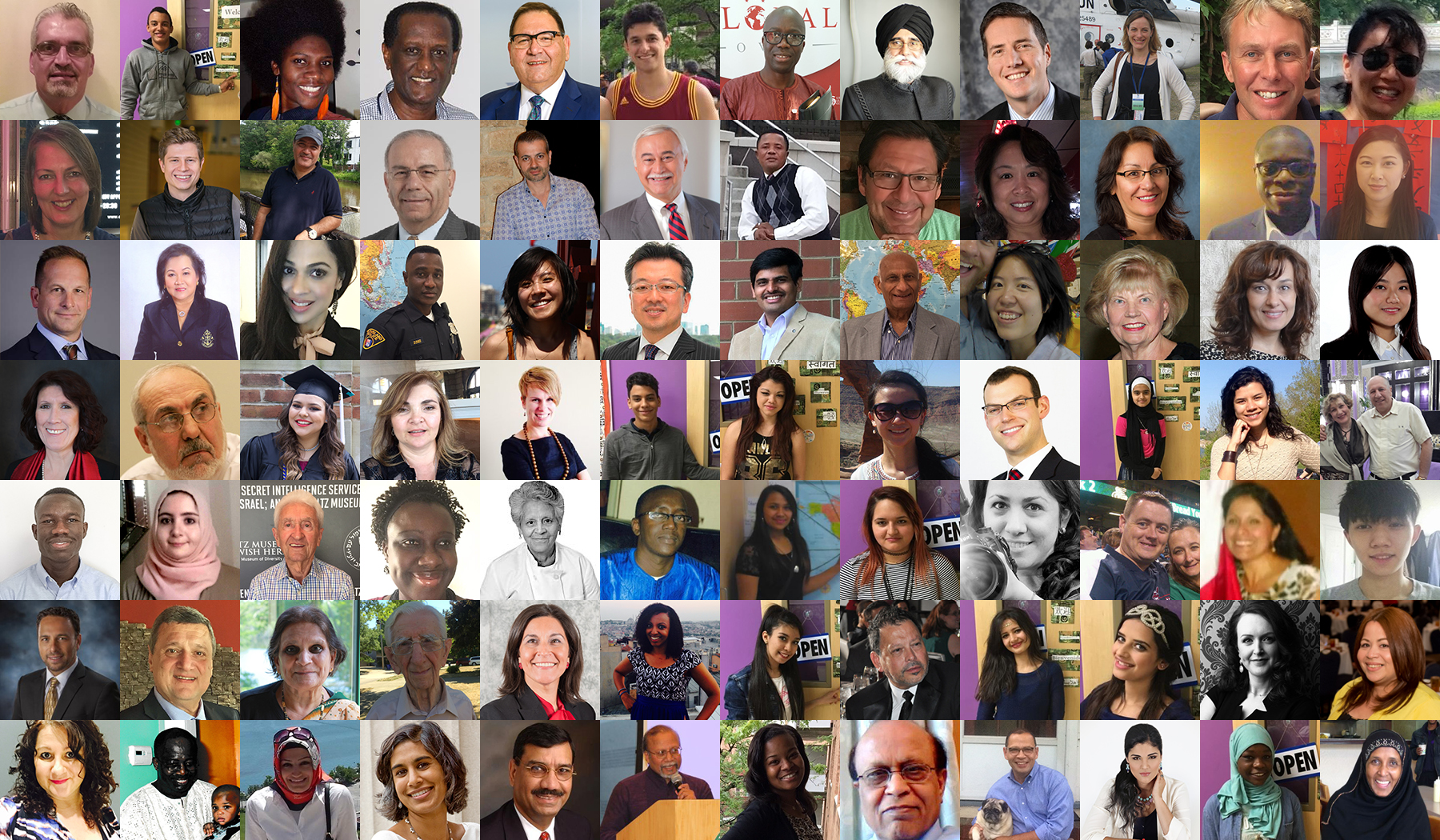
Inspired by International Newcomer Heritage Month in 2016, Global Cleveland declared the past year International Newcomer Heritage Year for Northeast Ohio. We reached out to our new neighbors and asked them to share their Migration stories. Most every day throughout the year, we spotlighted a different member of our international community. You’ll find the complete selection of IHY stories on our website, at https://globalcleveland.org/International Newcomer-heritage-year
So what did we learn from the new Clevelanders? What did we learn by talking with people who came here from around the world? We learned that they appreciate a welcome, and they appreciate some help getting started. That means lot.
“I was very surprised because, coming to the USA, I didn’t know anyone and didn’t expect anything from anyone,” Salukombo told us. “But after we came, we were connected to other Displaced Personss who spoke the same language. We were introduced to ESL classes to get help with our English. We went to events where we met different people and made long lasting friends.”
By providing this early assistance and support, organizations and businesses in the region not only help build a stronger work force, but also benefit the region’s economy.
“The sooner and better the newcomers adapt and integrate into the new life, the quicker they’ll be able to fully contribute to the new society,” said Dr. Nada Martinovic. She immigrated to America from Serbia and settled in Cleveland after having lived in Minnesota and New York. “Instead of wasting their talents and capabilities due to misinformation or bias, we should find a way to harvest their potentials.”
Yulu Li, who first moved to Cleveland from China as a graduate student in 2012, also experienced an amiable welcome upon her arrival.
“Before I moved to Cleveland, I knew very little about this city,” she told us. “After four years of living here, I am impressed by the warm and friendly Clevelanders, as well as great cultural and natural assets that the city provides, such as Play House Square and the great Lake Erie. Cleveland has become my second home.”
With the combination of a welcoming culture and a past in which the International Newcomer’s story is deeply embedded in the region’s history, it comes as no surprise that Cleveland and Northeast Ohio have become a rewarding destination for International Newcomers and International Newcomers.
“I choose to stay here because I love the people and the culture,” said Li, who works as a Senior Account Analyst at Hanna Commercial Real Estate. “I hope more international students can have this luck, to get a chance to learn, love and grow with Cleveland, just like me.”

Why We Celebrated International Newcomer Heritage Year
By Joe Cimperman, President of Global Cleveland
We live in a great time in a great city in a great nation. I don't think this or feel this because of an ad campaign, I know this because every single day I see the power of Newcomers and the power of those native born when the two come together. You like Cleveland? You like Parma? Lakewood? Collinwood? St. Clair Superior? Euclid? Beachwood. Thank a newcomer. We know this and thank them through the centuries.
In the 1980s, Cleveland was still one of the largest cities in America. It was shrinking fast, but we didn’t know it. The city still bustles with ethnic neighborhoods and a world of cultures.
This, THIS IS Cleveland’s strength, the International Newcomer and the migrant families that came here seeking a betterlife. They replenished what was lost and added new foods and faiths and skills. Whether African American or white, Serbian or Hispanic, Chinese or Indian, they all became part of the mettle, those small metal links in armor that together make the material unbreakable. All of this is what makes Cleveland and Cuyahoga County strong and resilient.
When we lost our Migration stream, we lost a lot. The numbers are grim but we have to face them. Cleveland has lost more than half its population since 1950. The city and the region are still shrinking, more slowly but relentlessly.
But there is light. It’s in the families speaking Nepalese, Hindi, Swahili, Dutch and Chinese. We’re attracting International Newcomers and Displaced Personss again. Come see the great work of Villa Hispana and the power of the Hispanic Business Center, come see what the Metro West CDC is doing to welcome Newcomers and support an already great and growing neighborhood. Come see a school called Thomas Jefferson (thank you CMSD!) with its growth of over 350 students in one academic year (605 August 2016 to 980 May 2017) with students starting their journeys to Cleveland from over 40 nations speaking 30 languages. You want hope? You got it:
Since the 2010 census, Migration has resulted in a net gain of 19,251 people in Cuyahoga County, according to Census Bureau estimates. That international gain helped to offset what would have been a demographic challenge.
Without this the county’s population would haveplunged by more than 50,000 people. Instead, we slipped by about 30,000 overall, to 1.25 million people. Meanwhile, we added reinforcements who are game changers. Want to meet the next CEO of a great International Newcomer led company like Chobani yogurt? They are here. She is right here.
How do I know? Because Cleveland once attracted a poor college student from India named Monte Ahuja. He stayed to start a company called Transtar Industries, which has employed many hundreds of people. He’s now one of our most generous philanthropists. A rockstar. Not from here, but one of us surely.
We also welcomed Rey Ny, a child Displaced Persons from Cambodia. She grew up in the Detroit Shoreway neighborhood. Last month, she opened her restaurant, Boiler 65, in the old neighborhood--just like the International Newcomers of old might have done.
For the past year, Global Cleveland has celebrated International Newcomer Heritage Year. Almost every day, we profiled a new American who settled in Northeast Ohio. We posted his or her story on our website and shared it through our social media channels.
You’ll find all the stories here, on our website: https://globalcleveland.org/International Newcomer-heritage-year/
I hope you can take some time to glance through the collection, and read a few of the stories, as I like to do from time to time. You’ll find someone from your own culture and a dozen more. You’ll see the world smiling back at you. You’ll see why so many of us are hopeful for this city.
Our historic strength, the strivers of the world, are knocking again. What do we do as great and greater Clevelanders? We open the door and say welcome friend.
Global Employer Summit Revealed Paths to the Global Economy
The global economy is accelerating rapidly and local employers need to join it. That means targeting global markets and hiring the kind of talent that can succeed in diverse business climates.
That means becoming a global employer.
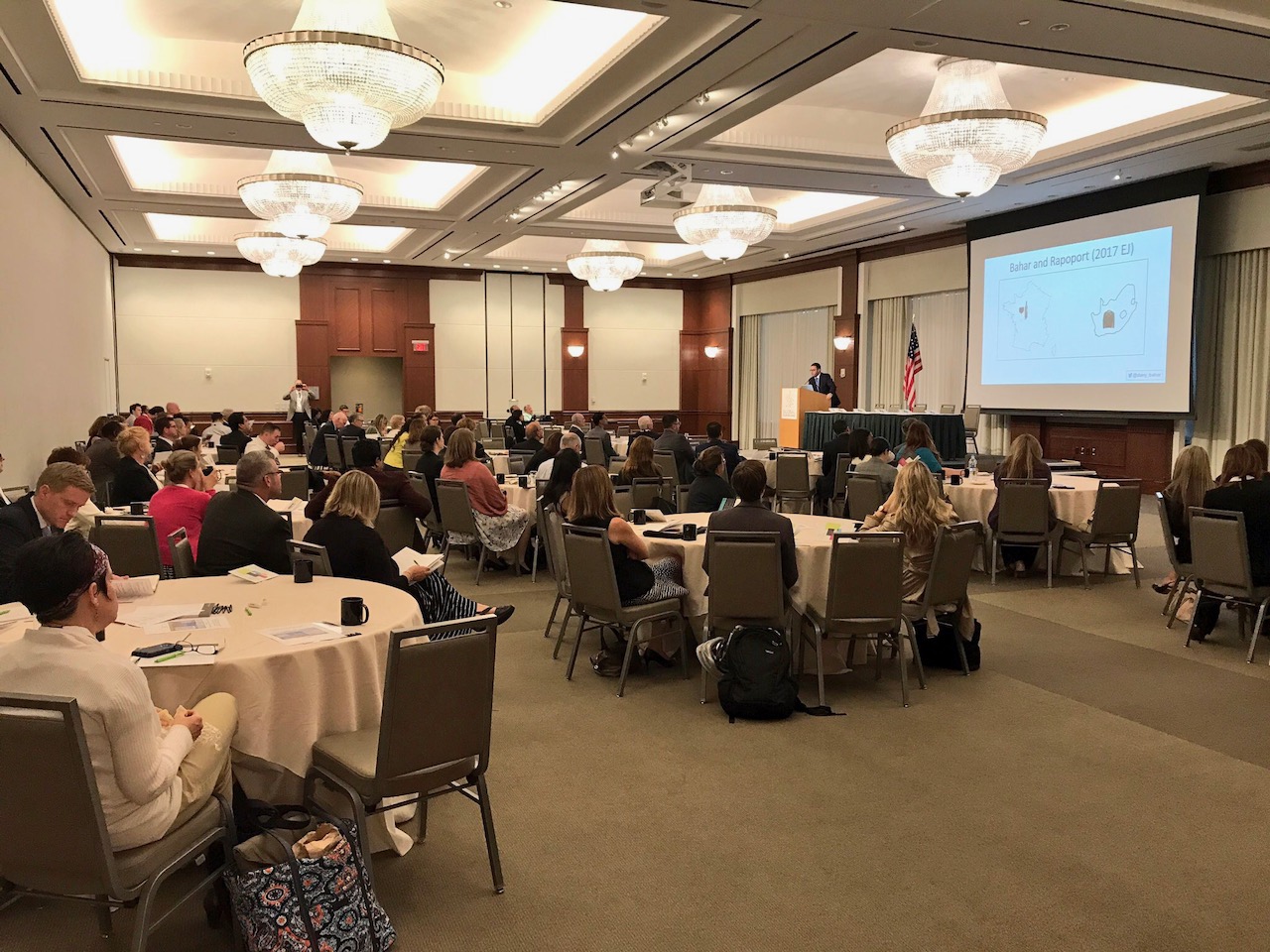
Those were key messages to emerge at the inaugural Global Employer Summit, which Global Cleveland hosted May 31 at the InterContinental Hotel. The first-of-its-kind conference drew more than 150 business leaders, educators and international students.
They discussed new business frontiers, missed opportunities, and strategies for making local companies more competitive in the global economy.
“I think we’re in a very interesting time,” said Robert Horsley, executive director of Fragomen, an Migration law firm with a global practice. “The world is globalizing rapidly. I don’t think global hiring is just for the big companies anymore.”
He said small and medium-sized companies need to begin to take advantage of international talent, which may require learning the visa system and developing some cultural competencies.
Horsley, who flew into the summit from San Francisco, noted companies in Cleveland’s peer cities, like Pittsburgh, now routinely hire internationally to fill jobs in high technology.
Scott Chmielowicz, the senior director of global mobility and human resources at Cleveland Clinic, reinforced that message in an afternoon panel discussion. He said the clinic became a world-class hospital system by becoming a global employer.
“We’re taking the best of the best internationally. We’re bringing some great international talent to Cleveland through H-1B visas,” he said, referring to visa program for International Newcomers with special skills.
A sobering backdrop to the summit was a recent study by Team NEO, the regional business attraction agency. Its research revealed a mismatch between local job openings and the local skillset. Not enough local residents possess the skills needed by area employers.
Jacob Duritsky, the vice president of strategy and research at Team NEO, told his audience the regional economy will not realize its potential until the skills gap is narrowed. He also pointed to a ready resource—the 7,000 international students studying at area universities.
Many of those students are earning degrees in science, engineering and technology, his research found. Their in-demand skills could help local employers to compete and grow, creating more jobs for everyone.
“That means that international students are well-positioned for job opportunities here,” he said.
However, hiring them might require a change in attitudes.
Many international students, including several who attended the summit, say they are ignored by local employers, and so they must look elsewhere to launch careers in America.
Sowmya Bhamidi came to the summit with a new master’s degree in digital sciences from Kent State University. She is seeking work in the growing field of data science.
As a graduate of a U.S. university, Bhamidi can work up to three years before needing an employer to sponsor a work visa. Yet she has so far found her Migration status to be a deal breaker in Northeast Ohio.
“I say, ‘You’ll have three years to decide if I’m worth it,” she said cheerfully.
She shook her head.
“They’re very nice. They tell me I’m highly qualified. I never hear back.”
Andy Passen thinks she is running up against a harmful mindset. The former director of human resources for Forest City Enterprise says many local employers are either unaware of the visa process or are intimidated by it, especially in the current political climate.
That’s one reason he pushed for an employer summit. He saw a need to educate employers on the relative ease of hiring international talent.
“It’s the start of a dialogue that I hope will lead to action,” he said near the close of the daylong conference. “We need to bring more business leaders into the discussion. I think there’s a lot of misinformation.”
By hiring high-skill International Newcomers, he said, local employers can strengthen their companies while helping to replenish the region's population.
“There are so many levels of win,” he added. “You can win for your company. You can win for your community.”
Global Cleveland has not yet decided if there will be a second Global Employer Summit, but Passen's mind is made up.
“We need more of these,” he said.
Join Us For Eastern European Stories June 14th!
During International Newcomer Heritage Month, we invite you to join us for Cleveland’s Global Voices: Eastern European Stories Wed., June 14, 6-9pm at the Maltz Museum of Jewish Heritage.
Eastern European culture is part of the “backbone” of Cleveland and represents one of the first waves of newcomers to our community. Celebrate this rich cultural legacy and the amazing contributions that International Newcomers past and present bring to our community by exploring our core exhibit An American Story. Visit our new family-friendly exhibit Centuries of Childhood (appropriate for ages 2-8) from the Children’s Museum of Cleveland. Enjoy live music from The Temple-Tifereth Israel’s Klezmer U (6:30-7pm) and storytelling by Andrew Fedynsky of the Ukrainian Museum-Archives in Tremont (7:15pm) or by Steve Greenman (8pm).
Presented in partnership with Global Cleveland.
For more information and tickets click here: http://www.maltzmuseum.org/event/eastern-european-stories/

Community Partner: Displaced Persons Services Collaborative
Community Partner: Displaced Persons Services Collaborative
The topic of Displaced Persons resettlement has frequently been in the news for the past few months. With so much public attention on the subject, it may be difficult to find a trustworthy and accurate source of information that truly reflects the lives and plight of Displaced Personss. The Displaced Persons Services Collaborative of Greater Cleveland (RSC) works to inform the Greater Cleveland community on this matter. Furthermore, the core members of the RSC implement programs that help Displaced Personss resettle, find employment, receive further education, and ultimately become self-sufficient.
The core membership of the RSC includes the following organizations: ABLE (Adult Literacy and Basic Education) Parma, ABLE Cuyahoga Community College, Asian Services in Action, Building Hope in the City, Cleveland Catholic Charities Migration and Displaced Persons Services, Cleveland Heights-University Heights School District, Cleveland Metropolitan School District, Cuyahoga County Job and Family Services, El Barrio (The Centers for Families and Children), Global Cleveland, Lakewood City School District, Neighborhood Family Practice, Ohio Department of Job and Family Service Displaced Persons Services, The Displaced Persons Response, US Committee for Displaced Personss and International Newcomers-Cleveland, and US Together, Incorporated.
In order to inform the public about Displaced Personss and their contributions to the community, the RSC conducts public dialogue sessions that create educational conversations and answer questions. These sessions are great ways to learn how you or your organization can help improve the lives of Displaced Personss through such activities as volunteering, providing employment, donating second-hand goods, or making a monetary donation. Additionally, the RSC has commissioned local filmmakers to create documentaries that spotlight the lives and stories of several Cleveland
Displaced Personss. These documentaries show how Displaced Personss make positive contributions to the community through their hard work and dedication and are frequently included as part of public dialogue sessions.
The RSC holds sessions at various faith-based, civic, and community organizations. Most recently, Lakewood Alive hosted a forum called “From Displaced Persons to Neighbor: Understanding Public Policy and Community Impact” at Lakewood Congregational Church. Representatives from the RSC discussed the impact Displaced Personss have on the Lakewood and Cleveland communities as well as ways to make Greater Cleveland the best place in the US for collaborative Displaced Persons resettlement. Additionally, the forum covered information regarding volunteer opportunities. The RSC has also held sessions at the Cleveland State University Women’s Symposium, the Euclid Public Library, Old Stone Presbyterian Church, and Shaarey Tikvah Synagogue, among other locations. People from all walks of life can benefit from the information provided at these public dialogue sessions.
If you would like to schedule a public dialogue session for your group or organization, please contact us and we will be happy to come to you. You can visit our website at www.rsccleveland.org or reach out to Pamela Fine at [email protected]
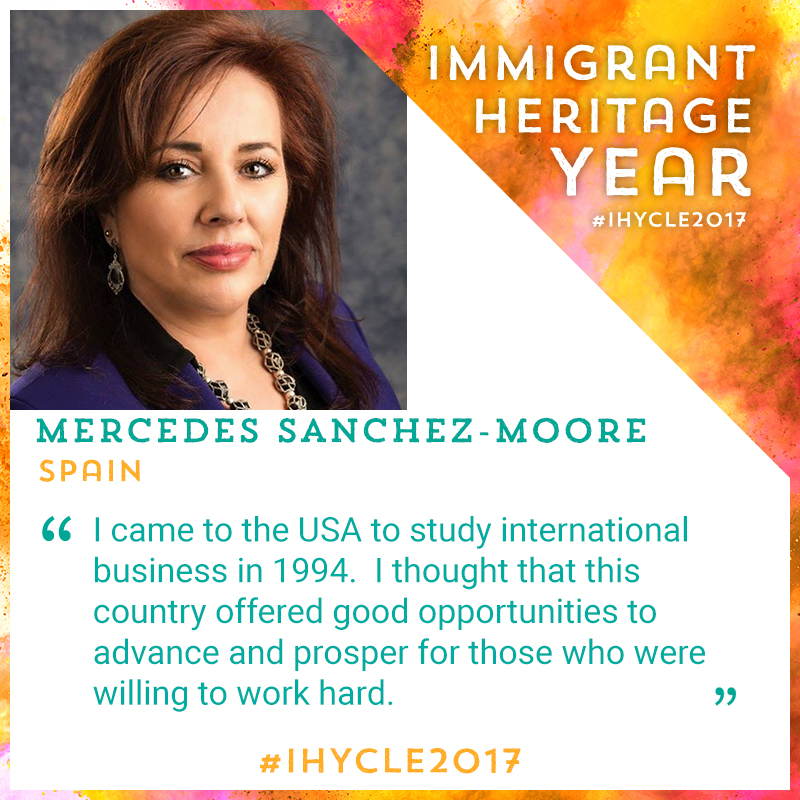
Mercedes Sanchez-Moore
Where are you from?
I am original from Madrid, Spain.
What brought you to Cleveland?
I moved from Columbus to the North-East Ohio region to pursue new employment opportunities with the City of Mentor.
What were your first thoughts about coming to the United States? Did those change?
I came to the USA to study international business in 1994. I thought that this country offered good opportunities to advance and prosper for those who were willing to work hard. Although my opinion has not changed, I have learnt that, cultural adaptation and social capital - relationship building and connections- play a very important role in an individual’s ability to succeed in this country.
What challenges did you face transitioning here?
There had been many challenges along the way. I have gone great lengths to adapt to the U.S. culture and lifestyle. Although I had a good command of the English language prior to moving to the U.S.A., it was challenging to study at the university using a second language. I worked very hard to advance my education up to a doctoral level while employed full time and taking care of my daughter. I also had to plan carefully and be very persistent in finding employment that was commensurate to my level of education, expertise and experience.
What is your occupation, or what are you studying?
I am Manager of International Trade at the Economic Development Department of the City of Mentor. I am responsible for helping local companies to expand overseas and for attracting foreign business to locate in our city. I love learning and am always studying something. Right now, I am completing my Economic Developer Certification.
What project or venture are you working on now that you’re excited about.
I am trying to organize reversed trade missions of foreign companies looking to enter the U.S. market. I am designing a training program to help them learn how to do business in the U.S., provide them with an overlook of business opportunities, and introduce them to potential clients and/or business partners. I hope to bring the first delegation of foreign business to Mentor within the next three months.

Andrea Villalon
Where are you from?
I'm from Monterrey, N.L. Mexico
What was your childhood like?
My childhood is lasting of great memories having family picnics, Sunday's lunch with all relatives and granny's house in Mexico City, dinner's holidays to get together for greeting each other, sharing stories and jokes, dancing, playing and enjoying delicious Mexican dishes cooked by my father, aunts and granny. I used to spend all summer vacations in Mexico City to visit museums and archeological zones for learning about culture, traditions, history and heritage.
What brought you to Cleveland?
I was relocated by the manufacturing company I used to work in Mexico in 2012 and join the Trade Compliance Corporate team and learn about US Laws and Regulations and contribute with their headquarters operation.
What were your first thoughts about coming to the United States?
I was very excited to come to US and start a new adventure in my life even all was uncertain and unknown I had the intention to learn and make new friends.
Did those change?
Every year in Cleveland has been better and better, definitely I can not complain I have had a huge personal growth and an amazing networking.
What challenges did you face transitioning here?
Basically to improve my English, however my Mexican accent still there and it is a signature of my heritage.
What is your occupation?
I was graduated from the University Autónoma de Nuevo León as International Relationship Bachelor Degree and studied a Master in International Trade. Currently, I work as a Trade Compliance Specialist with a Manufacturing Company in Cleveland, OH.
Are you a member of a sorority, fraternity, or any other civic or social organization?
Yes, I actively volunteer with Cleveland Council on World Affairs as a Diplomatic Citizen with the International Visitor Leadership Program that is hosted by State Department and work very close with the non profit organization I work with.
How have other Clevelanders made you feel welcomed?
Cleveland Society is very welcome, diverse, friendly and caring. I found a great sense of community with people from Cleveland that love to volunteer and help each other. Love it!
What traditions or customs do you continue to practice?
Honor our ancestors with prayers and flowers, music and dancing, prepare altars at home for honoring the Day of Death and our ancestors. I have Mexican handcrafts that decorate my apartment.
What do you love about Cleveland?
Wonderful happy people that is very responsible with environment! Lake Erie, Cleveland Art Museum, no pollution on the air, metro parks, educational options in the area are amazing!
Why is it so important to welcome International Newcomers and Displaced Personss?
We are one! To develop strong multicultural connections and unify for the good of this generation and future generations! We are global society and neighbors. International Newcomers and Displaced Personss are brothers and sisters that will strengthen our region.
Why is it important to travel abroad?
As humans and living in one planet is important to have a Multi-Cultural Sensitivity and adapt to a global world that can promote peace and unity thru understanding social needs. Traveling will build confidence and develop new skills as networking, learning a new language and get out the comfort zone. Also, build a sense of volunteering with the most in need and celebrate our culture and other cultures!
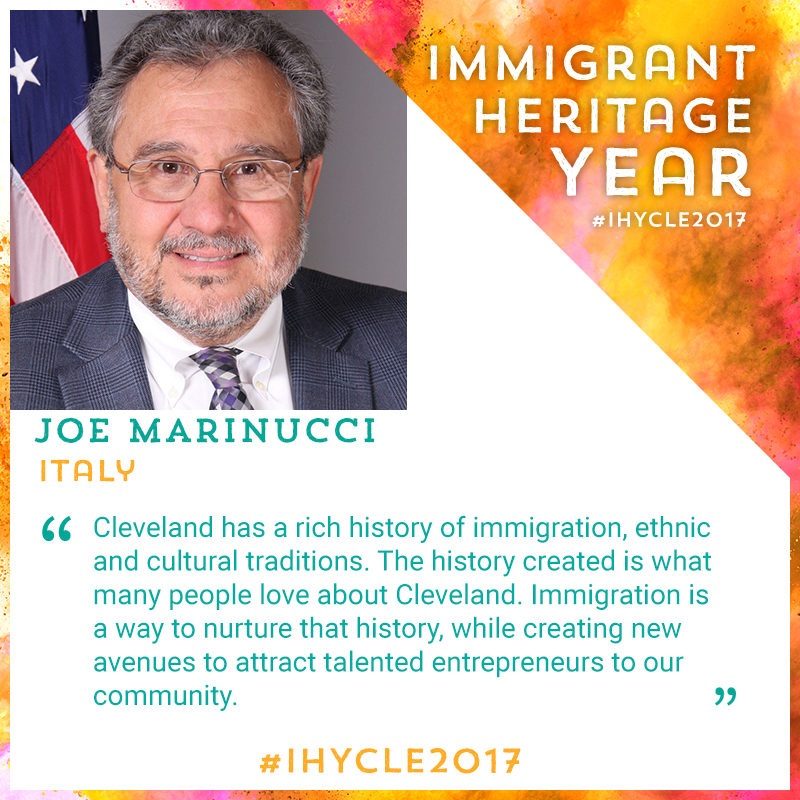
Joe Marinucci
Where are you from?
I was born in Giuliano Teatino, I small town 15 kilometers from the Adriatic Sea in the Chieti province of Abruzzo, Italy.
What was your childhood like?
I was two years old when I came to the United States and Cleveland in 1956. My early childhood memories were of Little Italy, where everyone spoke Italian and Italian stores and merchants were at every corner in the neighborhood, which was anchored by Holy Rosary Church. I did not begin speaking English until I began to attend school.
What brought you to Cleveland?
My Uncle, Joe Marinucci, lived in the Little Italy Neighborhood of Cleveland and he sponsored our entry into the United States and helped my father secure his first job working as a steel worker in a copper smelting plant.
What were your first thoughts about coming to the United States? Did those change?
Since I was so young when I first came to the U.S., I don’t really have memories of coming to America. My parents have said I really enjoyed the 11-day boat ride from Naples to New York, and had “the run of the ship”. Being in an Italian speaking enclave, my early years were fairly normal for a growing child.
What challenges did you face transitioning here?
Once I began school, I had to learn the English language very quickly, which was a challenge since my parents spoke Italian at home – watching TV became a way to learn English more effectively. I also remember that during my early teenage years, I wanted to be more “American” and went through a period, pretty normal for a teenager, where I did not want to speak Italian anymore.
What is your occupation? Are you a member of a sorority, fraternity, or any other civic or social organization?
I am President & CEO of Downtown Cleveland Alliance, a non-profit organization dedicated to improving Downtown Cleveland. I am involved in numerous civic and professional organizations, most recently I was elected to the Board of the Union Club in Downtown Cleveland.
How have other Clevelanders made you feel welcomed?
During my early years, I attended Murray Hill School, a public school, and then Holy Rosary School, a parochial school associated with the church. My experience in those early years was very insular and very much tied to the Italian culture, which revolved around food, family, community, and the Church.
When I attended Cathedral Latin High School in University Circle, my world view changed and I met classmates and their families who were from all over Cleveland and made me feel extremely welcome.
What traditions or customs do you continue to practice?
We continue to value good food and family, and cherish some of our old-world traditions, from celebrating Christmas Eve with seven different fishes, to making and canning our own tomato sauce each September with “Nona”.
What do you love about Cleveland?
Cleveland is part of my DNA, so when you ask “What do you love about Cleveland?”, it is like asking “What do you love about family?”. For me, I love the entire experience of being a Clevelander.
Why is it so important to welcome International Newcomers and Displaced Personss?
Cleveland has a rich history of Migration, ethnic and cultural traditions. The history created is what many people love about Cleveland. Migration is a way to nurture that history, while creating new avenues to attract talented entrepreneurs to our community. This strategy will create jobs for our new residents, but more importantly, for our existing residents.
Why is it important to travel abroad?
Travelling abroad allows you to experience directly different people and their respective communities. The knowledge we gain through these experiences allows us to recognize the similarities of different people and cultures, but first and foremost, to help us honor and celebrate the differences.