Flashstarts And Global Cleveland Announced Strategic Partnership
Cleveland, Ohio - Flashstarts, a startup accelerator and venture fund focused on unique and disruptive uses of software and technology, today announced a new strategic partnership with Global Cleveland. The partnership will combine Flashstarts’ expertise in startup and innovation with Global Cleveland’s interest in having more talented global entrepreneurs succeed in Cleveland, and to deliver solutions for international entrepreneurs who are struggling with their Migration status.
The partnership between Flashstarts and Global Cleveland will mark the beginning of partnerships of regional organizations and universities with Flashstarts who come together for the same mission: bring and support world-changing startups through enabling International Newcomer founders to locate in the Northeast Ohio. The new partnership will be a stepping stone for setting up a Flashstarts Global Entrepreneur-In-Residence (GEIR) program with local universities in Northeast Ohio.
International entrepreneurs who are interested in Flashstarts Global EIR program in NEO will first apply to the program through Flashstarts. Through a competitive selection process, successful applicants will be selected and form a collaborative partnership with a partner university in exchange for a cap-exempt H-1B visa pathway. International Entrepreneurs will work on campus for 20 hours per week to serve school’s mission, while the remaining 20 hours per week they will work on their startups.
Jessica Whale, Global Cleveland’s Director of Global Talent and Economic Development, says “partnering with Flashstarts to bring more global talent to Cleveland and help more International Newcomer entrepreneurs grow their businesses will be very beneficial to our community. While Global Cleveland seeks to help talented International Newcomers thrive in the region, given current Migration policy, getting proper visa status can be challenging. This program aligns perfectly with Global Cleveland’s vision of transforming Cleveland into an international hub of innovation.”
“As we expand our startup accelerator program, we want to attract more innovative ideas from all around the globe. This program will allow us to draw talent from anywhere in the world” said the CEO of Flashstarts, Charles Stack. Flashstarts has expanded it’s global presence each year and had two startups from outside of U.S. last summer in its new Lab Program.
####
About Flashstarts
Flashstarts is a Cleveland-based business startup accelerator, consultancy and venture fund focused on unique and innovative uses of software and technology. Startups will benefit from Flashstarts’ executive team’s deep expertise in HealthIT, SaaS and Enterprise software. Flashstarts’ rigorous 12-week summer accelerator program is powered by rapid cycles of feedback and iteration, customized guidance from dedicated coaches, and an extensive network of top-tier, experienced mentors. For more information, visitwww.flashstarts.com or follow@Flashstarts on Twitter.
About Global Cleveland
Global Cleveland is a nonprofit organization that welcomes and connects International Newcomers to social and economic opportunities in Cleveland and Cuyahoga County. Global Cleveland views engaging International Newcomers as an ingredient of regional economic development and is positioned to catalyze and launch efforts that will help attract newcomers to the region and support those that are already here. You can learn more about Global Cleveland atglobalcleveland.orgor follow @GlobalCleveland on Twitter.

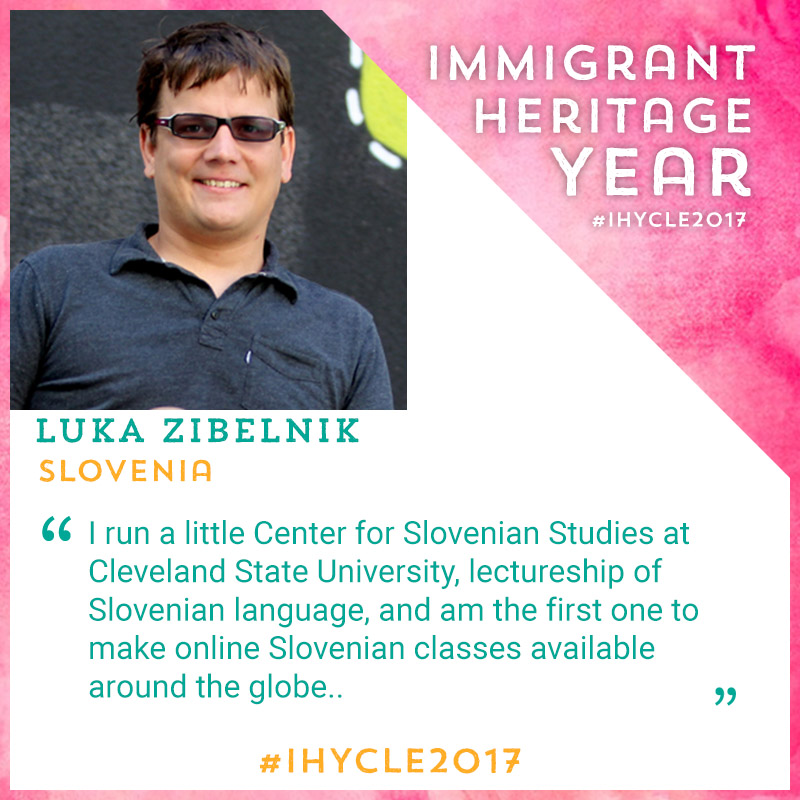
Luka Zibelnik
Where are you from?
I come from a little green country of Slovenia.
What was your childhood like?
It was simple and beautiful. I had a wonderful childhood and adolescence, having a big connected family and lots of friends from all over the place. I still visit them regularly, seeing that deep family love and firm 20-some-years friendships still exist.
What brought you to Cleveland?
I got a job at the Center for Slovene as a second or foreign language at the University of Ljubljana, and was sent to Cleveland to teach Slovenian language at Cleveland State University.
What were your first thoughts about coming to the United States? Did those change?
Whenever you come to a different country and even slightly different culture you experience a cultural shock. First, everything is beautiful, people are the nicest you’ve ever met, all things are good. Then this honeymoon phase passes and you start to doubt your own decision to move. After a while, you get adjusted and acclimate to your host culture. It was no different for me. My first thoughts were: “People are so nice and open here.” After 8 years, I can still say that.
What challenges did you face transitioning here?
The small differences make a big impact. Not being able to be completely myself, as people would see me as a rude person. One of other small adjustments was not being able to look people in the eyes when I was walking on the street without them speaking to me. And, yes, not being able to drink a cold beer on the street because of the open container law.
What is your occupation? Are you a member of a sorority, fraternity, or any other civic or social organization?
I run a little Center for Slovenian Studies at Cleveland State University, lectureship of Slovenian language, and am the first one to make online Slovenian classes available around the globe (www.onlineslovenian.com). Otherwise, I enjoy being in the Slovenian community, where I volunteer at the Slovenian Museum and Archives, bring in speakers, exhibits, poets, musicians, have movie nights, etc. I enjoy being in other ethnic communities as well: Bosnian, Croatian, Jewish, Hungarian, etc.
How have other Clevelanders made you feel welcomed?
I always felt welcome in Cleveland and elsewhere in the US. Complete strangers offered me help, ask me about my well being, and give me an advice when I needed it.
What traditions or customs do you continue to practice?
I still like Fat Tuesday (Mardi Gras) celebrations and I am happy to say that this tradition is very much alive in Cleveland Slovenian community. In the last few years we even have a parade (Kurentovanje).
What do you love about Cleveland?
Its Ethnic diversity. Not only food (even though that is a big plus), but also the different vibes in different neighborhoods, celebrations, languages, music. That is truly different than in any other US city.
Why is it so important to welcome International Newcomers and Displaced Personss?
I shortly answered this question above. However, it is necessary for a culture to grow to have many different influences. America must stay melting pot, and one pot dishes are the best.
Why is it important to travel abroad?
To be able to see yourself and your own culture from a different perspective. Whenever you travel, you see places, but the most important thing is – you learn something about your own individuality and on the other hand, your own culture in the broadest sense of meaning.
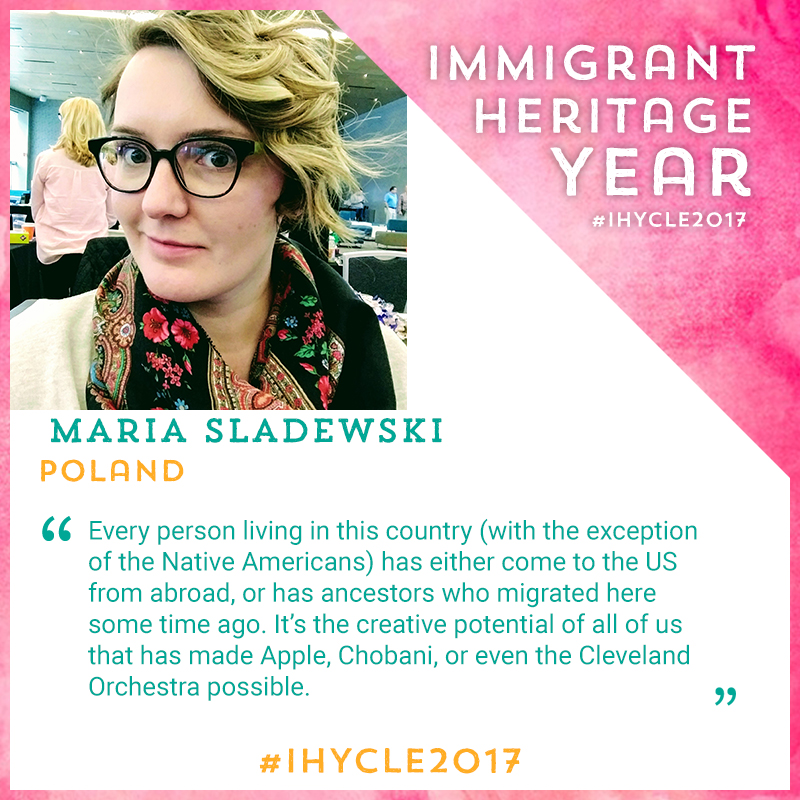
Maria Sladewski
Where are you from?
I’m from Łańcut, Poland.
What was your childhood like?
My childhood was peaceful and fun. It was filled with big and small joys and lots and lots of laughter. I had everything a child could wish for. Every summer, we would go to Croatia with my parents and two older brothers. Not all my friends had all that, so I’m really grateful for what my parents had provided me with.
What brought you to Cleveland?
I fell in love with a Clevelander. We’ve been married for almost four years now.
What were your first thoughts about coming to the United States? Did those change?
I was surprised how poor certain areas of Cleveland were. I’m still amazed at how segregated this city is…
What challenges did you face transitioning here?
I didn’t really face any challenges coming here. I came here on a tourist visa and we got married. The interview at the Migration office was a bit stressful, but I think it’s because of all the stories I’d heard about it. The biggest issue I still struggle with is homesickness. I really miss my family and friends…
What is your occupation? Are you a member of a sorority, fraternity, or any other civic or social organization?
I’m an ESL teacher at a language school at CWRU campus. I also teach Polish at a Saturday Polish school. I teach adult students because I’m not particularly good with children… I write and translate articles for a Polish magazine, ‘Forum’. I also actively participate in the activities of the Polish-American Culture Center.
How have other Clevelanders made you feel welcome?
Clevelanders are very warm and welcoming. I think this is why I’ve gotten used to living here pretty quickly. They have accepted and embraced all my quirks, and, in return, have embraced their "Clevelandiness". I have more friends among young Polish Americans here, but I love going out with my non-Polish friends, too.
What traditions or customs do you continue to practice?
I’m not religious, but I celebrate Christmas and Easter. I celebrate Polish Independence and Constitution Days. I’ve gotten to like Thanksgiving – I’ll do everything for some good Brussel sprouts with bacon…
What do you love about Cleveland?
I really like Tremont and Ohio City (although W25th has gotten to crowded for me). I love how much potential Cleveland has. It’s quite impressive how this city has survived the biggest crisis and is slowly becoming an attractive place for big and small businesses.
Why is it so important to welcome International Newcomers and Displaced Personss?
Every person living in this country (with the exception of the Native Americans) has either come to the US from abroad, or has ancestors who migrated here some time ago. It’s the creative potential of all of us that has made Apple, Chobani, or even the Cleveland Orchestra possible.
Why is it important to travel abroad?
Traveling is fun! Eating crazy local foods and talking to people can bring you so much joy and can broaden your horizons. Even getting lost can turn into an incredible adventure.
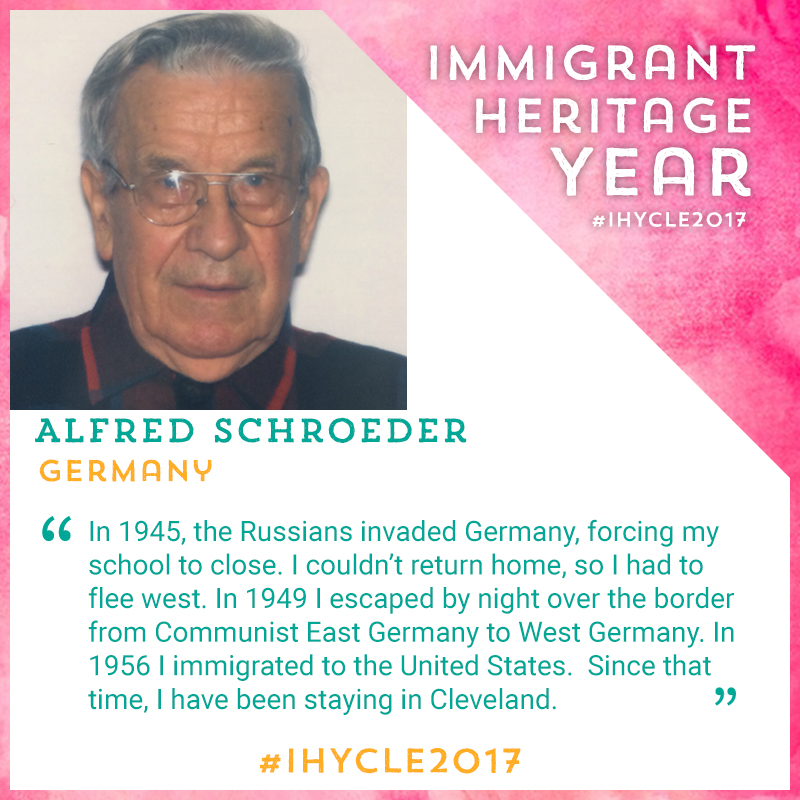
Alfred Schroeder
Where are you from?
I am from Germany.
What was your childhood like?
In Germany, I grew up on a farm and went to school. Between the ages of 14 and 16, I attended a teachers’ school away from home. In 1945, the Russians invaded Germany, forcing the school to close. I couldn’t return home, so I had to flee west. In the middle of February, I ended up in the center of Germany near Magdeburg. As the war ended in 1945 and since no jobs were available I stayed for three years with a family on a farm. This had at least food and shelter for me, as I became an orphan during the war. Then in 1949 I escaped by night over the border from Communist East Germany to West Germany. I then lived on another farm, because I would at least have enough food to live. Shortly thereafter, I entered an apprenticeship as a brick layer. In 1956 I immigrated to the United States. Since that time, I have been staying in Cleveland. When I first came here, I worked as a brick layer. However, I didn’t like it very much, so I decided to return to college to earn my bachelors. I taught in a high school from 1966-1993 and have been retired since.
What brought you to Cleveland?
I came to Cleveland because I had relatives here and because the weather was about the same as what it was in Germany. There was also plenty of work available here. I arrived on a Sunday and had a job by Monday.
What were your first thoughts about coming to the United States? Did those thoughts change?
Whenever I considered starting a new life, I always wanted to go somewhere where there hadn’t been war in a very long time. Germany had recently suffered from World War I and World War II. I figured I could start completely over in the United States.
I have always had a great interest in improving myself. Coming from a different country, I have experienced different cultures. This has enabled me to understand how people think. Since I’ve been in the States, I have visited every state in the Union. I have come to understand how people in the United States view things.
What challenges did you face transitioning here?
It was challenging to adjust to the English language and the customs here. Having lived abroad, I knew a lot about these world events, but I could not communicate any of my thoughts with those around me. This quickly changed, but it was very challenging initially.
What is your occupation?
I have worked on a farm and in construction. My favorite occupation, however, was working as a high school teacher. I taught business courses, German, and photography.
Are you a member of a sorority, fraternity, or any civic, religious or social organizations?
I am a member of the Cleveland Men’s Chorus. I attend church and sing in various choirs around the city.
How have other Clevelanders made you feel welcomed?
The majority of people welcomed me very warmly. There were some instances that were not so pleasant. Some people accused me of taking jobs away from their children. I did my best to disregard these opinions. People had so many good things to say about me, so decided not to pay attention to the people who spoke about me without knowing me.
What traditions or customs do you continue to practice?
I still cook German food and practice German culture. I also observe German holidays whenever possible.
What do you love about Cleveland?
Living in Cleveland comes at a very reasonable price. We have a great symphony, theaters and museums. You get a lot of culture for the price.
Why is it important to welcome International Newcomers and Displaced Personss?
It has been proven that Migration into this country has caused the country to grow quickly and in many areas while other countries have remained stagnant. International Newcomers have made this country. If any citizen goes back three, four, or five generations, they will realize that we are all International Newcomers. Some may not realize this, but they should be reminded of it.
Jergens Shanghai Creates Access for Northeast Ohio Companies to Expand into China
Recently, Global Cleveland spent time with the team at Jergens, Inc. to learn more about their innovative approach to connecting Northeast Ohio to international business opportunities. Bryon Shafer, General Manager of ASG and Jergens Shanghai, oversees the ASG Division of Jergens, Inc. and has operational responsibility for their wholly owned foreign enterprise (WOFE), Jergens Shanghai Commercial Co., Ltd. In our conversation, Bryon shares more details on how Northeast Ohio companies can partner with Jergens to break into the Chinese market:
What are some of the legal aspects that Jergens has gone through in opening an office in Shanghai? Were any aspects of this process unexpected or more difficult than planned?
Our WOFE in China was established in 2006 to grow market share of the Jergens brands into the Chinese market. In 10 years, our business model has grown and evolved to include other US mid-market industrial product manufacturers, providing them access to a proven platform to introduce their brands into the Chinese market.
Compliance is one of our top priorities in China. More specifically, ensuring all our HR and related social benefits for staff are handled properly, as well as customs and other regulations associated with doing business in China. (pricing, invoicing, tax, A/R, A/P, etc.)Compliance is also one of the core commitments we make to partners giving them the comfort of knowing we’re handling the operations correctly, so they can focus on growing their brand in China.
How was the decision made to locate in Shanghai?
Shanghai is the commercial hub of China, centrally located on the East coast, with easy access to ports and commercial flights from the USA. Our first few offices in Shanghai were located in the financial district of PuDong.
Prior to establishing the Jergens WOFE, our first staff were hired in Shanghai through AMT (Association for Manufacturing Technology) and it was a natural progression to establish our first office in Shanghai. As our business grew, in 2014 we signed a long-term lease and moved to an industrial park in the Jinqiao district of PuDong, providing abundant access to office and warehouse space and the ability to expand our brands into China.
How can Cleveland area manufacturers partner with Jergens Shanghai to work in China?
Once a Cleveland area manufacturer has determined it’s time to take their brand to the Chinese market, Jergens can provide them access.
The core services available include:
- HR & payroll
- Accounting & finance
- Logistics & warehousing
- We’ll also soon be adding marketing to the lineup
Our goal is to provide partner brands with a low threshold of entry to the Chinese market that is compliant, customizable, flexible and scalable.
What do Jergens Shanghai colleagues say about their visits to Cleveland?
Jergens Shanghai team members that have the chance to visit Jergens HQ in Cleveland are often impressed. The NBA is extremely popular in China and the Cleveland Cavaliers (and of course LeBron James) are a hit! Everyone wants tickets to a Cav’s game! Jergens hosts visits a few times a year for training, trade shows, or other special events. Of course, they prefer to visit in the spring, summer or fall months over winter.
If you or your organization would like to learn more about opportunities to partner with Jergens Shanghai, contact:
Bryon Shafer
[email protected]
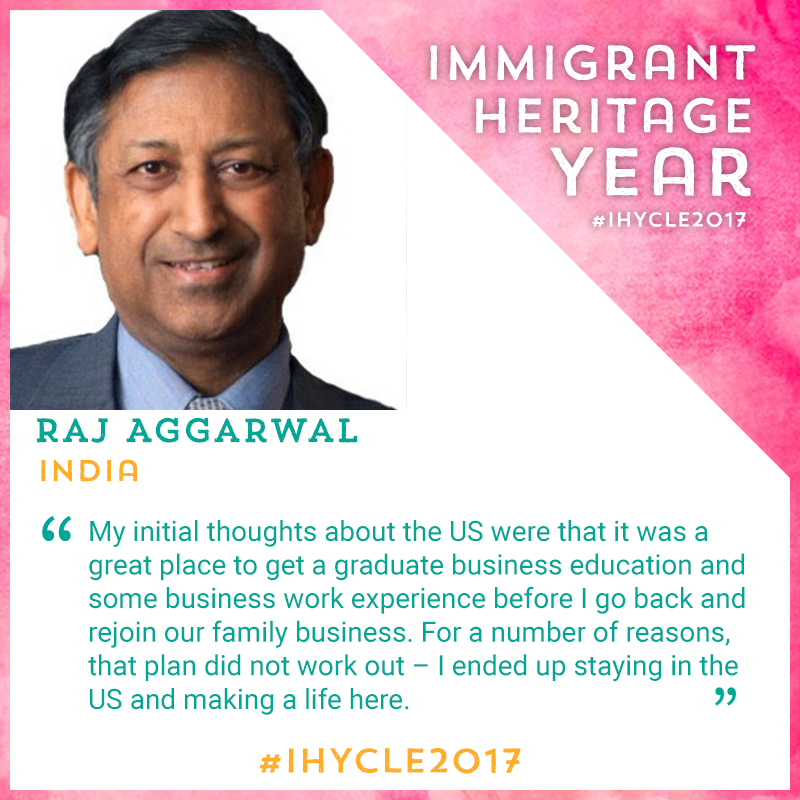
Raj Aggarwal
Born and raised in India until a bit past my teenage years, I came to the Cleveland area (Kent State) to go to graduate school. Kent State was one of four US schools that gave me money and admission to the MBA program – others including some Ivy’s (e.g., Harvard and Wharton) just gave me admission. Besides, the KSU bulletin available to me in New Delhi at that time (1968) showed a beautiful pastoral campus and claimed it was located on the banks of the beautiful Cuyahoga River (it caught fire in 1969, the year after I arrived)!
My childhood in India was a bit unusual in that I grew up in many different cities in Northern and Western India (my engineer father used to run newly built telephone exchanges till the technical bugs were out). Because of linguistic and cultural differences in these towns, my sister and I were home schooled for a time. By the time I reached high school, we had fortunately settled in New Delhi where I also graduated from the famous IIT.
My initial thoughts about the US were that it was a great place to get a graduate business education and some business work experience before I go back and rejoin our family business. For a number of reasons, that plan did not work out – I ended up staying in the US and making a life here. That was very challenging in the beginning.
In the late 1960s, India was a very poor country and in those days, most of us from India arrived with $8 (officially) and a few more dollars (about a $100 in my case) acquired from friends or family or purchased through the black market. In addition, I did have a half assistant ship from KSU. So, one major initial challenge was economic – there were periods when I literally did not have money for food. The second challenge was cultural – I was a stranger in a strange land! The third was linguistic – while I spoke English, my phrases, idioms, accent, and behavior were not at all American. While I fit-in a bit better now, but as they say “you can take the boy out of India, but can’t take India out of the boy”. My family and I continue to celebrate major Indian holidays, and in general, I am proud that I have been able to carry on most of our family traditions.
While it has not all been smooth sailing (after-all my culture and skin color is not consistent with the majority here), over the last 48 years that I have been in the US, I have been extraordinarily fortunate (e.g., even though I could not attend Harvard as a student, I did teach there as a professor). I have been a US citizen since before then 1980s and the Cleveland area has given me many professional and personal opportunities becoming my home town. I recently retired from full time work as an academic/business person and now I have three part-time jobs – as one of them I now work with some Cleveland area companies and civic organizations (with some of them on their boards of directors).
Having spent time in other cities all over the world (from few days to a year or so not counting US or Indian cities), I can say with certainty that Cleveland is a great bargain! The cost of living here is one of the lowest in the world especially when one accounts for the Cleveland area’s cultural and natural assets (no, I am not talking about our weather). It continues to be a great place to raise a family and I am so very glad our daughter grew up here.
Further, Cleveland is mostly a very friendly and accepting city. The kindnesses extended to me by many Cleveland-based strangers, acquaintances, and friends are just too numerous and frequent to mention. As a 2004 graduate of Leadership Cleveland, I know we are a strong city but we still have a lot of challenges and I am trying to do my part to help solve them. Cleveland is clearly a place that has accepted me as a part of the civic fabric even though I still look strange and talk funny.
Because of advanced communication technologies and global exchange of goods and services, distances are shrinking. Global markets are vitally important for our companies and our region. International trade and investment is not a zero-sum game, they actually create new wealth! To engage in such activities successfully, we need to have open minds and cross-cultural competencies.
In building such competencies, like learning to play tennis, book study only scratches the surface. Building cross-cultural competencies is essentially an experiential process. One way to do this is to travel to various overseas cultures and interact with them, but is much more convenient to do the same in your own city. So, it is important that we continue to welcome people from other countries and cultures to Cleveland. Besides, International Newcomers are known to bring economic vitality and entrepreneurship to their communities. I am so glad that organizations like Global Cleveland and the Cleveland Council on World Affairs facilitate cross-cultural interactions in our area.
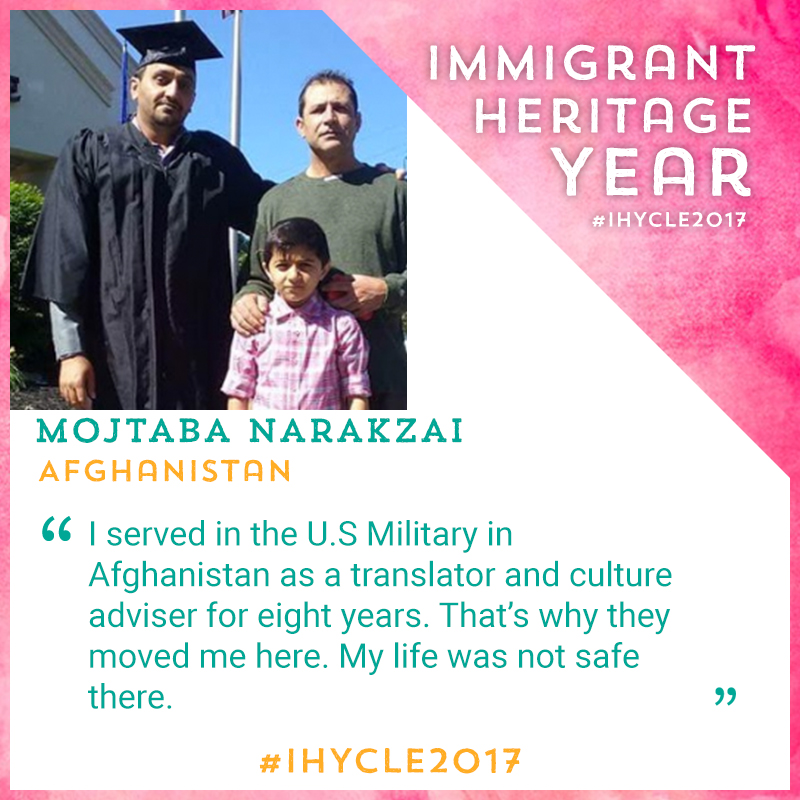
Mojtaba Barakzai
I have been here for two years. I am from Afghanistan and I served in the U.S Military in Afghanistan as a translator and culture adviser for eight years. That’s why they moved me here. My life was not safe there. I have a lot of stories from when I was learning and teaching English. I eventually went to jail for that. I am currently working with auto complete care at Firestone. I went to Ohio Technical College, graduated and I successfully found a job!