International Women’s Day: Women in Power
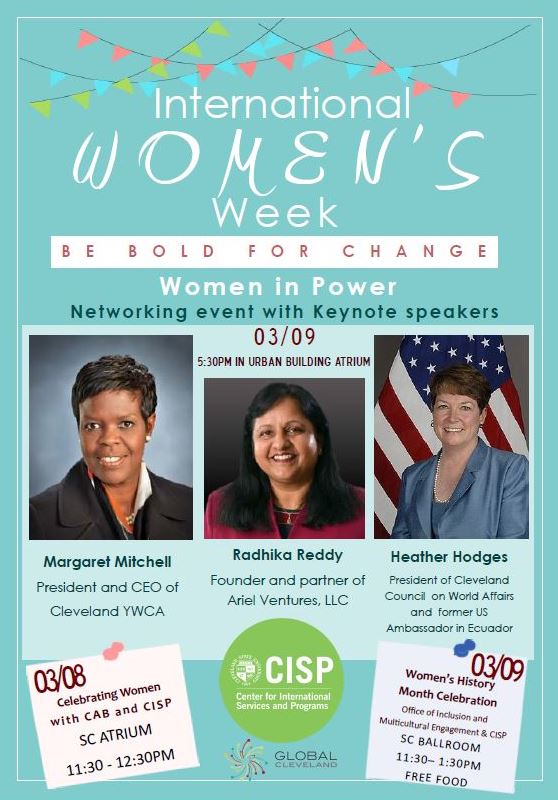
Women in Power will be held on Thursday, March 9th, 2017 in Cleveland State University’s Maxine Goodman Levin College of Urban Affairs atrium at 5:30pm. The event is in honor of International Women’s Day which is celebrated all around the world on March 8th. International Women’s Day has been observed since the early 1900s; it was a time of industrialization, a growing population, and new ideologies. Today, International Women’s Day celebrates the social, economic, cultural, and political achievements of women recently and across history. Specific to 2017, the campaign theme is “Be Bold for Change”.
With the current changes in The United States’ politics and many protests and marches occurring across the country, the CSU Center for International Services and Programs would like to bring forward influential women in Cleveland to speak on campus. The women will speak about their rise into a position of influence and how their experiences have been. The three speakers are: Margaret Mitchell (President and CEO of Cleveland YWCA), Radhika Reddy (Founder and partner of Ariel Ventures, LLC), and Heather Hodges (President of Cleveland Council on World Affairs and former US Ambassador in Ecuador). All three of these women have proven themselves to be leaders in their industry and are inspirational to students.
The CSU Center for International Services and Programs would like to invite Cleveland professionals to hear the three keynote speakers and network with Cleveland State Students after the formal presentations. Thanks go out to Global Cleveland for supporting the event and a fabulous panel of student organizers for making Women in Power possible. For more information please see the CSU International Center’s website here: http://www.csuohio.edu/international/upcoming-eventsworkshops or email the organizer, Rita Kizys, at [email protected]. If you would like to learn about International Women’s Day as a whole there is an informational website online: https://www.internationalwomensday.com/ .

2017 Cleveland Humanities Festival explores timeless (and timely) issue of Migration
Second annual humanities festival unites 25 of Northeast Ohio’s cultural institutions for artistic and educational events from March 15-April 24, including a presentation by Vicente Fox, the former president of Mexico.
The history and contemporary shape of Migration in Northeast Ohio—itself a rich fabric of diverse neighborhoods and cultural traditions—sets the stage for the second annual Cleveland Humanities Festival.
Most of the events—lectures, exhibits, theatrical performances, tours, and films—are free and open to the public, though many require registration at chf.case.edu/events.
“Exile, Migration, deportation, Migration—the history of every nation includes challenges and opportunities caused by the movement of people. Nowhere is this more true than in our own country,” said Peter Knox, director of the Baker-Nord Center for the Humanities at Case Western Reserve University, which is coordinating the festival.
“We hope people think about this topic in new and challenging ways, with the humanities as our gateway,” Knox added.
The opening keynote will be delivered on March 23 by Henry Louis Gates, Jr., host of the PBS program, Finding Your Roots, and history professor at Harvard University.
On April 3, Vicente Fox, former president of Mexico and a sharp critic of President Donald Trump, will discuss Migration reform in a free public address.
“I hope people gain a richer appreciation for how Migration shapes our communities,” said Knox, who holds the university’s Eric and Jane Nord Family Professorship. “That may be a deeper interest in their family background; a sense of sympathy for current Displaced Persons or migrant groups; or perhaps an energized attitude toward helping new members of our communities.”
The festival, which debuted last year, has become an annual fixture in Cleveland, with a new theme each year that engages the public by addressing meaningful issues and pressing concerns.
“The humanities help us understand who we are, what we’ve done and created along the way,” Knox said. “I understand that some will think Migration is a politically charged theme, but we’re not treating it that way, nor are we taking any side of a political question. We’re here to think more deeply about this unmistakable force.”
Highlighted events
- March 24 - Author of A Polish Doctor in the Nazi Camps, Barbara Rylko-Bauer tells her mother’s story of World War II imprisonment to examine how echoes from the past are re-appearing.
- March 25 – New York Times columnist Anand Giridharadas will deliver his A Tale of Two Americas TED Talk.
- March 27 - Pulitzer-Prize winning playwright Ayad Akhtar will discuss the Muslim experience in America.
- March 27 - Who Should Enter the Golden Door: American Migration Policy in Historical Perspective, a lecture by John Grabowski, the Krieger-Mueller Joint Professor in History at Case Western Reserve.
- March 29 - Norwegian composer, and accordionist Frode Haltli teams up with Swedish nyckelharpa virtuoso Emilia Amper for an evening of Scandinavian folk-inspired music.
- March 31- When Away Becomes Home: The Displaced Persons Crisis and Opportunities for Welcome in Northeast Ohio (sponsored by Global Cleveland)
- April 3 –Vicente Fox, former president of Mexico, will emphasize why America must establish sensible pathways for citizenship for undocumented International Newcomers.
- April 5 - International Newcomers in Ohio, Global Cleveland a nonprofit focused on population growth and regional economic development will share five things about newcomers in northeastern Ohio that are engines to our communitys revitalization and greatness
Events take place at Case Western Reserve and at many partner institutions in the region.
Facts and figures
There are 25 Northeast Ohio partners for the 2017 Cleveland Humanities Festival: Migration.
They are: Anisfield-Wolf Book Awards, Apollo’s Fire, Armenian Cultural Organization, the Baker-Nord Center for the Humanities, Books@Work, Cleveland Archaeological Society, Cleveland Cinematheque, Cleveland History Center, Cleveland Institute of Music, Cleveland Museum of Art, Cleveland Museum of Natural History, Cleveland Play House, Cuyahoga Community College, Cuyahoga County Public Library, Dittrick Museum of Medical History, Facing History and Ourselves, Global Cleveland, Kelvin Smith Library, Lake View Cemetery Foundation, Literary Cleveland, Maltz Museum of Jewish Heritage, Montessori High School at University Circle, Museum of Contemporary Art (MOCA) Cleveland, Schubert Center for Child Studies, University Circle Inc., and Wick Poetry Center at Kent State University.
Funding is provided by Ohio Humanities and Cuyahoga Arts & Culture.
The festival is coordinated by the Baker-Nord Center for the Humanities at Case Western Reserve University, which was founded in 1996 with a gift from Eric and Jane Nord. The center supports research and creative endeavors and hosts humanities events around the region.
In 2018, the Cleveland Humanities Festival will focus on health and health care. The inaugural event, in spring 2016, explored the impacts of war.
Case Western Reserve University is one of the country's leading private research institutions. Located in Cleveland, we offer a unique combination of forward-thinking educational opportunities in an inspiring cultural setting. Our leading-edge faculty engage in teaching and research in a collaborative, hands-on environment. Our nationally recognized programs include arts and sciences, dental medicine, engineering, law, management, medicine, nursing and social work. About 5,100 undergraduate and 6,200 graduate students comprise our student body. Visit case.edu to see how Case Western Reserve thinks beyond the possible.
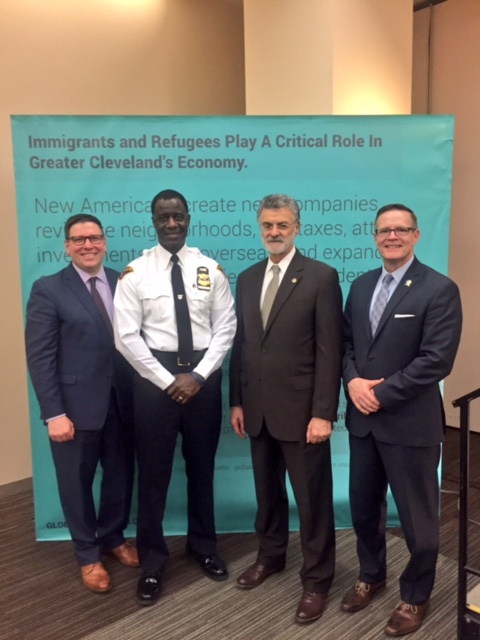
Mayor Jackson, Council President Kelley Convene with Cleveland's International Leaders For Dialogue About Being A Welcoming City
On Wednesday, March 1, Mayor Frank Jackson and Council President Kelley held a gathering with 130 of our greater Cleveland community's international leaders. The meeting was productive in that it transmitted 3 messages:
1. All are welcome here, the Cleveland community has been welcoming to newcomers since 1796. All are still welcome here.
2. The Mayor and the Council President announced with the great support of Legal Aid Society, the Universal Language Access policy in place now at Cleveland City Hall. For those needing to access city services, this will be a great help if English is not a first language.
3. Global Cleveland is committed to supporting all efforts to continue to support, welcome, enhance, and grow our International Newcomers.
While the conversation to action here in Cleveland and Cuyahoga County is real, it's important to realize that the Foreign Relations Chairman, US Senator Bob Corker had similar sentiments when he spoke to the global community in Cleveland this summer.
Senator Corker's words in total are below. May we always be the welcoming city we are.
“I want to congratulate the City of Cleveland and the county. I love listening to the county mayor with the energy he had. I was able to walk yesterday around the city and was most impressed, number one, with the city. And, I have to say, I’ve been to almost every convention over the last 20 to 25 years. I don’t think I’ve been to a place that is more welcoming, nor have I been to a convention that, in spite of what is being said on the media, is one that is more unique and really homespun. There’s good feeling in being here, I’m so impressed with the effort of this organization to reach out to reach out to people of different backgrounds, to understand the importance of having diversity, of having people come to your community that are able to bring skills and knowledge and background that really broaden your community’s ability to function and to produce, and to welcome other people in. Each community has its own way of attempting to move ahead, and I just have to tell you, especially as chairman of the Foreign Relations committee, my hat is off to this entity, Global Cleveland, what you’re doing to bring talented people to your community and your understanding of what that means for the future.
To the ambassadors, please know that all of us who serve, like I do, understand that we have inherited from people who came before us a heritage. We’ve inherited that. And, the fact that 80 ambassadors from around the world would come to the Republican convention, and 80 ambassadors from around the world would go to the Democratic convention to understand what they believe our country’s role in the world is going to be is something that is very humbling to all of us, and we thank you for coming. We thank you for trying to understand the future. We also understand that when our country functions at the highest levels, relative to foreign policy, the world is a better place. I was talking to a couple of ambassadors before I came up here; one whose country I’d been to, one who hadn’t, and I said, ‘You know, y’all are here. This convention is something that’s probably very unique to your country,’ and that reminded me, actually, this convention is very unique to our country, and it is. And, what’s happened in the process, is that more people in our country are focused on what is happening during this election than probably anytime in recent times. But, what all of you know, because all of you are involved in internationalism, you understand that, around the world, more than ever, people are paying attention to this election. They want to understand what the future is going to be.
Now, I don’t know what the outcome of this election is going to be, and therefore, it is very difficult, because the chief executive, our president, plays such a huge role in foreign policy. We play a role, but in our country, obviously, the president determines more fully than anyone else what our country’s role is gonna be. But, what we need to do, and what Cleveland has done such an outstanding job of doing, is we have a responsibility with our citizens to understand the importance of U.S. leadership and involvement around the world. We have four-and-a-half-percent of the world’s population in America. Four-and-a-half percent. And, yet, we have, we participate in twenty-two percent of the world’s gross domestic product. And, the only way that we’re going to continue to better the lives of our own citizens is to ensure that our citizens understand how it important it is for us to be involved in the world, and most of the ambassadors here, they will tell you that ‘Look, when there’s a vacuum in world leadership, someone will step in and lead.’ And, I think most of them, regardless of where they come from, would rather it be the United States that takes that leadership role. I can tell you firsthand that the world is a better place, the world is a better place because of what the United States represents when we take that leadership role in concert with others. So, look, this is a group of very influential people, people that are very knowledgeable, people that have traveled the world, and people that understand what I just said happens to be true. But, in a country like ours, we’ve got a job to do, because what’s happening with people’s concerns about security, with people’s concerns about economic issues, we are going through a period of isolationism where people want to retrench, and that’s the opposite, in my opinion, of what a great nation needs to do. That’s the opposite of what the world needs to have happen.
So, I want to close by, again, thanking Cleveland. Thank you for your broadness of understanding of what having people of different backgrounds and origins means to your community. I want to thank the ambassadors for paying us such a huge honor and being so interested in what is happening, and I want to commit to all of you that I have a privilege of serving as chairman of the Foreign Relations committee, and I’m going to do everything I can, as one senator, to help take the example that is being set in Cleveland around our country and make sure that we play the rightful role that we need to play in this world. Thank you very much.”
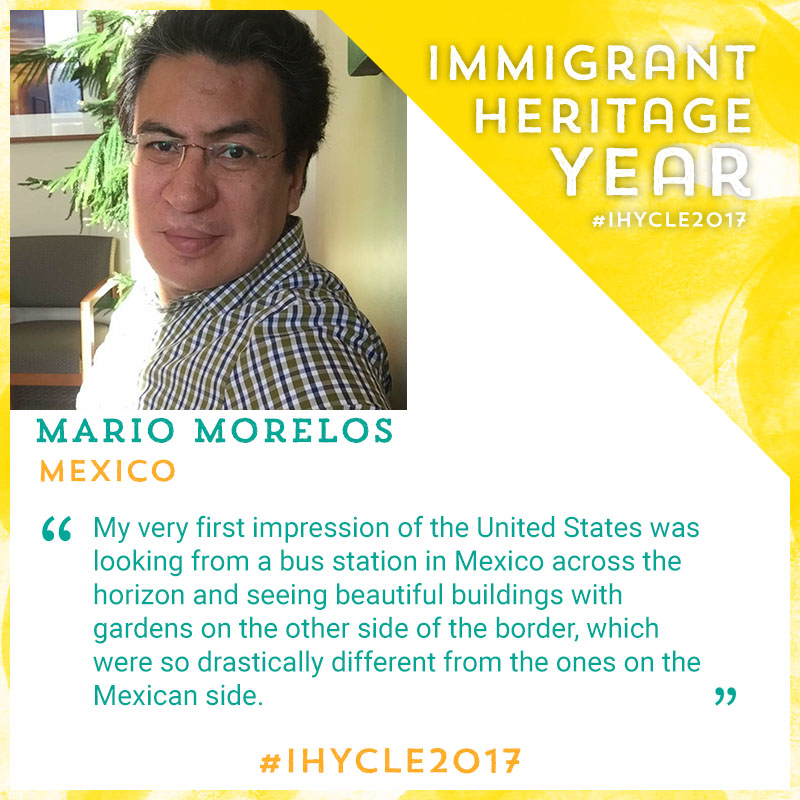
Mario Morelos
Where were you born, and how did you come to Northeast Ohio?
I was born in Mexico City and I came to the U.S. after some of my sisters relocated here and they invited me join them. I am the second youngest of seven children. Years later, I decided to move to Madison, Wisconsin in search of better opportunities and in hopes that I would improve my language skills. My brother had recommended that I look into moving to Madison after spending a summer there. That is how I met my wife, who was a student at the University of Wisconsin. Together we decided to live in Costa Rica in 1998 and in 2000, we moved back up to NE Ohio where she is originally from. This is where we decided to stay and raise our family.
What were your first thoughts about the United States? Did those change?
My very first impression of the United States was looking from a bus station in Mexico across the horizon and seeing beautiful buildings with gardens on the other side of the border, which were so drastically different from the ones on the Mexican side.
Once in the U.S., it seemed to me that people were very refined and formal, maybe because I did not understand English. I assumed this because the U.S. as a country is more developed, organized, and has many rules compared to the chaos of Mexico City. After learning more English, I realized that that is not necessarily the case.
What challenges did you face transitioning here?
Not knowing the language was the biggest barrier, and not understanding the culture and social cues did not help that fact. I often found myself missing friends from back home in Mexico City. Making friends with non-Spanish speakers was a challenge. That said, I knew pushing myself to learn English by conversing with new people would be much more beneficial than trying to surround myself with only Spanish-speaking friends. I made it a goal to gain more knowledge about anything I could to pursue a better life.
How did Localingua get started?
After working for years as a freelancer for a translation agency, I began work as their in-house sales manager before deciding that I really wanted to follow my lifelong dream of starting my own business. Coincidentally, I live right next to one of the leading schools in the country for translation and one of graduates from the program was willing to help me in my endeavors. In 2006, with one laptop and different varieties of translation software, the business began to take form. Soon, I found myself attending networking events and translation association conferences to find our first clients and establish our business.
Are you a member of a sorority, fraternity, or any other civic or social organization?
When I was in college, I was a member of the Latino Student Association and also the Student Economics Organization because that was my major.
Additionally, I participated in events with the Hispanic Chamber of Commerce.
I have been a member of the NEO STC (Northeast Ohio Society for Technical Communication) for a long time, and, together with the PR committee, earned the STC Award of Excellence in Public Relations in the Northeast Ohio Community. I am also a member of the American Translators Association. Both are technical and professional organizations and I am always looking forward to their events in order to network and learn more about the industry.
How has the community made you feel welcomed?
For the first few years, I was a non-traditional full-time student and I really enjoyed it. In addition to working from home and later starting Localingua, I opened a bike shop because I wanted to engage the community and really contribute to it.
I have always felt that I have been welcomed here and I believe that taking an active role in being part of the community has helped that.
What traditions or customs do you continue to practice?
Day of the Dead as been my favorite holiday for as long as I can remember. Between making the traditional foods, listening to the music, and enjoying the colors, I have so many fond memories of this celebration. To this day, it is very important to continue tradition in my house.
I always try to keep up with speaking Spanish, even at work, where I can speak Spanish with all of my employees.
Dancing has been a huge part of my upbringing as well, especially salsa!
What do you love about Cleveland?
Cleveland has great entertainment—music, tourism, restaurants and cultural variety all keep things fresh and exciting. It is a city of true resilience which continues to thrive. I love being able to go downtown to see entertainers, like the late Celia Cruz and Louis CK, with my family we enjoy going to the West Side Market and cheering on the Cavs.
Why is it so important to welcome International Newcomers and Displaced Personss?
We really are a great human resource and we have a lot to offer in the way of diverse experience and a resilience that most Northeast Ohioans share. Turning a blind eye to the full potential of the positive ideas and energy that these people bring could be a huge loss to the community. We provide a richness to the culture by bringing our own personal stories and experiences and truly work to improve our surroundings in pursuit of a better life, which in turn improves the lives of those around us.

Runah Assad
Where are you from?
I was born and raised in Cleveland, Ohio and I am first generation Palestinian American.
What was your childhood like?
My childhood growing up was great! Most of my family lived near me and we would have family gatherings weekly. If there wasn't an occasion, we would make one just to spend time together.
What brought you to Cleveland?
My family first immigrated to Dearborn before settling in Cleveland. My entire family (aunts, uncles, and cousins) decided it had better job opportunities.
What is your occupation? Are you a member of a sorority, fraternity, or any other civic or social organization?
I have my degree in Dental Hygiene, but I currently work for a non-profit organization called Salaam Cleveland that helps Displaced Personss and people within the community that are in need, with the essentials to call Cleveland their home.
How have other Clevelanders made you feel welcomed?
Since wearing the hijab (headscarf), there is often the misconception that I was not born in America. So when asked about my religion and culture by community members, they tend to go out of there way to get to know me as well as my beliefs, which has been a nice surprise. Who knew a piece of cloth worn on my head would be a great conversation starter?!
What traditions or customs do you continue to practice?
Something I love within the Palestinian community in Cleveland is that they try their best to pass down customs and traditions. From our foods like maklouba and kanafa, to our dances like the dabkah, they have stayed intact for many generations. Not only this but to welcome people into your home and make them feel apart of your family is a huge custom that is never neglected.
What do you love about Cleveland?
I have grown to love Cleveland very much through the different communities I have had the opportunity to connect with. Cleveland is a great place especially as people stand united and support each other despite their differences.
Why is it so important to welcome International Newcomers and Displaced Personss?
Although you may not be an International Newcomer or Displaced Persons yourself, someone in your family has been. Coming to a new land can be difficult and scary, because you are leaving everything you have known behind you. If only we could walk in each others shoes... That is why it is important to welcome International Newcomer and Displaced Persons, to let them know they are not alone here and we support them. Not only should that be our communities goal but it is the goal of Salaam Cleveland.
Why is it important to travel abroad?
I have been blessed to travel to a few hispanic countries like Costa Rica, Panama, Belize, and Puerto Rico, as well as a few middle eastern countries, like the Palestine, Jordan, and Saudi Arabia. We are all humans. Sure we have differences, but to experience each others cultures is amazing. To see the ancestry of each land and compare it to your own, you would be surprised with all of the similarities.
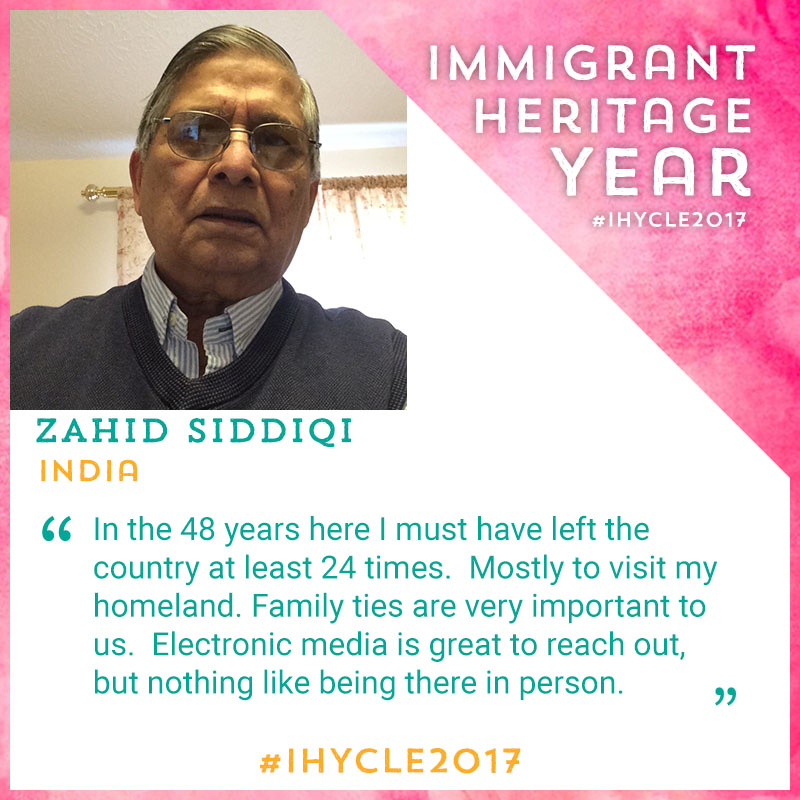
Zahid Siddiqi
Where are you from?
I am from India
What was your childhood like?
A very happy childhood indeed. Nine(9) siblings, caring parents, loads of friends, bunking school, picnics--everything nice.
What brought you to Cleveland?
Ethnic/ religious issues made me leave India. Came to Cleveland because there was someone (a relative) here already.
What were your first thoughts about coming to the United States? Did those change?
I found the life in the US everything I had imagined plus more. Good life, plentiful of everything, work appreciation, jobs etc.
What challenges did you face transitioning here?
I used to be an engineer and found good jobs with supportive people, willing to guide and show the way. The weather was and still is the only challenge. But we get our share of good days--so no complaints.
What is your occupation? Are you a member of a sorority, fraternity, or any other civic or social organization?
I have been retired for 17 years. I serve as an officer on the boards -- India Association, Aligarh Alumni Association (my alma mater), Bazm e Adab Cleveland, Islamic Center of Cleveland, the Displaced Persons Masjid on Detroit Ave.
How have other Clevelanders made you feel welcomed?
Cleveland has been most welcoming in all my 48 years here--no regrets.
What traditions or customs do you continue to practice?
I follow all of our religious and cultural traditions.
What do you love about Cleveland?
The easy life style, access to cultural, educational and medical facilities. Traffic. Opportunities. The ethnic mix of the city and many other etceteras.
Why is it so important to welcome International Newcomers and Displaced Personss?
Being an International Newcomer myself I value the help, the welcome and the guidance I received. Without it would have been so much harder. Displaced Personss are, mostly illiterate, already traumatized and need so much more help.
Why is it important to travel abroad?
In the 48 years here I must have left the country at least 24 times. Mostly to visit my homeland. Family ties are very important to us. Electronic media is great to reach out, but nothing like being there in person.