Citizenship Ceremony Renews Faith and Pride in American Ideals
Global Cleveland counts upon volunteers to perform a number of services, including welcoming new Americans at citizenship ceremonies in federal court. Recently, one of our board members, Doug Bugie, volunteered in this role. Here are his thoughts on the experience.
By Doug Bugie
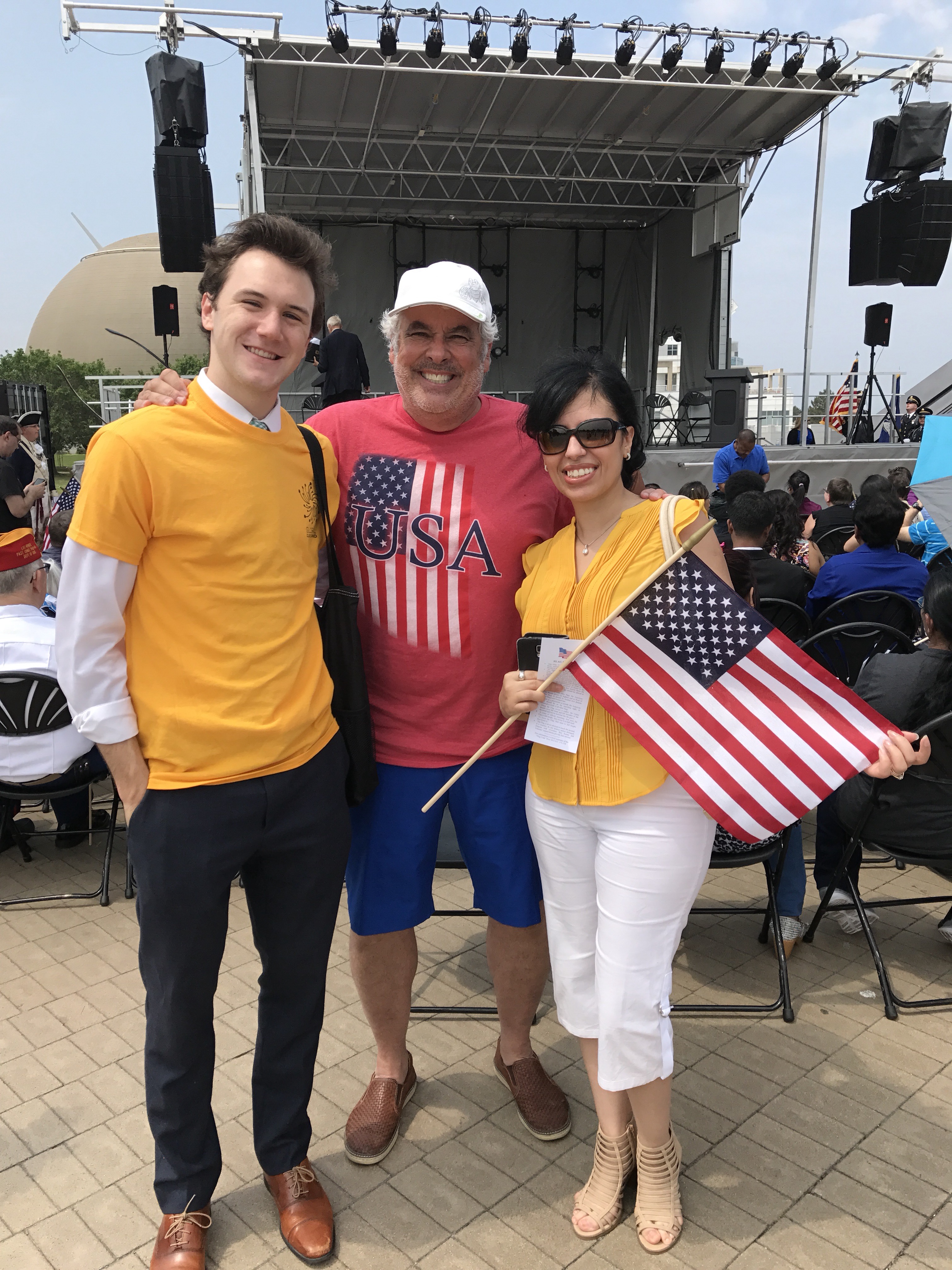
There is an old expression '”Talk the walk or walk the walk.” There’s a big difference between the two. After years of serving on the board of Global Cleveland, I learned that difference by attending a naturalization ceremony, my first. This event commemorated the birth of the U.S. Army and Flag Day at the Rock & Roll Hall of Fame.
It was a beautiful, sunny day and even though concurrent with the terrible shootings at the Congressional baseball game, spirits were high and focused on the future.
I learned and felt firsthand the immense pride and good fortune to be an American, through the eyes and hearts of the 32 people from 20 nations winning US citizenship. And I do emphasize “winning.” America remains a country where people dream about living, of breathing free, and the nation wins with legal Migration. I wish we would allow much more of it.
As U.S. Judge Dan Polster observed that day, “Many new citizens have come from places where freedom of thinking, expression and religion and yes, voting, are under pressure or not permitted.”
They come here emboldened to do great things. As Judge Polster said so eloquently, “Leaving one’s home, family, friends, and way of life” to move to a new country “is the ultimate act of entrepreneurship.”
He is so right. Many International Newcomers continue to invent, invest, create jobs, pay taxes and work so hard as new Americans. A high percentage have gone on to lead Fortune 500 companies.
Who could not be moved by the recent 60 Minutes story on Hamdi Ulukaya, the Turkish International Newcomer who founded Chobani Yogurt, and who has made so many of his employees millionaires? International Newcomer contribution is right and necessary for our spiritual and material health.
I was somewhat surprised I did not know anyone at the ceremony, except Judge Polster. I saw no politicians, no civic leaders. The military was there in a big way and I was comforted to see Courtney Ottrix and a couple of newcomers to GC! In some way, I was relieved too, as the outfit I has on was decidedly rockesque.
This ceremony made me think about the tremendous contributions made by International Newcomers, not just now, but throughout out American history. I saw with my own eyes how much this moment meant to them, for I could see it in their faces. We must never let the notion perish that we are indeed the “shining city on a hill.”
New Americans should assimilate into our culture, values and way of life, even as they preserve and enrich us with their own heritage. The new Americans who spoke that day embraced this point of view.
It swelled my heart with pride to know that we are still the America we know and love. I walked up to Greg Harris, the president of the Rock Hall, and simply said. “It makes you proud and fortunate to be an American, right?”
“Sure does,” he nodded.
It sure does, Greg. It sure does.
If you would like to become a welcome volunteer for Global Cleveland, please visit our volunteer page


Community Partner: The Maltz Museum of Jewish Heritage
The Maltz Museum of Jewish Heritage opened its doors 12 years ago and since then has upheld the vision of our founders, to create a space that celebrates culture, identity, and diversity through a Jewish lens. Our exhibitions, programs, and tours focus on human stories, build bridges of understanding, to bring history to life and challenge the evils of racism, intolerance, and bigotry in all its forms.
In the last year alone, we served over 10,000 school aged children through our amazing exhibitions including This Light of Ours: Activist Photographers of the Civil Rights Movement. By telling the crucial story of Freedom Summer through stunning black and white photographs, immersive three-dimensional structures, and powerful films, we looked at the past in a bold new way to better understand our current era, and perhaps make better decisions as a community in the future.
One core story we share with our amazing partner Global Cleveland, is the International Newcomer experience. Last summer we piloted a series of panel discussions dedicated to the rich diversity and powerful contributions of Cleveland’s International Newcomer communities. We are thrilled to announce that George Koussa will share powerful narratives from Syria, and we will hear other stories of captive nations around the globe as we celebrate our own nation’s independence.
Visit our website maltzmuseum.org for details, and please join us for our joint presentations. I promise you will walk away knowing someone and something you did not know before.
From New Americans to Business Owners
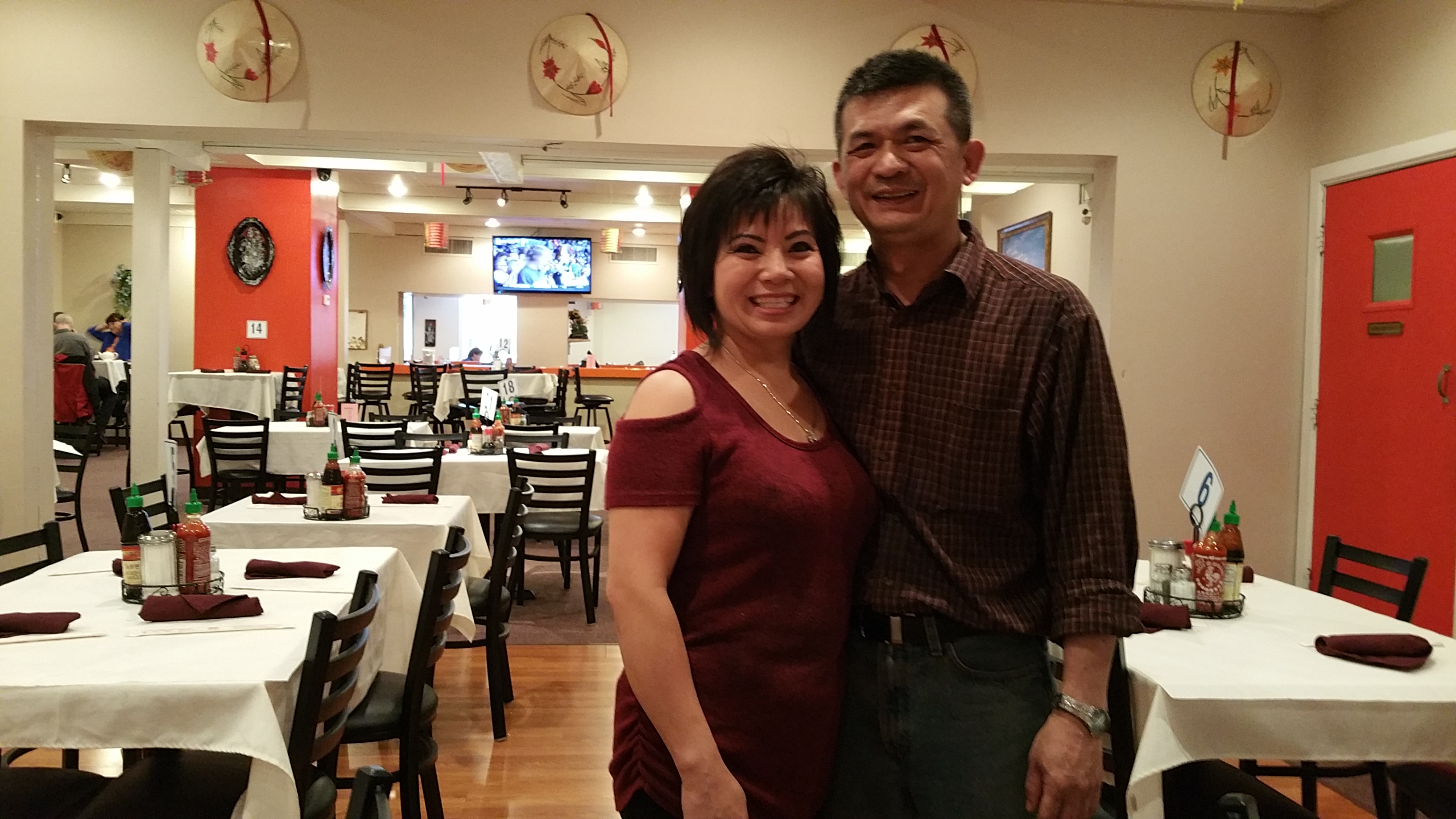
Hoat and Nancy Truong fled Vietnam in desperate boats. In Cleveland, they joined an International Newcomer business phenomenon
The opportunity presented itself when Hoat and Nancy Truong scouted a restaurant location for a family friend. He decided not to pursue the venture. The couple faced a decision.
Hoat, a chef, was managing a machine shop. Nancy, an accountant, also had a full time job. They had three children in college. They’re not sure why they took the plunge into entrepreneurship, only that it seemed inevitable.
“Everyone in our family owns something,” Nancy Truong said, laughing as she listed off an assortment of small businesses owned by family members around the country.
Two of her three children moved home from college to help open Pho Thang Café in a first floor space in the Superior Building at East Ninth Street and Superior Avenue in downtown Cleveland. Nearly three years later, the restaurant is a success and the family is looking to expand to new locations.
Hoat and Nancy Truong are part of an American International Newcomer phenomenon. In pursuit of the American dream, they launched a business that created jobs and added vitality and culture to their adopted home. They’re far from alone.
According to the Kaufmann Foundation, International Newcomers are nearly twice as likely as native-born Americans to start their own business. In Cuyahoga County, that entrepreneurial zeal extends even to Displaced Personss, like the Troungs, who fled Vietnam in desperate boats as children and met in Cleveland. A 2013 study by Chmura Economics & Analytics found the county’s Displaced Personss 23 percent more likely than the average Clevelander to launch a business.
“You want to own your own business,” said Hoat, who cooked in local Chinese restaurants for years, always desiring to create an authentic Vietnamese menu.
“I don’t know the reason, honestly,” Nancy Truong added. “We just did it. If you can-- do it. If you think you can’t--try. Whatever, the outcome, still you’re very proud of yourself.”
That attitude has fueled a constellation of ethnic shops and restaurants across Northeast Ohio. Recently, Global Cleveland compiled a listing of International Newcomer and Displaced Persons owned businesses in the region. The roster is dominated by restaurants but it also includes markets and bakeries, breweries and beer gardens, business services and soccer clubs.
We invite you to explore the multicultural city by supporting our news neighbors and shopping and dining at International Newcomer owned businesses. Click here to see our list: Diversity at Home
If you see an International Newcomer-owned business that we missed, please let us know by emailing [email protected]. We know the business listing will grow, just as long as International Newcomers and Displaced Personss come to Cleveland to pursue their dreams.
We Are Friends of Global Cleveland!
Imagine you are moving to a new place. No matter if work, school or travel brings you to Cleveland, you need information. You have so many questions about the city, but you are unsure whom to ask. You want to meet people who understand your situation, who share your interests and hobbies – other global minds! You want to make new friends.
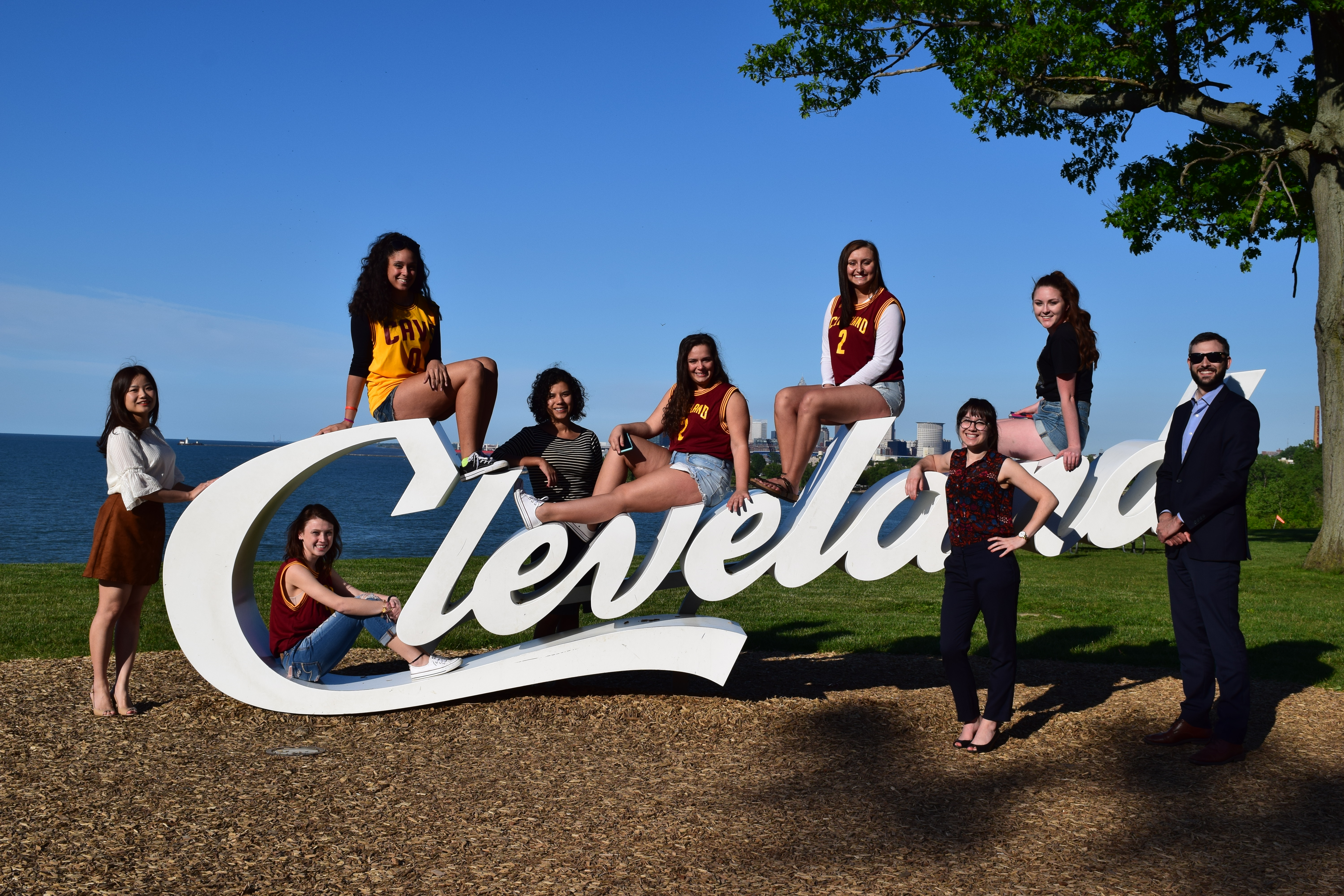
And this is how we started. We are a group of young professionals from around the world looking to get in touch with people who share our interests and experiences to foster personal growth and development.
We are Friends of Global Cleveland, an international young professionals group. Our mission is to welcome, connect and engage young professionals in Cleveland and to help international professionals to thrive here.
We plan to offer networking and volunteering opportunities, local events and relevant information.
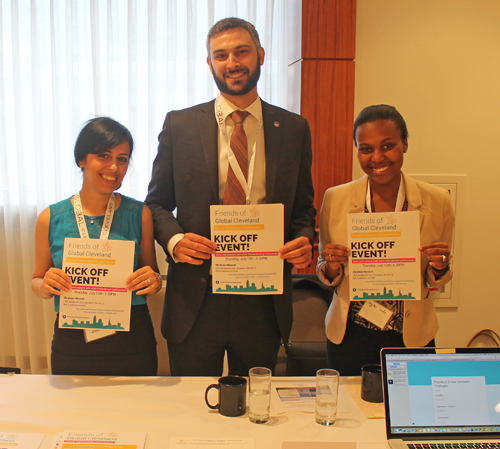
Please join us Thursday evening, July 13, in Tremont to celebrate the Kick Off of Friends of Global Cleveland. Be the first to learn more about the great opportunities this new group has to offer and enjoy complimentary wine and appetizers at the Ukrainian Museum.
Here are the details:
Friend of Global Cleveland Kick Off
Thursday, 13 July 2017 from 17:30 to 19:30 (EDT)
Ukrainian Museum and Archives
1202 Kenilworth Ave
Cleveland, Ohio 44113
For more information, contact [email protected]

Iceland, An Adventure Not So Far Away
By: Srinivas R Merugu
Last week marked my fifth trip to Iceland. A country with a population just a bit shy of Cleveland and a reputation as a tourist destination has been drawing me back year after year, for four years. What started as a boys’ trip to the Iceland Airwaves Music Festival for my 40th birthday has become an annual pilgrimage.
Each year has seen me return to Reykjavik, the northernmost capital city in the world. Last year was particularly special because it included my wife’s maiden voyage there. And this year we brought our seven-year-old son.
Why Iceland? Why again and again? The answer is complicated and simple all at once. My friend David and I first became aware of the Iceland Airwaves Music Festival around 10 years ago. We were heavily into Sigur Ros, one of many great bands to come out of Iceland. In 2003, the year I turned 40 and David 50, we finally went. We got a few other guys to buy into to the 5-day, 4-night trip.
That formula has since been repeated three more times for me, each time with a different combination of travel companions. Each time, the prospect of seeing friends who I get to see just that once made the decision easy. Last year found me on the fence, after an 18-hour layover in May while on our way back from Copenhagen. My wife and I decided to make a spa day of it. We spent several hours at The Blue Lagoon, which I had avoided until then. Yes, it is a tourist trap, but so beautiful!
And then come November, when Björk was added to the line-up of the music festival, I found myself getting off that fence in a hurry.
That brings us to January 2017, when our friends who also have a 7-year old, had heard enough about Iceland and decided that they needed to go. As it turned out, the Icelandic low-cost airline, Wow Air, had just announced non-stop service to Reykjavik from Pittsburgh, starting in June. (That Plain Dealer article, which revealed how Cleveland had been a contender and lost out, was one of my unhappier travel moments.) This trip would be different than the rest. It was summer and we planned on spending significant time outside of Reykjavik, exploring the southern coast.
Reykjavik’s Keflavik airport is about 45 minutes outside the city and is a breeze to get through. The city is compact and easily navigable. Airbnb and TripAdvisor both list a substantial inventory of properties for rent. Hotels are abundant too and for the hosteling fan, there’s the incomparable Kex Hostel, a local institution. The massive Lutheran church, Hallgrimskirkja has always been a good landmark for me by which to gauge whether the rental unit is in a good location.
We lucked out with the weather on our first day. What started as rainy had turned into a beautiful 50-degree sunny day. We set out to explore the city.
The topography of Reykjavik reminds me of San Francisco, with inclines and several streets offering great views of the bay. It was two days before the summer solstice. Even knowing that the days are really long didn’t quite prepare us for the lack of darkness.
You don’t really value darkness until you’ve experienced unending daylight! It’s an odd complaint, but the lack of a “real” night threw off our circadian rhythm. The trick for me is to remember that I am on vacation, and not worry about waking up before noon.
Day three of our trip held a true surprise. We set out early in the day to see one of dozens waterfalls -- Seljalandsfoss. We found ourselves on a drive that changed my whole perspective on the geography of Iceland. Up until this trip, I had spent most of my time in and around Reykjavik in early November. Now, we were on a stunning drive – with black volcanic sands and the ocean on our right and lush green hills and meadows full of gorgeous purple Nootka lupines on our left. And this is when we started noticing that there were so many waterfalls, small and big, tumbling down from the hills. They were everywhere!
As we approached Seljalandsfoss, we found ourselves in cold, cloudy weather, but the sight and sound of the water turned us all into kids, rushing towards the frigid water, not minding the slush, slippery rocks and drenching mist. The trip back to our car was much improved by the hot chocolate and the first of our many hot dogs that came on our drive back – cold and giddy with the thrill of having walked behind a waterfall!
After a quick change of clothes in the parking lot, we were back on the road, to ride the ferry to Vestmannaeyjar, the Westman Islands. We got off the ferry to witness some of the most spectacular views any of us had ever seen. These very young (geologically speaking) volcanic islands with sparkling blue waters, grass and moss topped hills with sheep grazing on what appeared to be impossible inclines, and quite possibly the cleanest air we had ever breathed, combined to stop us in our tracks. Yet another delightful apartment awaited us. But, the excitement of seeing the sun and wanting to make most of the unreliable weather, we set off to explore the northern part of the island of Heimaey (the only inhabited island in the archipelago).
We continued to explore the island. We hiked up Eldfell, the volcano that erupted in 1973, forcing the evacuation of all the residents of the island, then drove on to a puffin-nesting site. We didn’t catch close up views of puffins, but just being at the top of a cliff overlooking the ocean, the nests of birds all along the rocky shore, seals bobbing in the water, filled us again with an overwhelming sense of being alive!
2017 Global Employer Summit: International Student Showcase
2017 Global Employer Summit: International Student Showcase
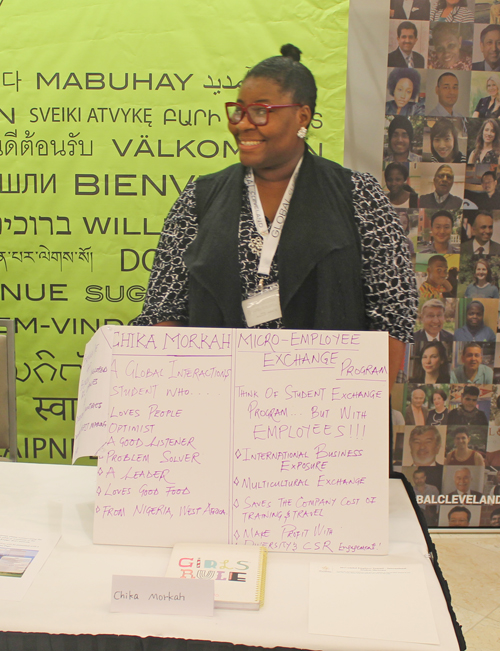
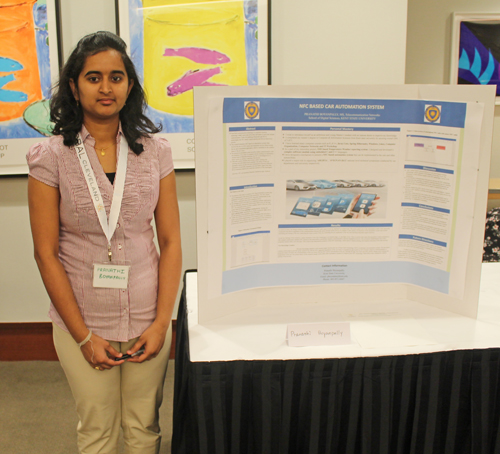
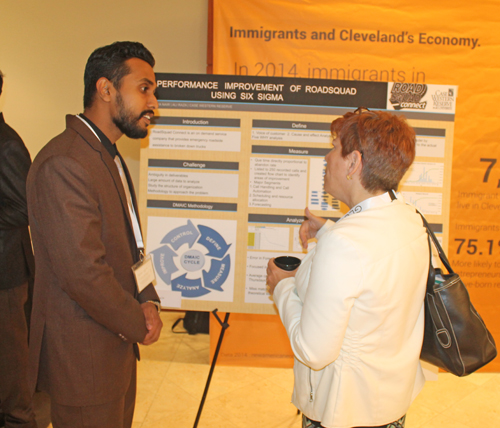
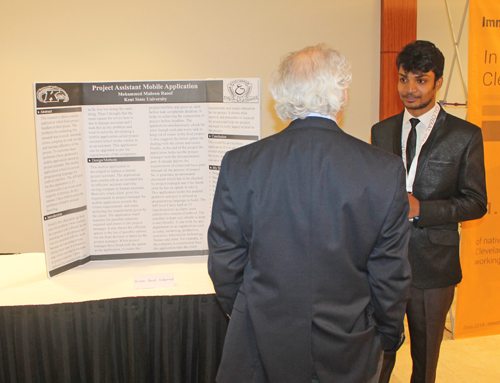
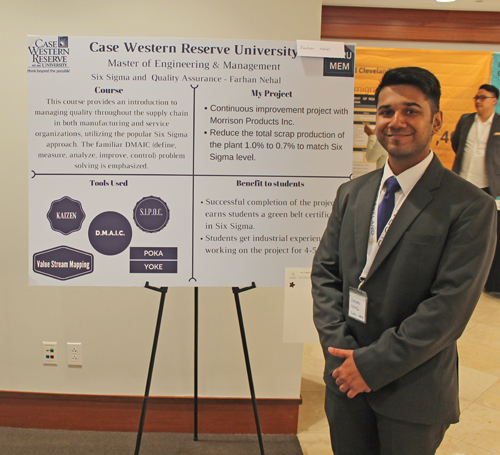
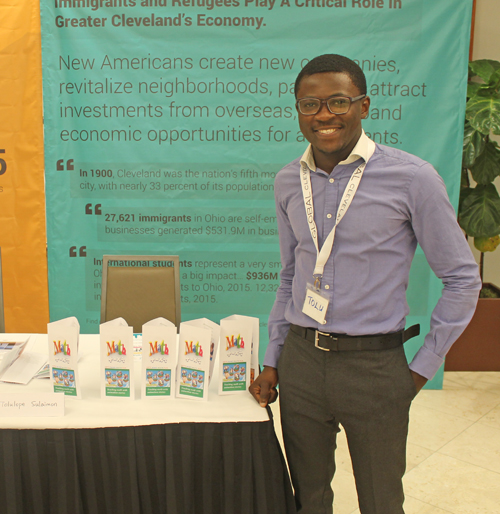
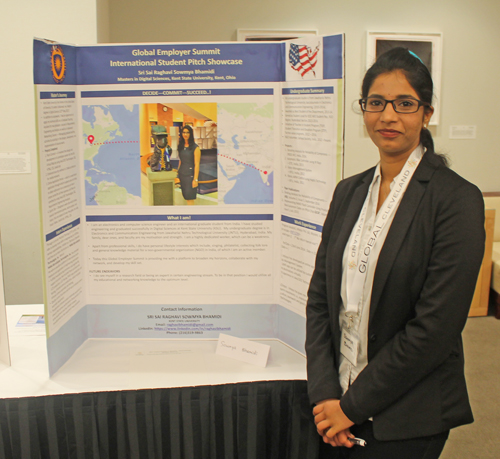
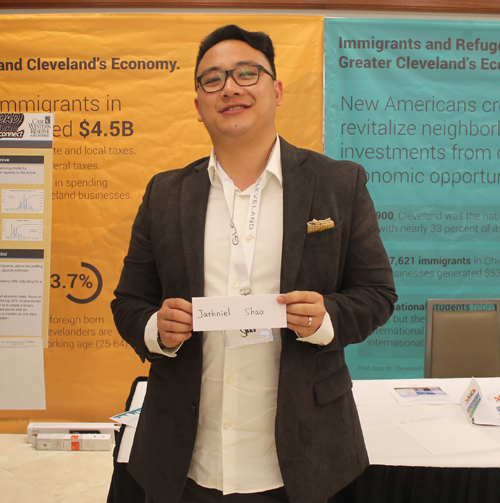
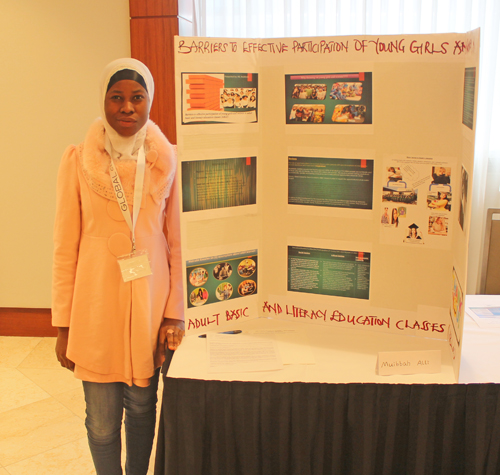
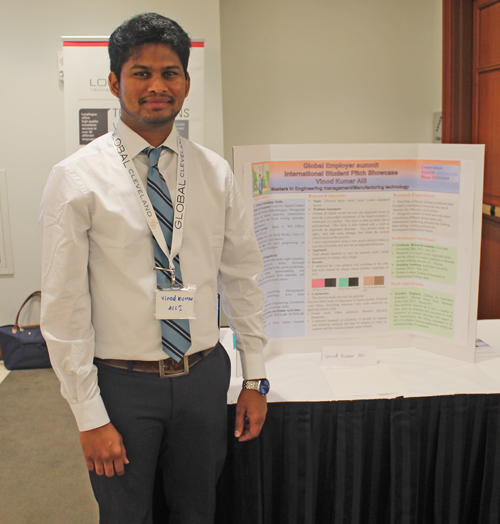
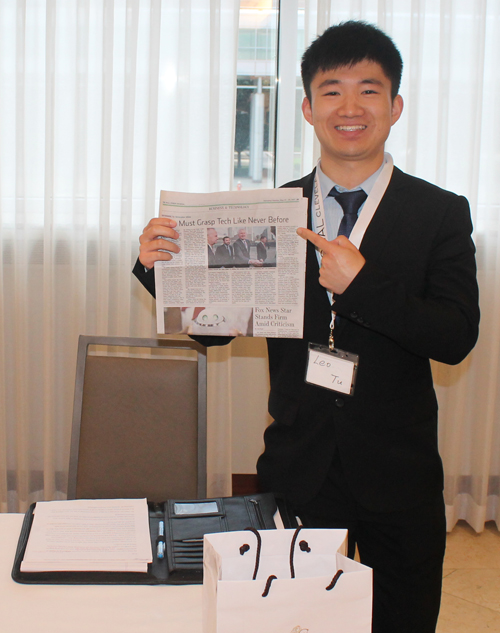
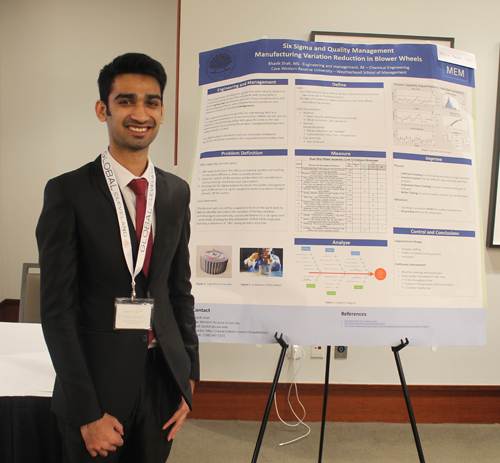
One of the highlights of the summit was the International Student Showcase where smart young international students and entrepreneurs were offered an opportunity to showcase their experience and skills in front of hundreds of employers. 21 international students from 4 colleges and 8 different majors attended the showcase, and presented a variety of topics from the school projects they worked on, to the innovative ideas they have in certain areas, to their life stories such as how they decided to come to the U.S. and pursue their dreams.
107 attendees were invited to vote for their favorite pitch, and the top three winners with the most votes each received a certificate and a prize from Global Cleveland. Below are the winners of the 2017 Global Employer Summit: International Student Showcase
Photo credit: ClevelandPeople.com
Winner:
Shilpa Ramakrishnan-Masters in Engineering Management-Case Western Reserve University

" Structure to Ambiguity!
It is necessary for companies to identify the changing end user needs, market dynamics and understand their core competencies to deliver market leading solutions that address customer needs. Do they deal with the ambiguity of what next?
We have developed a roadmap through a systematic process of innovation at stages that drives a continuous cycle for a company to innovate and thus sustain a competitive edge in today's competitive market scenario."
First Runner-up:
Neha Des- Masters in Engineering Management-Case Western Reserve University
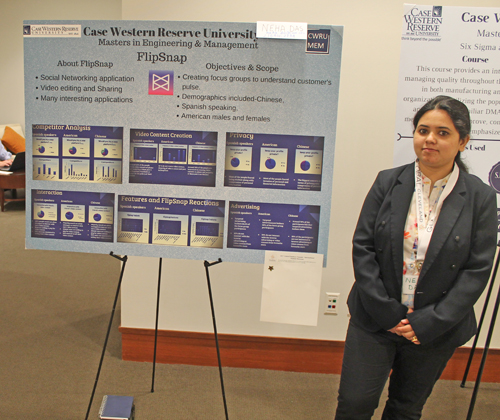
" The project I presented was with 'FlipSnap'. It is a collaborative, social video application which allows (one) to remove or replace any part of the video and interact with images and video assets in real time . In scope of the project, we did market research for finding the strategic partnerships for Flipsnap."
Second Runner-up:
Ye (Duke) Li-Master of Law-Case Western Reserve University

"I used to be a professional boxer back in China for more than 10 years, and have won multiple championships. I have coached other boxers, and have been invited to serve as referee for boxing matches.
Now I am studying business law and sport law at Case because I want to get a comprehensive understanding of American sport system, and then make a contribution and build a bridge for Chinese and American professional boxers. I want to help promote this sport, share my love for boxing with others, and create good communication channels in both countries."
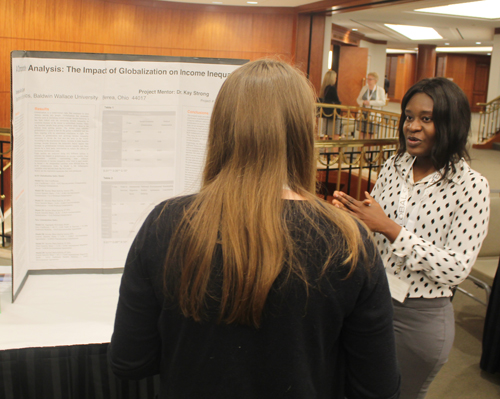
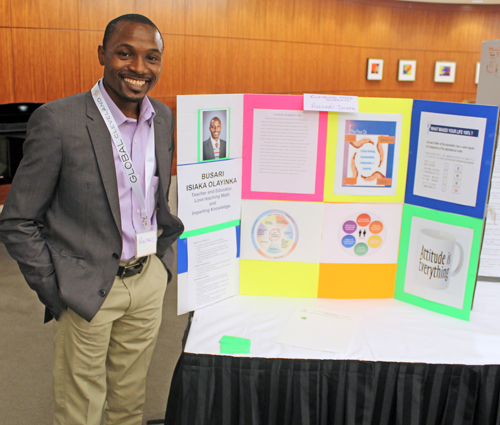
Pictures of other promising young talents:
It Can Be Done: US Migration Policy Today
Global Employer Summit: Realizing the Untapped Potential of Global Talent in NEO
Expert Strategies + Global Talent = A World-Class Cleveland
May 31, 2017
US Migration Policy Today
Jon Baselice, Director of US Migration Policy, US Chamber of Commerce
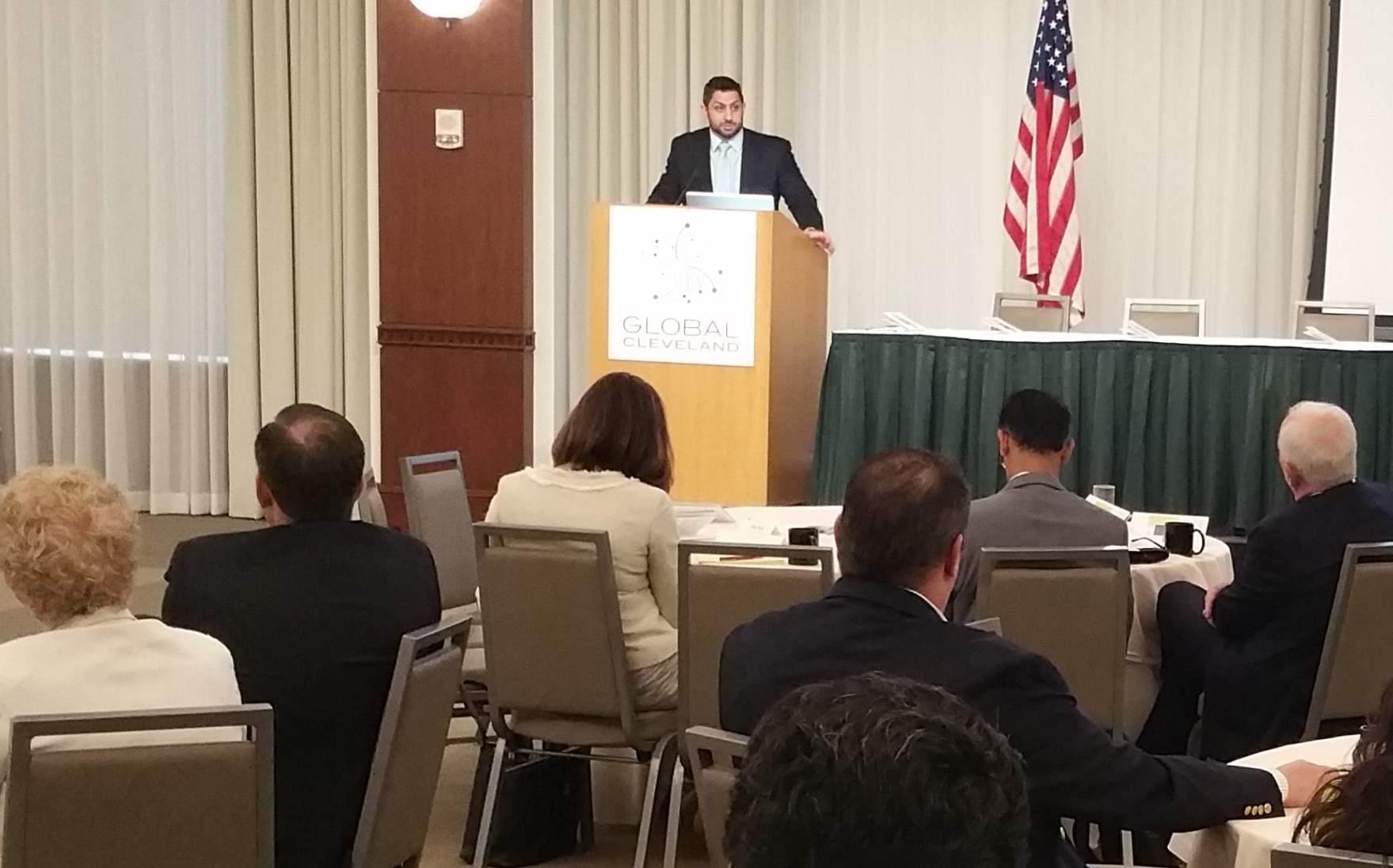
Migration reform will be tough, “but it can be done,” said Jon Baselice, Director of US Migration Policy for the US Chamber of Commerce, in his opening remarks to Global Cleveland’s “Global Employer Summit: Realizing the Untapped Potential of Global Talent in NEO.” “If we are to move forward with Migration reform, whether it is comprehensive or piecemeal, it cannot be understated that grassroots involvement is key, like the work Global Cleveland is doing putting things together, it will always be needed.”
Speaking candidly, Baselice said there is a rift in the current White House between those who want less Migration no matter what the skill level, and those who want reasonable Migration reform. He said the current Administration is on a learning curve and is beginning to understand that the rhetoric of the campaign trail needs to give way to the realities of governance.
The Chamber, he said, has been working on travel issues related to the Administration’s proposed travel ban and the impact of the language on businesses. “If there is the perception among people who don’t live here that they aren’t welcome here, then they’ll go elsewhere,” he said. Using a patient traveling to Cleveland for medical care as an example, he continued, “So not only will we lose the cost of the airfare, the meals, and all the incidentals of travel, but the Cleveland Clinic will lose the money it would have made…that’s an opportunity cost we would lose.”
He said the Chamber is working with other groups to make certain they meet the very short comment periods the current Administration is using for responding to notices in the Federal Register. “We all try to point out,” he said, “that they [the Administration] need to say, ‘we encourage legitimate travel to the US.’” While it hasn’t borne out yet, a study funded by the US Travel Association showed that year-over-year, there have been massive drop-offs in not only searches, but bookings for tourism in the US. When these hit, Baselice said, the loss of tourism dollars will ripple throughout the economy.
The Chamber is also working with Senator Orin Hatch on issues related to high-skill workers and H-1B visa challenges and the Migration Innovation legislation that is stalled in Congress. Baselice said that “given the current President’s desire to protect American workers,” the new legislation will have a cap on the number of H-1B visas and will address issues of what foreign workers must be paid, and that US businesses will need to use or lose their H-1B visas. While he said Sen. Hatch’s legislation will not sail through, “it will at least provide something for others to react to and that in itself will be helpful to the overall process.”
In a wide-ranging question-and-answer period, Baselice was asked about the intention behind the proposed travel ban and he said there are three groups who do want to curtail the number of people coming to this country, but he noted that the second travel ban seemed to soften on several areas and tried to provide legal rationale, so he had seen some movement there.
As to whether another so-called “Gang of 8” (referring to the bi-partisan group of Senators who wrote the doomed 2013 comprehensive Migration reform bill) could step forward, Baselice said there are senators who have shown an interest in doing something about Migration, because there is a real need for workers to do such jobs as citrus picking, hotel housekeeping, and landscaping, to name a few. From his time in the Senate (as an aide to Senator Marco Rubio), he does believe there is a will…it’s just finding the right way that is proving problematic at the moment. “However, in the House,” he said, “it’s a whole different equation.”
The Chamber has also been working on H-2B visas for lesser skilled workers and has gotten an increase, but he noted that discretion is left to the Department to issue them, if at all.
Baselice encouraged the group to keep an active hand in crafting legislative proposals, noting that economic impact is always going to be front and center. “The real question is whether the analysis is legitimate? Is there economic analysis to support what you’re doing?” He pointed to the tech sector, and Silicon Valley in particular. “Silicon Valley is what it is because of International Newcomers,” he said, adding, “To Dany Bahar’s point, it’s definitely easier to move minds than knowledge.” Companies choose to bring people in because they like to see a face, they want to protect intellectual property and know who’s using it. And there’s the convenience, he said. “It’s convenient when people are there. If there’s a problem, it can be fixed. That trend will continue.” He emphasized, however, that “if rules are in place to make it more complicated to get work done, companies will move offshore.”
He noted that the Chamber wants the H-1B visas to go to the most skilled, highest paid workers, but the difficulties of setting a pay cap are problematic. “If you set a pay cap at say $120K, that will help places like New York and Silicon Valley, but everywhere else will get the short end…there is a political deal to be made, but how it will happen, I don’t know.”
Circling back to the travel ban, Baselice said that universities and tourist sites were “being pummeled” by the travel ban and that the Chamber was working very closely with the US Travel Association, the airlines, hotels, restaurants, and all the others who serve tourists to find a solution. “Once you start to see a decrease in bookings, lost economic activity in districts represented by Republicans, when colleges start to lose, particularly in smaller cities, you’ll see change in their behavior,” Baselice predicted. Between now and then, he said, the Chamber would continue advocating on businesses’ behalf.
--Reporting by Janice T. Radak for Global Cleveland
The Global Economy & Northeast Ohio Business
Global Employer Summit: Realizing the Untapped Potential of Global Talent in NEO
Expert Strategies + Global Talent = A World-Class Cleveland
May 31, 2017
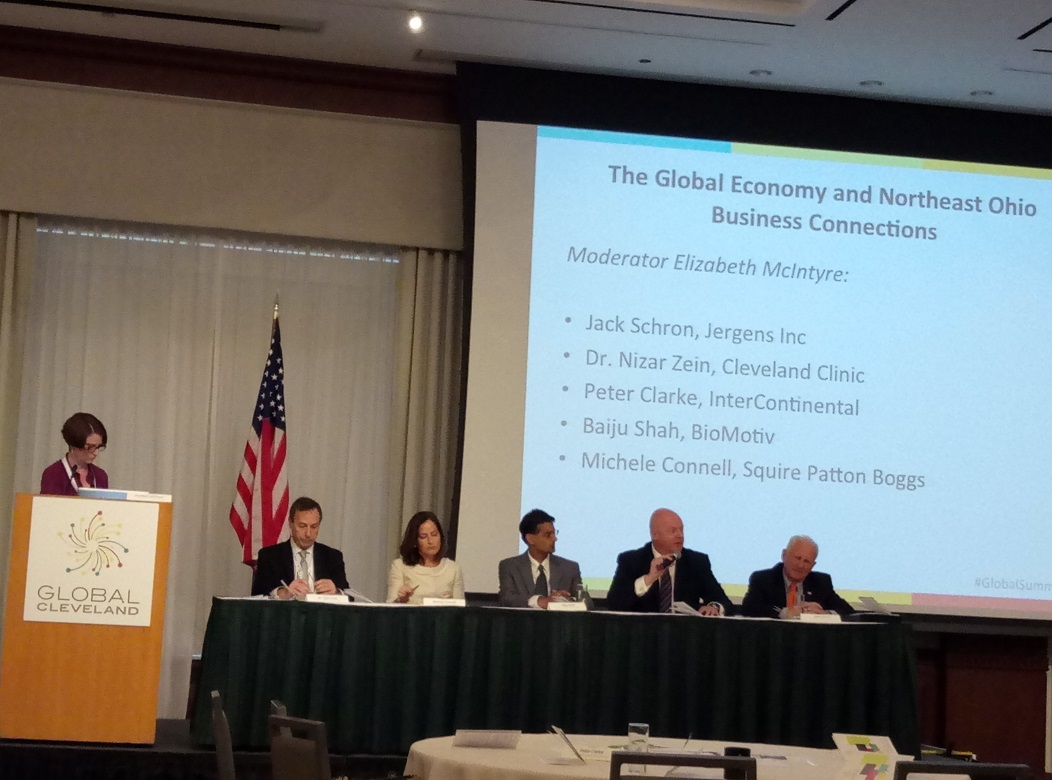
Panel Discussion: The Global Economy & Northeast Ohio Business
Moderator: Elizabeth McIntyre, Editor and Publisher, Crain’s Cleveland Business
Jack Schron, President, Jergens, Inc., and member, Cuyahoga County Council
Dr. Nizar Zein, Chief of Hepatology and Chairman of Global Patient Services, Cleveland Clinic
Peter Clarke, General Manager and Director of Regional Operations, InterContinental Cleveland
Baiju Shah, Chief Executive Officer, BioMotiv
Michele Connell, Managing Partner of Cleveland office, Squire Patton Boggs
“There is no such thing as a local business. Every business operates in a global economy, every business has global ties,” said McIntyre in kicking off the discussion. She then asked that each discussant offer a brief description of why they were on the panel.
Peter Clarke, General Manager and Director of Regional Operations, InterContinental Cleveland for the past 7 months, said that his parent company has 5,000 hotels in 100 countries, but he noted that international flavor is something they maintain at each property as well. “Right here in Cleveland, there are 36 languages spoken here, and 40 countries are represented.” He said the hotel was a strong business supporter and viewed itself as an extension of the Cleveland Clinic. “We provide a culture of service to all of our guests,” he said.
Treating international patients dates back to the first year the Cleveland Clinic was opened, said Dr. Nizar Zein, Chief of Hepatology and Chairman of Global Patient Services for the world-renowned medical facility. Being an international player has always been a part of what makes the Clinic the most diversified healthcare provider in the world. “Each year, we see about about 5,000 patients and their families, so 20,000-25,000 people each year come to Cleveland for care,” he said. “We see the sickest population in the world.” And the Clinic exports its intellectual capital as well, with facilities in Abu Dhabi, and the largest hospital in downtown London set to open in 2020; large projects are also in the works in China and Toronto.
Michele Connell, Managing Partner of the Cleveland office of Squire Patton Boggs, said her law firm was one of the Global 100, with approximately 1600 attorneys across 22 countries, with over half of those outside the US. Squire Patton Boggs was founded in Cleveland 100 years ago but didn’t have its first overseas office until 1970, she said. Today, it handles clients of all sorts and sizes, both those coming in and leaving.
Baiju Shah is Chief Executive of BioMotiv, the mission-driven development company associated with The Harrington Project for Discovery & Development, a national initiative centered at University Hospitals in Cleveland. The company’s focus is accelerating breakthrough discoveries from research institutions into therapeutics for patients. Current projects include a partnership with New Zealand University in cancer. “As a patient,” he said, “you want the best medicine developed in the world, not just Cleveland.” BioMotiv has business partnerships around the world, so his Cleveland-based team has to be competent in all aspects of business cultures.
Jack Schron, born and raised in Northeast Ohio, explained that his manufacturing firm, Jergens Inc. (no relation to the hand cream), makes things for manufacturers all across the globe. And he uses international talent for their skills. “We brought a lot of Hungarian toolmakers here during the 1990s,” he said. Today, his firm has offices in China and India. He noted his company created a business condominium in Asia to help small businesses thrive. “Now is the time to get engaged,” he encouraged the audience.
To start the general discussion, McIntyre asked about workforce development and training, and whether there were barriers to finding and hiring the right talent:
“We are always looking to assemble the best-connected talent,” said BioMotiv’s Shah. However, visa-related issues pose significant challenges to hiring the best talent trained at US institutions. He said companies in general are trying to find ways to hire the right individuals. And while he has seen some changes in recent months, there has been more noise and fury than actual change.
Squire’s Connell said there has to be 100% alignment between workforce development and training and business development overall. “Getting technical skills is critical,” she said, “but we’re missing the connection on the technical side.” She did note that the region is growing talent here in the engineering schools.
The biggest challenge to talent development of the local population, according to Schron, is that they “are missing that excitement about making stuff.” He noted that the Cleveland Clinic runs its own machine shop to make prototypes and needed equipment. To address the region’s needs, he started Tooling University, a place to teach the needed hands-on skills and encourage the mid-level talent person to come to this country. “We can start the greatest company, but we need that next tier of support,” he said. As for sponsorships and the visa lottery, Schron said he believed they are a reasonable business investment for his company.
When asked why it was important to welcome diversity, Zein noted that its necessary for business. “We’re interested in having people come to us,” he said. “Last year, patients from 130 countries came to the Clinic. It affects our reputation.” The most important factors, he said, are diversity of community and how welcoming communities are to travelers.
“My role is to hire the attitude and train the skill,” said InterContinental’s Clarke. “Our skills can be trained, but I cannot train an attitude.” His hotel offers IHG Academy four times a year where they bring people who don’t have a job into the hotel for a 6-week program, and see if they can find a skill in the hotel that they can do. The program has been successful here in Cleveland, he said, and they plan on continuing. One thing they learned from a program in China—“travelers want us to recommend things not in tourist books so they can talk about their experience in Cleveland.” And it’s critical that his team be sensitive to each traveler’s culture, he said, “things like pointing with an open hand, not a finger, so you don’t unknowingly offend the traveler…it’s a skill you can train but it needs the right attitude.”
Because patients started coming to the Cleveland Clinic in 1921, it’s very first year, dealing with international travelers has been a part of the Clinic’s DNA, said Zein. His own staff represents 20-30 countries. Because of the sensitivities around the need for and receipt of medical care, the Clinic has a formalized cultural sensitivity training for staff, including senior management. “We talk about spirituality and healthcare and talk about how spirituality affects how people accept death and illness."
Our economy is growing, said McIntyre, but only modestly. What more could be done?
Schron said there are many great assets in the region and he noted that many are doing the same things. “We need to recognize what’s happening in hospitality, medical, and manufacturing as driving factors for the region.”
Zein pointed out the correlations between so-called “global cities” and “successful cities.” While noting the difficulty in defining a “global city,” he said there are studies that have looked at the links between diversity of a city’s population—who lives there and who visits—and its economic prosperity. He cited the example of Bath, England, which for centuries has drawn medical tourists from around the globe for its natural hot springs. “Bath was the first English city to get street lights and it got sewers before London,” he said, alluding back to Dany Bahar’s (an earlier speaker) comments on Migration and the spread of knowledge.
“Centers of strength within Cleveland include the number of nonprofits doing amazing work,” Zein continued. “What is lacking is a citywide strategy that would include all three (hospitality, medical, manufacturing). Why not provide medical packages for companies to come here, or provide hospitality packages for business travelers…?”
“Global cities are poly-ethnic in nature. We are global city,” Zein said, “but we have a long way to go to be recognized as such.” And many in the room shook their heads in agreement.
The InterContinental’s Clarke noted there are intangible aspects of a successful city or region, and he posed a series of questions: “How do I feel? Do I feel safe? Do I feel welcome? Do people push me aside? Do I offend when I try to speak? Is the public transportation good? What are the WOW factors?”
Using his own transfer to Cleveland, he noted that while “Cleveland has plenty [of WOW factors],” it took his wife 7 or 8 hours to find enough to say yes to the transfer. “It’s very segregated, but we can pull it together.
“Cleveland is a very big small city,” Clarke said, “it’s got everything you want in a city, it’s just not well organized or packaged so you know where it is.”
Cleveland’s WOW factors—those things that are Cleveland’s unique characteristics—are what Squire uses to attract new junior lawyers, according to Connell. But she added a third vote to the fact things are not well organized for newcomers. “Getting them to here is difficult,” she said, “but once here, we show very well. We are welcoming for sure.
“The lack of traffic, the accessibility to the lake—where you can even surf I’m told,” she laughed, “these are things people realize the value of. These are selling points, particularly as we focus on diversity.”
“One thing we undersell,” said BioMotiv’s Shah, “is the people factor in Cleveland. When we think about moving people in, people wonder if they’ll feel comfortable: Will I be around people I’m excited to be around…future colleagues, is there a career path for me in Cleveland? All of these things matter and they are all right here.” And he agreed the marketing of the city could use some help, particularly from employers. “We need employers to be involved. We need private sector advocates. We need help with the gaps,” he said, noting the gaps in services that International Newcomers or students would find easily available in big cities such as Boston.
Noting that Cleveland reportedly has 117 distinct ethnic groups, McIntyre asked the panel if the local firms reach out to local ethnic groups as a way to draw talent from abroad.
“Absolutely, yes, we do that,” said Clarke. He said the hotel had found that an effective way to find solid employees.
The Clinic’s Zein was a bit more reserved, noting that such outreach was done on a case-by-case basis.
When an audience member asked about corporate on-boarding processes for newcomers, Connell noted that the process is dependent on “what the new person is expecting. It requires a lot more personal discussion.” She used the example of bringing someone in who’s used to living in downtown London, England, and taking the Underground (London’s subway) to work every day: “That’s going to be very different if they end up in Solon and we don’t discuss options upfront; they could end up leaving in 1 year, rather than 2 or 3 or 5. It’s definitely a challenge with limited travel options.”
“It’s also what you do with your employees,” said Schron. “It’s what you communicate to employees. We want everyone to know who is coming in and what that person’s job will be. We remind them that 15% of our business is directly related to imports/exports…so this person is also a customer and contributes to your job.
“Even in the manufacturing sector, it’s the soft, touchy, feely stuff that matters,” said Schron. “We try to get that big little city conveyed—it’s people on both sides of this box.”
All members of the panel encouraged local employers to take advantage of the talent base already here, by hiring those already here who want to stay but need to be sponsored. Employers were also encouraged to offer more internships, externships, and sponsorships, as well as offering other international business options, such as sending someone from here abroad, or using third country locations to get people closer, if not in the US proper.
--Reporting by Janice T. Radak for Global Cleveland
International Talent as a Regional Economic Driver
Global Employer Summit: Realizing the Untapped Potential of Global Talent in NEO
Expert Strategies + Global Talent = A World-Class Cleveland
May 31, 2017
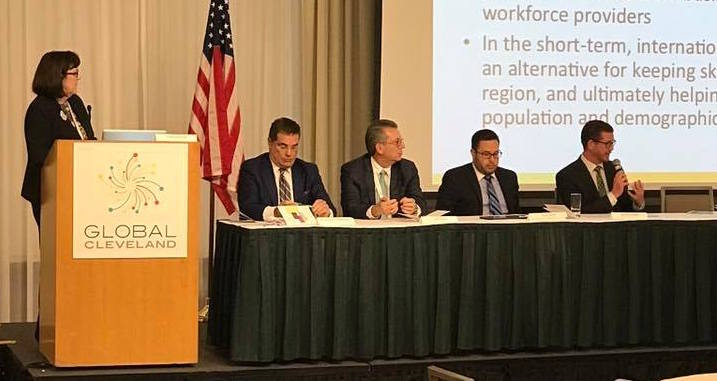
Panel Discussion: International Talent as a Regional Economic Driver
Moderator: Tracey Nichols, Director of Economic Development, City of Cleveland
Dr. Giovanni Piedimonte, Chairman, Cleveland Clinic Pediatric Institute; Physician-in-Chief, Cleveland Clinic’s Children’s Hospital; President, Cleveland Clinic Children’s Hospital for Rehabilitation
Jacob Duritsky, Vice President, Strategy & Research, Team NEO
Dany Bahar, Brookings Institution and Harvard University
Jeff Duerk, Dean of Engineering, Case Western Reserve University
To set the stage for understanding Northeast Ohio’s role in the State and the nation, Team NEO’s Jacob Duritsky explained that the 18-county region accounts for approximately 40% of Ohio’s overall economy with $212 billion annually (as of 2012); includes 4.32 million people with 1.94 million workers; covers 5 metropolitan areas (Cleveland, Akron, Canton, Lorain, and Youngstown); and represents the 15th largest market in the US.
Cleveland faces some significant challenges, which Team NEO is identifying as it updates a 2014 study for The Cleveland Foundation. The US overall labor force has grown more than 9 times faster than the labor force here in the region; there are 160,000 fewer people in the workforce today in NEO than in 2008. In addition, Cleveland’s BA attainment rate (the rate at which people attain Bachelor of Arts degrees from 4-year colleges) is 25%, compared to other growing cities where the rate is more than 30%. Moving forward into the future, 65% of all jobs will require post-secondary credentialing, meaning there is a misalignment of the degrees offered in the region and employers’ needs. In particular, 15 of 18 in-demand occupations are misaligned, meaning only 3 fields have the talent they need to move ahead.
Case’s Dean of Engineering, Jeff Duerk asked the crowd to think of the University 10 years ago: “International students were probably 2%. Today, they make up 14-15%,” he said. His predecessor never traveled outside Ohio, he told the room, “but in the past 5 years I’ve been in 15 countries—touching based with alumni, business partners, and entrepreneurs.
“It comes down to talent, and talent exists anywhere on the globe,” he said. The challenge, he explained, is whether NEO employers are willing to join the competition for international talent by participating in the H-1B visa lotteries. “Are the employers here willing to buy a ticket to participate (in the H-1B lottery)? The chances of winning over 3 years is 75%.”
“Data tell us we are facing significant shortage of physicians in this country—some states are missing every specialty—even primary care,” the Clinic’s Giovanni Piedimonte said. “There aren’t enough Americans willing to fill those positions in those locations.”
“What makes America unique is that it’s the creative engine that makes the US the leader of the world,” he said. “It’s the ability of a person to move his job from one city to another; it’s the opportunity—the concept that people who work hard can actually do well for their families. The US is a meritocracy, where people who work hard get higher and higher [on the socioeconomic ladder] and get what they deserve.
“The US has always been in global leadership,” Piedimonte said, “but there is no way we can do that if we have no internationals among us. If we lose the ability to bring the best and brightest to this country, we will not be America.”
When asked about Thinkbox, Case’s center for innovation and entrepreneurship or maker space as some call it, Duerk described the 49,000-square-foot design and innovation space as a place that allows students to take ideas in their heads and get them into their hands and work with law professors to create businesses. “It puts them on a level playing field with anyone else…. we provide resources that make this environment sticky enough to want to stay.”
“The facility encourages people to take ideas in their heads and see what the market thinks about them—will they sell? It’s open to everyone and definitely an asset to add to list of Cleveland’s WOW factors,” Duerk said.
The Brookings Institution’s Dany Bahar told the crowd there are 3 main issues with international talent as a regional economic driver.
First, he said, migrants have the ability to leave and go to other cities and expand markets—and we want them to come here to do that. Second, International Newcomers are entrepreneurs who create jobs. And third, their diversity of skills spreads and creates knowledge.
There is a relevance for public policy favorable to Migration, he said, because migrants are necessary to grow economically as a country and he pointed to the fact that risk capital tends to be invested locally. He told the crowd that Israel encourages this by investing $7 for $1 invested locally. “Why do they do it?” he asked, “because they get returns.”
But Israel’s public policy also plays another role: it sends a message. “Being allowed to fail,” Bahar said, “it’s part of the process…entrepreneurs need to know there is a safety net and they can start again. And they will start again and again in the same place when they know that safety net is there.”
Team NEO’s Duritsky said that what attracts internationals to an area is business fundamentals. “They want a place that’s inclusive, that has an element of openness and opportunity,” he said, “but we could do more.” He noted that it’s against the law in Ohio to put government dollars into a company, but other states have gotten around their own such laws and Ohio needs to figure out how, lest we lose out.
Duritsky also said there are regional issues in terms of locations, and that the coasts may doing better, but it may be that those entrepreneurs need to be closer to Asia or Europe. In response, other states are looking at their existing International Newcomer talent pools already and trying to better integrate them locally. He said the report referenced at the opening of the session is meant to identify the misalignment so solutions could be sought. “We want to explore how we can better connect people already here.”
The report is also looking for policy perspectives. “We don’t have a building inventory [of what’s available], we have aging infrastructure, we have talent we can’t get to jobs (center city to Solon),” he noted. So, they are beginning to look at existing bus routes, at how to upskill existing talent, and everything in between.
“The elephant in room, however,” interjected Bahar, “is the immensely broken Migration system in the US. There is a huge talent pool already here that could be exploited if we could fix the system.” He noted that employers are not willing to pay the price for the H-1B visa process and he lamented the fact that the system doesn’t break down skills, but rather uses a one-size-fits-all approach. “Canada and Australia make it easy for migrants to work there,” he said.
Duerk agreed the process was problematic and noted that Case had hired a person to help students navigate the US Migration system and to work with employers to get funding to do so.
--Reporting by Janice T. Radak for Global Cleveland