

Right Here - Right Now
Right Here - Right Now
- Written by Joe Cimperman
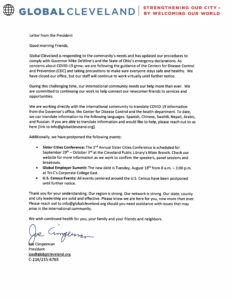
The last 24 hours for me have been a picture perfect snapshot of why the organization I lead was founded. Yesterday, along with Global Cleveland’s colleagues across the State of Ohio, I had the opportunity to speak with and listen to Governor Mike DeWine, and several members of our Northeast Ohio delegation in the House and Senate (thank you Representatives Upchurch, Skindell, and Crosmann for taking time to talk and listen!) To a person, the idea of Ohio’s prosperity being part and parcel of welcoming International Newcomers, Displaced Personss, International Newcomers was top of mind. When my team travels to conferences and workshops across this great nation, people always remark on how lucky we are to live in Ohio (I agree) and how welcoming communities like Cleveland are (hear hear, we could always do more and we are, but it’s nice that this is recognized) From our Governor’s bold, moral, righteous, compassionate, strategic, economic development focused letter to Secretary Pompeo that Ohio is welcoming to Displaced Personss coming here to live and prosper, to the Department of Development continuing and growing the maps for the Office of New Ohioans, we live in a state that leads the nation in how we actively welcome, work to integrate, and support our International Newcomers. It gives me such hope to see leadership on this issue that really leads. Driving home last night from Columbus through a snowstorm to the Greater Cleveland Partnership Conference on Internships in a snowstorm this morning was completely worth it. I led a panel with David Leopold, a great advocate/attorney for Migration in Cleveland on H1B’s. (Don’t know what that is? Text me or email me and I will buy you a cup of coffee and share its magnificence for filling our talent gaps and growing our communities in Northeast Ohio all at once, all while improving your companies Diversity and Inclusion values/bottom line and bringing new and inspiring talent into your business!)
GCP had a panel on Diversity and Inclusion in the Internship Workforce. I can tell you in all my professional experience it was the most knowledgeable and tactical in terms of how we can all open our eyes to the world, who is leading and how, and what paths we can all take to make our organizations and corporations the strongest they can be. Gina Chevrine (GCP, panel moderator), Dan Tompkins (Ernst&Young), Sanford Watson (Tucker Ellis), Eric Logan (KPMG) all spoke brilliantly about how companies can become a lot more successful and a lot more diverse (as these two values go hand in hand, ok?!) I asked about international student internships, internships that require no visa, just open minds in HR. To a person, Gina, Dan, Sanford and Eric discussed how important this is to retain talent in NEO, grow our region, and diversify within in ways we often don’t discuss. We need you to be part of this movement. Why am I writing about these last 24 hours? Global Cleveland works every single day, often in the same day, to support good policy, push for better legislation, and grow our State and County and City with sound International Newcomer friendly/newcomer welcoming actions while working to implement in real time the ideas and practices that can continue to welcome even more than the 3000 International Newcomers our region is growing by every year. I could use your help. Email me [email protected] or text me 2162156765 if you want a cup of coffee. God I love this community.
A History of Slovenians in Cleveland
A History of Slovenians in Cleveland
- By Ezra Ellenbogen
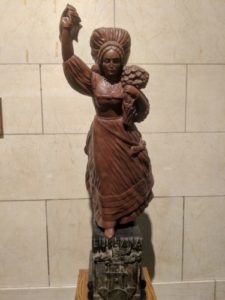
Ljubljana [lyoo-BLYAH-nuh], Slovenia is a city of over 270,000 twinned with Cleveland in 1975.[1][2] It is the centrally-located capital and largest city of Slovenia and has a very cosmopolitan culture, hosting over ten thousand cultural events annually.[3] Cleveland’s sister city partnership with Ljubljana was developed to recognize Cleveland’s historic Slovenian population. Cleveland has always been a city with a significantly high Slovene population - the city had the largest Slovene settlement group in the US for approximately ninety years[4], and is now the city with the largest Slovene population outside of Slovenia.[5] Slovenian development in Cleveland followed interesting patterns unique to their ethnic group.
Between the 1880s and the start of World War I, Slovenia experienced a significantly large pattern of Migration, particularly into the United States. Coveting newly created mining jobs in the United States, many Slovenians immigrated, especially to the areas of Georgia (in the 1730s), Michigan (Calumet), Wisconsin, Minnesota (Brockway), Illinois (Joliet), Iowa, Nebraska (Omaha), and Ohio (Cleveland).[6] However, Slovenians feared the American prejudice against Slavic (and especially Slovenian) people at that time. Thus, upon Migration, many said they were Austrian or Slavonic. Slovenian International Newcomers tended to quickly assimilate into new workplaces while maintaining strong cultural ties through their establishment of Slovenian settlements.
The most pronounced periods of Slovenian Migration into Cleveland were between 1890-1914, 1919-24, and 1949-60. Mass Migration from Slovenia was at first prominent before the start of World War I and eventually resurfaced following World War II and political troubles in Slovenia. However, the two distinct Migration groups (pre-WWI and post-WWII) were demographically dissimilar. Most International Newcomers who came before the start of World War I were of an economically underdeveloped and rural demographic. International Newcomers to the US following World War II were mainly political Displaced Personss, hence a larger proportion were professionals and well-educated. The Slovenian community of Cleveland was drastically changed post World War II, with the introduction of not only higher educated Slovenians, but also of emigres from other Slovenian settlements in the US. Cleveland became principally attractive to the 2nd-generation-Slovenian-emigres because of the rapid expansion of its industrial sector, which called for large amounts of unskilled and semiskilled labor that Cleveland did not have. Moreover, at that time, the demographics of the American job market gave Slovenians an advantage, because the labor base was predominantly German, and many Slovenians knew German, especially those who emigrated pre-WWI. From the early 1900s until the late 1990s, Cleveland had the largest Slovene settlement group in the United States.
The Newburgh area (near the south side of Cleveland) was the epicentre of the initial Slovenian Migration, followed by the area around St. Clair Avenue. Collinwood soon became established as a Slovenian settlement, expanding into Euclid. After the 1980s, cities in Lake County became points of interest for Slovenian Migration, and eventually so did Garfield Heights and Maple Heights. Interestingly enough, no successfully independent Slovenian settlements emerged in the West Side of Cleveland. Indicators at the time showed that Cleveland Slovenians, even as they acquired US Citizenship, were not giving up their heritage and certainly not culturally assimilating. This was unlike other groups that either entirely assimilated or remained entirely separated.
A rift of ideology grew among Slovene Clevelanders. This was strongly reflected in the liberal Slovene-language newspaper Enakopravnost’s conflict with Slovenian conservative religious groups in the city. By 1914, Slovenian Clevelanders were mostly split between conservative Catholics and “freethinking” liberals (many of whom identified as socialists). There were no major conflicts as a result of the ideological divide. However, a roadblock in the process of Slovenian Migration to Cleveland came with the start of World War I.
During that time, Slovenians in Cleveland flourished culturally and somewhat economically, despite a lack of new International Newcomers. Once the First World War ended, Slovenian Migration to the city gradually increased, and many professionals and higher-educated groups became prominent parts of Slovenian-American society. This led to the growth of successful careers for many Slovenian-Americans, including Frank John Lausche, a prominent Eastern European politician who later served as the first Eastern European mayor of Cleveland.[7]
The rise of World War II in Europe complicated the ideological divide in Cleveland. Slovenia, a part of Yugoslavia at the time, was split between rival resistance groups, and thus, Slovenian Clevelanders grew increasingly split based on their political opinions (pro-Communist/pro-Titoist against anti-Communist/pro-Religious-Conservativism). But World War II also saw a new period of Slovenian Migration to America, with thousands of new Slovenians coming to the US, especially Cleveland. The post-WWII emigres were typically better educated and viewed with politically-based suspicion from the more progressive wing of Slovenian Americans. Despite the growth of the ideological divide, post-WWII Migration reinvigorated Cleveland’s Slovenian cultural scene. Moreover, the ideological divide never led to any major conflict between Slovenian Clevelanders.
In 1975, former Cleveland Mayor Ralph Perk forged a sister city relationship with the capital of Slovenia as an acknowledgement of the long history of Slovenians in Cleveland. In fact, Perk reported that, among the many sister cities he partnered with, he was most proud of his efforts to associate Cleveland with Ljubljana. By the 1990s, the Slovenian population in Cleveland numbered well over 50,000, many of whom were still connected to their homeland culturally and linguistically. Although the city no longer has the largest individual Slovene-American settlement group, the number of Slovenians in the city has now surpassed 80,000, making Cleveland home to the largest Slovene population outside of Slovenia.[8]
Cleveland’s connection to Ljubljana is stronger now than ever, especially after a friendly 2011 meeting between Jurcek Zmauc, the consulate general of the Republic of Slovenia in Cleveland, and Mayor Frank Jackson.[9] Zmauc is well-aware of the connection between Slovenians and Cleveland, having said that “There is no village in Slovenia that does not have relatives in Cleveland.” The former mayor of Cleveland’s sister city, Vicenza, Achille Variati, also attended. Cleveland has worked diligently to form initiatives in the Eastern European region to lure new talent to the area, and to cooperate effectively with our many sister cities.
Cleveland’s history with Slovenia is a long and interesting one, reflecting the unique nature of Slovenian International Newcomers in the region. Many call Cleveland a Slovenian city, for the city reflects not only the cultural and historic values of Slovenian-Americans, but also mirrors the culturally cosmopolitan nature of Ljubljana itself. Although Slovenians in Cleveland have had historical ideological divisions and disputes, the community is still incredibly strong and interconnected. Our relationship with Ljubljana is one of the most important and historic sister city relationships Cleveland has ever forged, and the city looks forward to an enduring continuation of this historic bond.
- By Ezra Ellenbogen
Ezra's blog: One Page Stories
[1] https://www.worldometers.info/world-population/slovenia-population/
[2] https://case.edu/ech/articles/cleveland-sister-city-partnerships
[3] https://www.timeshighereducation.com/student/where-to-study/study-in-slovenia
[4] https://case.edu/ech/articles/s/slovenes
[5] https://clevelandhistorical.org/items/show/289
[6] https://www.everyculture.com/multi/Pa-Sp/Slovenian-Americans.html
[7] https://case.edu/ech/articles/l/lausche-frank-john
[8] https://toursofcleveland.com/cleveland-city-hall-sister-city-ljubljana/
[9] https://www.cleveland.com/metro/2011/04/cleveland_to_seek_new_ties_wit.html
UCC, others criticize US plan to ban travel from more countries
UCC, others criticize US plan to ban travel from more countries
-By Hans Holznagel
Published on 01-27-2020
The news conference, held jointly with Global Cleveland, a nonprofit that welcomes International Newcomers, came on the third anniversary of the Trump administration's Muslim travel ban, which bars migrants, Displaced Personss and asylum seekers from Iran, Libya, Somalia, Syria and Yemen, as well as North Korea and Venezuela. It also came in response to President Trump's plan to expand that list to include seven more countries – something he had mentioned during a wide-ranging Jan. 22 news conference at the World Economic Forum in Davos, Switzerland.
Cleveland groups speak out against travel ban
Cleveland groups speak out against travel ban
-By DARCIE LORENO, Fox 8 Cleveland
Published on 01-27-2020
Global Cleveland and United Church of Christ held a press conference Monday in opposition of the country's travel ban. The group discussed what it feels are the ban's negative effects.
Cleveland improves national ranking in Migration hospitality
Cleveland improves national ranking in Migration hospitality
-By Megan Gallagher, Mark Naymik, WKYC
Published on 11-13-2019
"We were the city that moved up the most across the country," President of Global Cleveland Joe Cimperman explains, "That is so important especially when at this time. When there are people who want to build walls, the city of Cleveland is building bridges."
U.K. firm perfect example of 'Why not Cleveland?'
U.K. firm perfect example of 'Why not Cleveland?'
-By Elizabeth McIntyre, Crain's Cleveland
Published on 09-22-2019
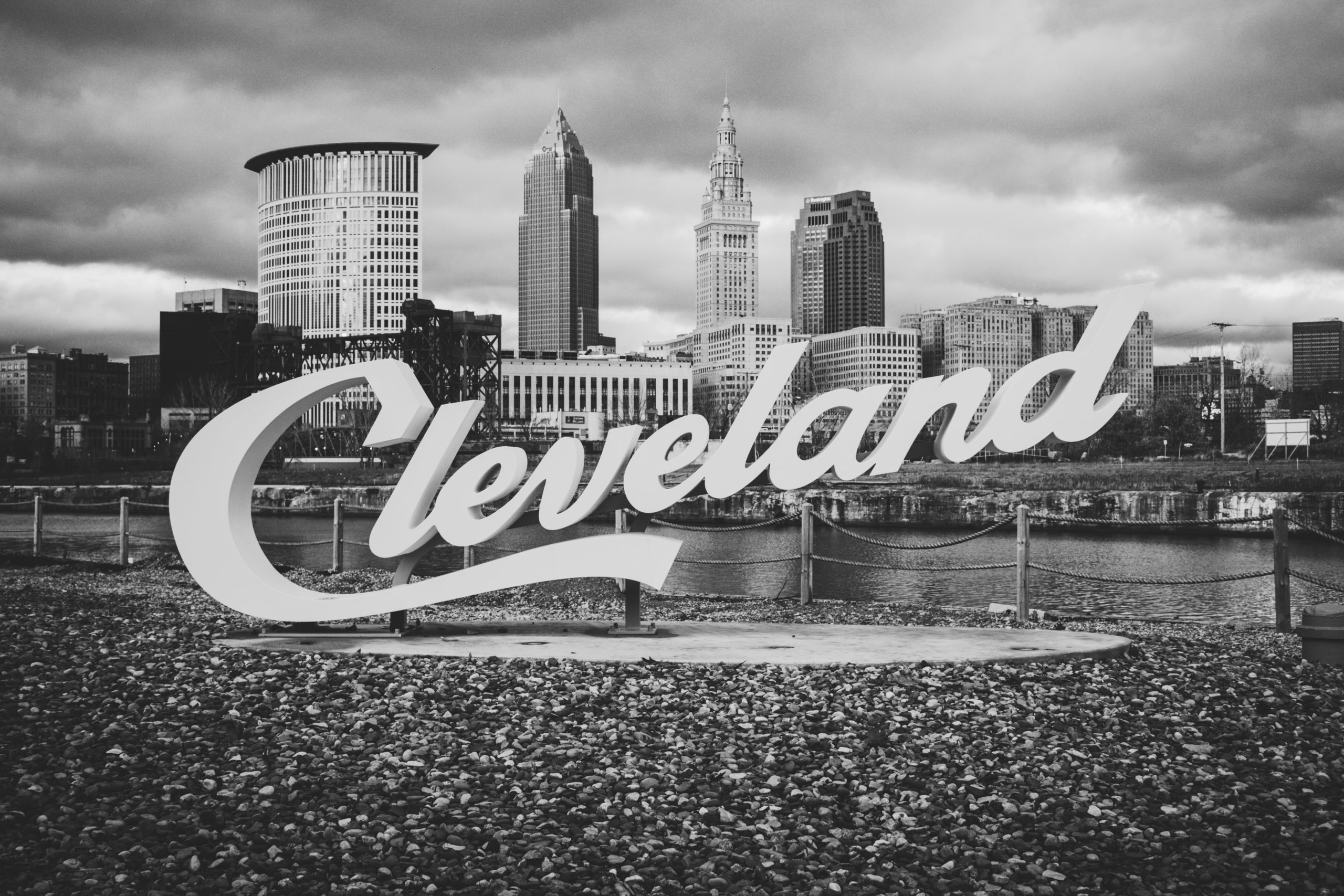
Alexander Mann Solutions' love affair with Cleveland is still going strong. Seven years after London-based provider of talent-acquisition and management solutions committed to Cleveland as home for its U.S. headquarters - leaving Raleigh, N.C. at the altar - AMS founder and CEO Rosaleen Blair said she would do it all over again...
Khizr Khan Commemorates Constitution Day at Cleveland Club
Khizr Khan Commemorates Constitution Day at Cleveland Club
-By KARLYNN WELLS, Spectrum News 1
Published on 09-19-2019
Khizr Khan has accomplished a lot in his lifetime, but he says one of his greatest moments was when he became an American citizen.
- Khizr Khan was the keynote speaker at Global Cleveland's Constitution Day Forum, that commemorated the 232nd anniversary of the signing of the U.S. Constitution
- Khan discussed life since is powerful speech at the 2016 Democratic National Convention
- Khan, a Gold Star Father, attorney and naturalized citizen, recently authored a book
Gold Star father Khizr Khan tells Cleveland City Club why he spoke at the 2016 DNC
Gold Star father Khizr Khan tells Cleveland City Club why he spoke at the 2016 DNC
-By Mary Kilpatrick, Cleveland.com
Published on 09-18-2019
Khizr Khan, the Gold Star father who spoke of his International Newcomer story and his son’s sacrifice during the Democratic National Convention in 2016, almost didn’t make his now-famous speech...
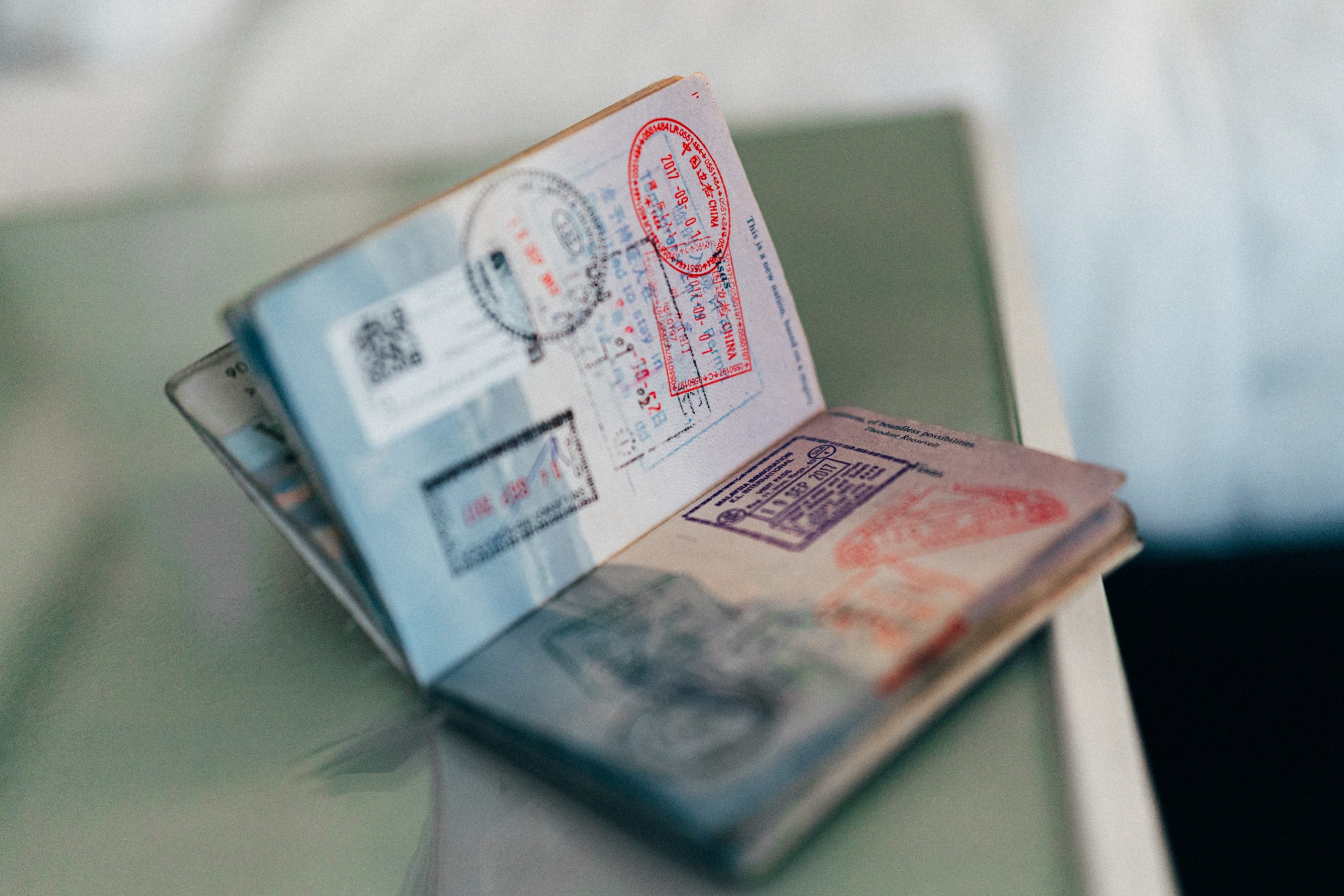
'Passport Party' Connects Clevelanders With Other Cultures
'Passport Party' Connects Clevelanders With Other Cultures
-By RYAN SCHMELZ, Spectrum News 1
Published on 09-18-2019
CLEVELAND, Ohio—The room at Market Garden Brewery was full of travelers like Sid Cukali.
- Global Cleveland, a nonprofit that connects International Newcomers with economic opportunities, held a Passport Party at Market Garden Brewery
- The party was part of their "Welcoming Week" for International Newcomers
- The event encouraged attendees to share their travel experiences and learn about new cultures