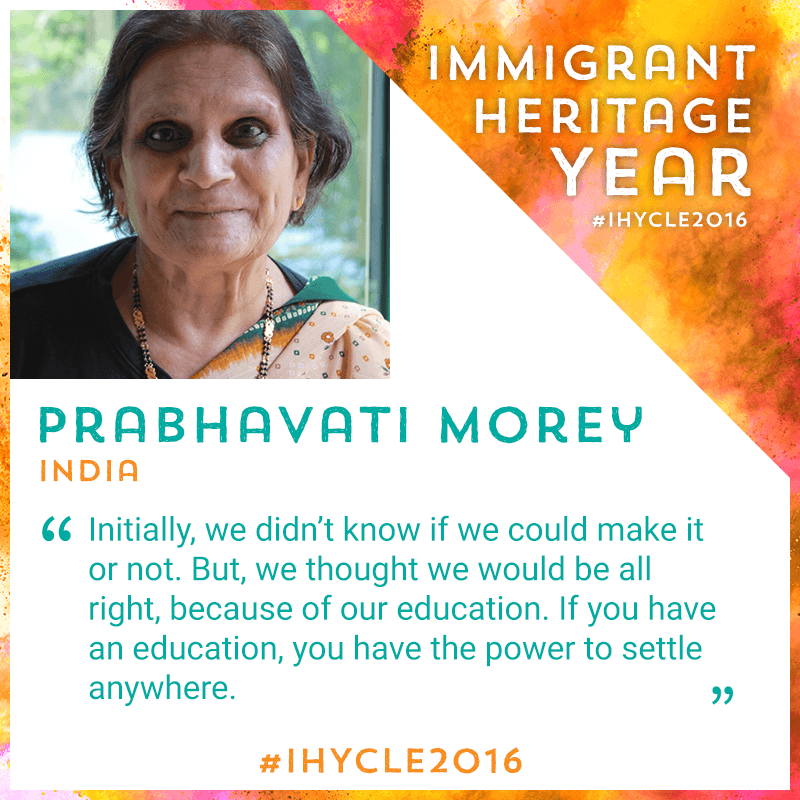
Prabhavti Morey
Where are you from?
Bombay (now known as Mumbai), India
What was it like growing up?
It was okay. If you were born over there, that was your life. There, the buildings had small rooms. Here, the rooms are bigger.
What brought you to Cleveland?
My husband came to the United States in 1961, and earned his Ph.D. in Atlanta, Georgia. I came over in 1963. I was 22 years old. After he got his degree, we went back to India. A few years later, Case Western Reserve University offered my husband a job in the microbiology department, so we moved to Cleveland.
What were your first thoughts about coming to America?
When I came to this country, I was scared. But, I didn’t come here by myself, like my husband did, so it wasn’t as bad.
What challenges did you face transitioning here?
Initially, we didn’t know if we could make it or not. But, we thought we would be all right, because of our education. If you have an education, you have the power to settle anywhere.
What is your occupation?
At first, I didn’t have a job, because I took care of our kids and the house. But, once the kids were grown, I got a college degree, and worked in the Cleveland Heights Library’s circulation department for 20 years. I retired in 2010.
How have other Clevelanders made you feel welcomed?
Some people are very nice and open-minded. Others are not as welcoming. My children found it particularly difficult growing up here in the 1970s.
What traditions or customs do you continue to practice?
I continue to observe my Hindu faith.
What do you love about Cleveland?
I feel it’s the best place to stay. So much is changing. So much is improving. Things declined in 2008, but now, the city is coming back. It’s also not very expensive to live here.
What is your favorite thing to do in Cleveland?
I enjoy hiking near the Shaker Lakes, as well as visiting Downtown Cleveland.
Why is it so important to welcome International Newcomers?
If somebody is bringing something beneficial to this country, why shouldn’t we welcome them? If they’re educated, and adding to the economy, they should be welcome here. It doesn’t matter which religion they are.
What suggestions do you have to make Cleveland a more welcoming Community?
People have to be open-minded. They have to understand the benefits that International Newcomers bring.

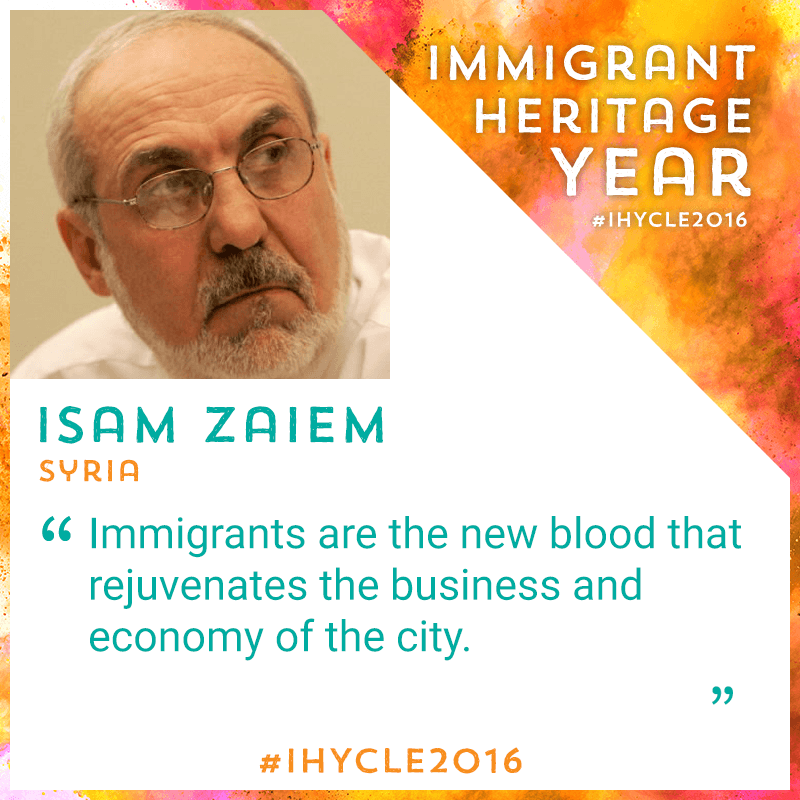
Isam Zaiem
Where are you from?
Damascus, Syria. I have been in Cleveland since 1974. But came to Chicago first in 1971.
What was it like growing up?
Financially middle class, socially very active happy childhood.
What brought you to Cleveland?
By accident. A cousin whom I have not seen for years and was in Cleveland for few years to start a Brazilian company, invited me to visit for a weekend. Since I was looking for a place to intern as a Medical Technologist, I applied for different hospitals including the Cleveland Clinic where I was accepted. There I met my future wife and as they say the rest is history!
What were your first thoughts about coming to America? Did those change?
Land of Plenty. Lots of freedom and opportunities. Some thoughts have partially changed particularly after 9/11 and the PATRIOT ACT!
What challenges did you face transitioning here?
Dealing in the early few months of my coming to the USA, with the cultural differences and the financial challenges.
What is your occupation?
Medical Technologist. Worked in laboratory medicine and transplant services.
How have other Clevelanders made you feel welcomed?
Yes for the most part. I consider Cleveland my hometown.
What traditions or customs do you continue to practice?
I was born Muslim. I did not practice my faith when I was younger, but I consider myself now as a practicing Muslim, where I feel that Cleveland is open to people of all faiths and backgrounds.
What do you love about Cleveland?
- Cavaliers! for one..It is about time!
- I love being in a mid size major city where commuting through traffic does not consume half of your life.
- The cost of living, particularly housing, is one of the lowest in the Nation.
- Lake Erie as a source of great Walleye fishing in the summer, besides, we hope we will never run out of clean fresh water for many years to come.
- The Emerald Necklace Metro Park within close proximity.
- The world’s renowned medical institutions.
- The City Club of Cleveland, the citadel of free speech for over 100 years.
- The Cleveland Orchestra.
- Cleveland’s welcoming people.
- It is HOME!
- And a lot more!
What is your favorite thing to do in Cleveland?
Living and being active in the civil rights, civic and religious leaders in the city.
What is the best thing about living in Cleveland?
Hard to choose. Pick any from the above of which I love about Cleveland.
Why is Global Cleveland a great resource?
Global Cleveland can possibly fill in the gap that is needed to help new International Newcomers due to the short assistance that some get from the federal government.
Why is it so important to welcome International Newcomers?
International Newcomers are the new blood that rejuvenates the business and economy of the city.
What suggestions do you have to make Cleveland a more welcoming community?
Support the new comers by providing more funds for organizations that help new International Newcomers settle down and get them standing on there feet the first few months of there presence.
Elizabeth Aubbin Manuel
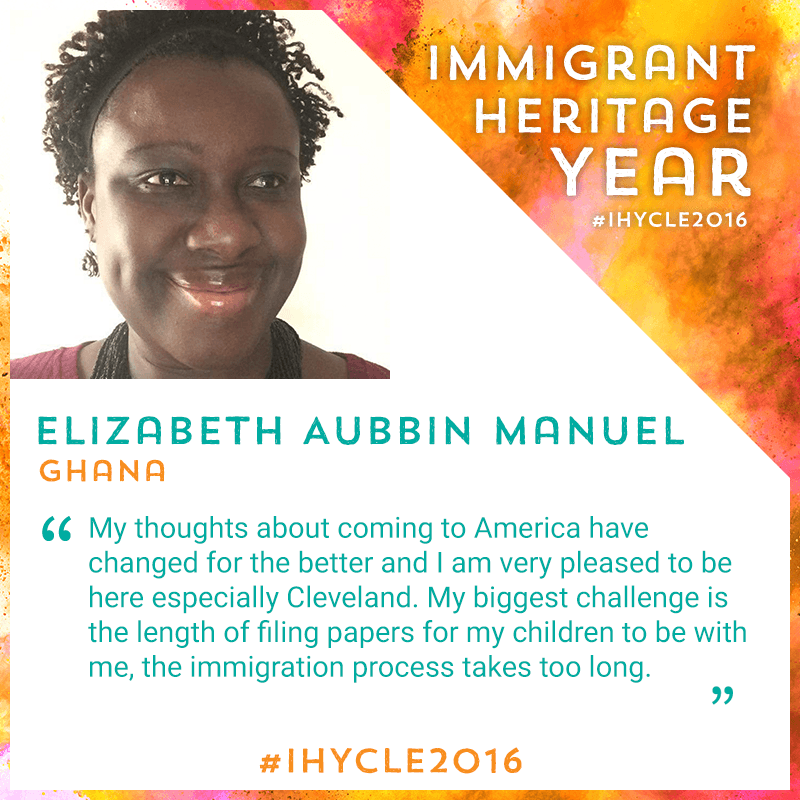
My name is Elizabeth Aubbin Manuel, I am from Ghana west Africa. My dad was a king,he passed 7 years ago, growing up was very good because I am a princess but I was brought up strictly by my parents because of who I am.
I came to the United States in November 2010, I came to visit my cousin in upstate New York (Poughkeepsie) then I met my husband who is from Cleveland hence my Migration to Cleveland. My thoughts about coming to America have changed for the better and I am very pleased to be here especially Cleveland. My biggest challenge is the length of filing papers for my children to be with me,the Migration process takes too long.
I am a seamstress, I do custom clothing and alterations for both men and women,I am looking to get a store to set up my own business but for now I can’t afford the rent it’s just too much,I wish I can get a grant that can set me up so that I can offer my services to support Cleveland. Clevelanders are very nice people and I really love the fact that they see everyone as family.
I do practice my customs by always wearing African prints to portray my culture,I love Cleveland because most of the people I have been in contact with are very friendly. Global Cleveland is a great resource because it portrays what goes on in Cleveland and promotes networking with other organizations, it is very important to welcome International Newcomers because we are all here to help promote the good image of the city and the country as a whole.
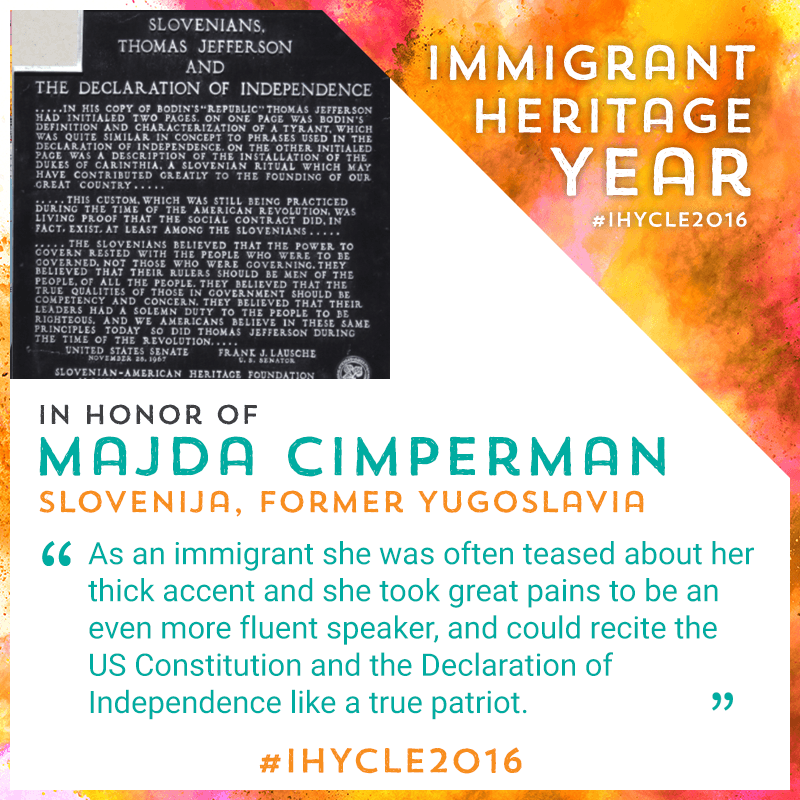
Majda Cimperman
My mom Majda, was born in Maribor, Slovenija ( former Yugoslavia) She was born in 1934, and would often speak to my sister Maria and me about her childhood in the midst of the Nazi invasions and the throes of a continent at war. She came to Cleveland for love, meeting my father Joe while he got on the wrong tour bus in the 1960's traveling to his ancestral homeland (Slovenija) to visit relatives. The two met and life happened and she came to Cleveland. She absolutely loved Cleveland, but she missed her family back home. Going to St. Vitus Church (largest Slovenian Roman Catholic Church in North America) and living in the awesome St. Clair Superior neighborhood (home of the 1st Slovenian community in Cleveland) made her feel more welcome and part of a larger culture.
As an International Newcomer she was often teased about her thick accent and she took great pains to be an even more fluent speaker, and could recite the US Constitution and the Declaration of Independence like a true patriot. She became a US Citizen and never looked back.
She worked as a travel agent, a bank teller, and volunteered at dozens of organizations while raising my sister and me. She taught us to speak Slovenian, and held close the traditions of Slovenian history: the celebration of St. Nicholas Day, the making of beautiful pine roped fruits and ribbons called "butare" the week before Easter, and the many small acts of celebrating a saint's Feastday or the remembrance of a relative long gone.
Her favorite thing to do in Cleveland was to take the RTA Number 1 bus downtown on St. Clair Avenue and walk Euclid Avenue and spend time on Public Square; she said downtown and its energy was the closest she felt to European Cities.
She often spent time with people who had immigrated to the US from other countries, she loved the stories of people's journeys and she knew how lonely it could be, she was as American as someone here for ten generations, in fact she never missed an election. Coming from a place where you could disappear for expressing an opinion contrary to a dictatorship, she would vote as if it were a sacred act of loyalty to this great country. She lived to see her homeland Slovenija liberate itself from Communist rule, that moment will forever be in my memory. She took me to this plaque downtown (still on west side of Mall B) and I treasure the ties between Slovenia and the United States of America::
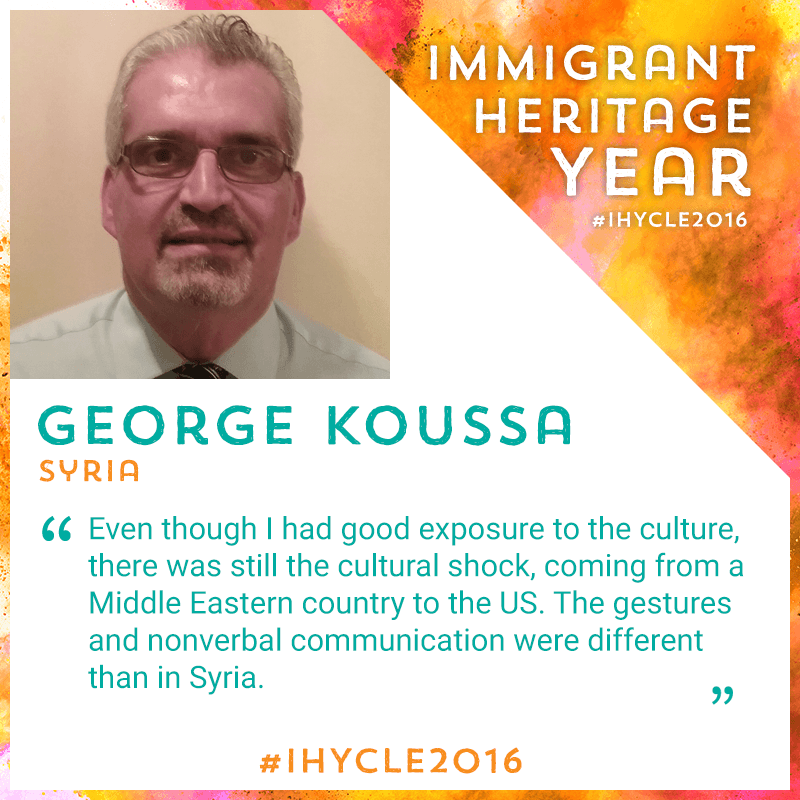
George Koussa
Where are you from?
Syria
What was it like growing up?
It wasn’t easy. It was challenging, politically. It’s a lovely country with a nice people. There were diverse people from different faiths. However, it wasn’t easy growing up as a Catholic. In a dominant Muslim culture, it was difficult. We were able to maintain our faith and activities as Christians, but were unable to speak out.
I received free education all the way through college, and earned my BA in literature from the University of Aleppo. Then, I went to work as a translator for the United Nations Peacekeeping Forces.
What brought you to Cleveland?
I decided to visit because I had family who had moved here. My uncle, who lived in Lakewood, encouraged me to come here. I came on a tourist visa to see what my opportunities would be. I came to the United States in the fall of 1986, and started to work toward my master’s degree at Cleveland State University, where I received a scholarship.
What were your first thoughts about coming to America?
I felt I belonged here. I felt the U.S. was my destiny. I love this country. I love the people here. It’s not perfect, but nothing is perfect.
What challenges did you face transitioning here?
Even though I had good exposure to the culture, there was still the cultural shock, coming from a Middle Eastern country to the US. The gestures and nonverbal communication were different than in Syria.
What is your occupation?
Public relations administrator and Arabic translator/interpreter at Margaret W. Wong & Associates LLC Attorneys at Law
<st
rong>How have other Clevelanders made you feel welcomed?
They’ve made me feel very welcome.
What do you love about Cleveland?
I see it as a friendly place. People are very friendly. We have a lot of good education institutions, medical institutions. I also like the cultural diversity and the various ethnic groups in the Greater Cleveland area.
Why is it so important to welcome International Newcomers?
This is a nation of International Newcomers. We are stronger because of this.
What suggestions do you have to make Cleveland a more welcoming community?
There should be more media exposure of cultural groups, in addition to more large-scale meetings involving the City of Cleveland and educational institutions, where speakers would be invited to discuss their respective cultural group with the community.
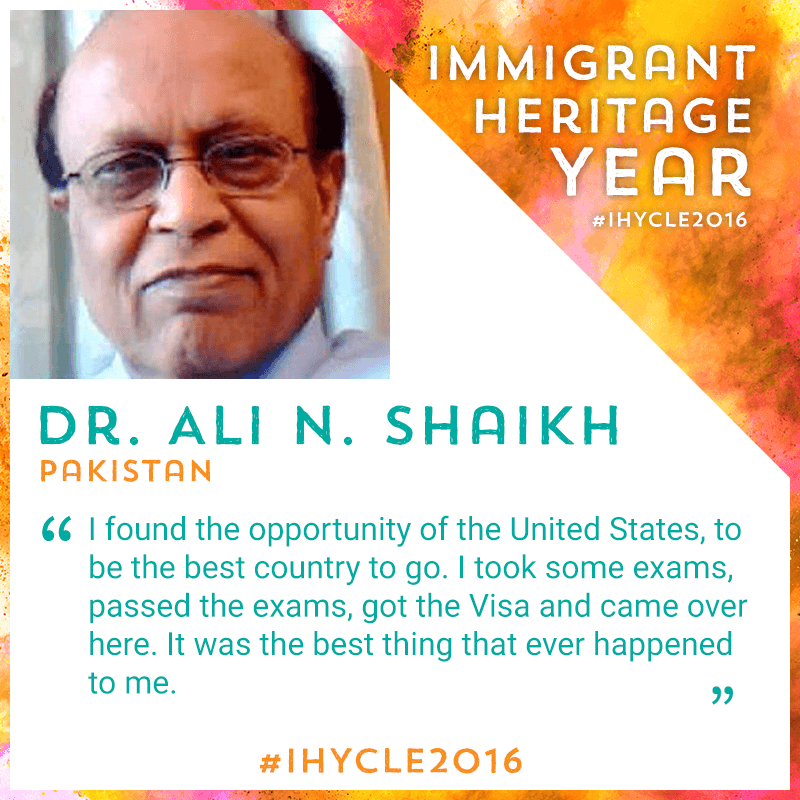
Dr. Ali N. Shaikh
Where are you from?
Pakistan, Sindh (province)
What was it like growing up?
There was no electricity, no running water. The school had only about 40 students.
What brought you to Cleveland?
I found the opportunity of the United States, to be the best country to go. I took some exams, passed the exams, got the Visa and came over here. It was the best thing that ever happened to me.
I got an offer from a hospital. I knew someone in Cleveland, and he thought I should come here, so I did. I took my chance, and I’m happy that I came.
What were your first thoughts about coming to America?
I had read a lot about America, and my God, there’s a difference between reading and seeing. When I saw things here in person, I was very impressed.
What challenges did you face transitioning here?
My accent was tough for people to understand. It was tough to learn the different parts of the culture. I didn’t know you were supposed to write a thank you note when someone does something nice for you, but now I do. I was very much interested to learn the cultural norms. I tried my best to learn, I’m happy I did it.
What is your occupation?
I’m an intervention cardiologist.
How have other Clevelanders made you feel welcomed?
Very good, very welcoming. I personally was very welcomed. I had no problem. There were little differences here and there, so you had to compensate for that, but it would worked out very well. I’m proud to be here.
What traditions or customs do you continue to practice?
Not much, really. I keep in touch with the family, that’s all I do. I don’t practice anything. I don’t go to any church or any mosque
What do you love about Cleveland?
It’s a big city, and everything is available. People are very receptive to International Newcomers.
What is your favorite thing to do in Cleveland?
I was a private pilot as a hobby, but I am older now, so I gave that up. Now, I have a house with a big yard. I’m always busy working in the yard.
Why is Global Cleveland a great resource?
Any organization that helps people is needed. When I came, there was no such organization. It would have made things easier.
Why is it so important to welcome International Newcomers?
Why not? We’re all the same people. The people who come from foreign countries look to be apart of us, so I welcome them, and do as much as I can to help them. This is the melting pot. This country is made of everybody. Everybody’s foreign.
What suggestions do you have to make Cleveland a more welcoming community?
More organizations like Global Cleveland that can give help and advice. There needs to be more communication to people who are coming here and people who are here. We need to communicate that we are ready to help out.