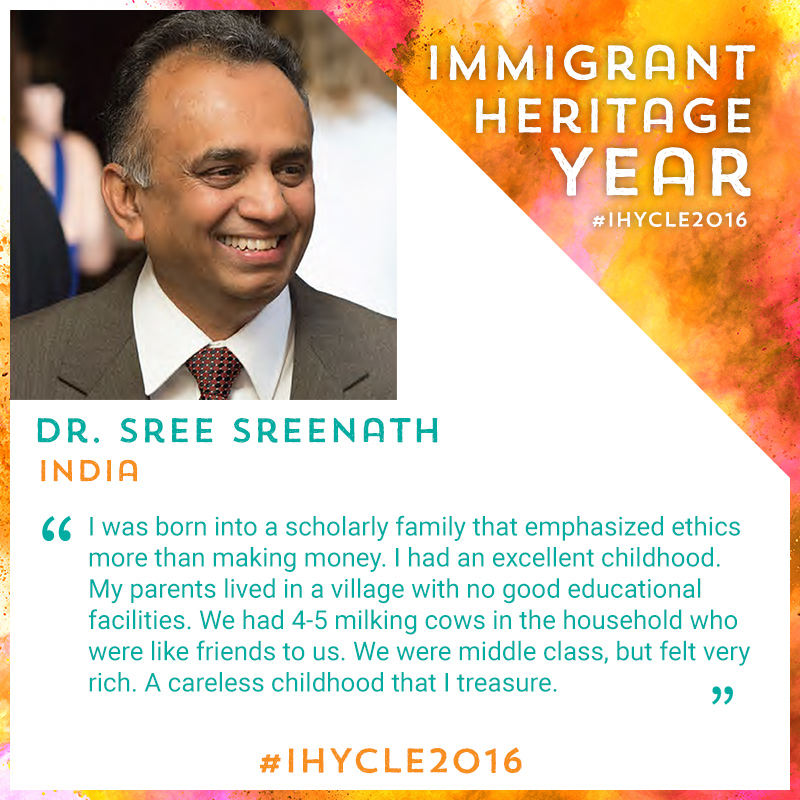
Dr. Sree Sreenath
Where are you from?
I was born and brought up in Bengaluru, India which is one of the largest High-Tech cities in the world.
What was your childhood like?
I was born into a scholarly family that emphasized ethics more than making money. I was brought up as one of the two lone males among 10 women (mother’s sisters and grandma) in my maternal grandfather’s house. Excellent childhood. Parents lived in a village with no good educational facilities. We had 4-5 milking cows in the household who were like friends to us. We were middle class, but felt very rich. A careless childhood that I treasure.
What brought you to Cleveland?
Academic job after my Ph.D. in 1988 to Case Western Reserve University
What were your first thoughts about coming to the United States? Did those change?
I was committed to going back to my home country. The opportunities in the USA were quite attractive and so I decided to stay.
What challenges did you face as transitioning here?
Lack of a social safety net.
Cultural adjustment both professionally and personally. Professionally, communication was emphasized on rather than the expertise. Worked triply hard to overcome the handicap. Never took a vacation for 6 years. Worked New Year’s through Christmas.
Lack of mentorship.
What is your occupation?
Professor at a Research University (Case Western Reserve)
How have other Clevelanders made you feel welcomed?
My colleagues were excellent. My Neighbors were welcoming. Never felt alienated.
What traditions or customs do you continue to practice?
I am a Hindu. We celebrate July 4th, Thanksgiving, Hindu New Year (April), Diwali – Festival of Lights, and other religious/social holidays.
What do you love about Cleveland?
Small city with big city amenities.
Very friendly people.
Accessibilty. You can access anyone from a public official to anyone on the street.
No traffic.
Clean air.
Nonstop airline connection to all major US cities
Why is it so important to welcome International Newcomers and Displaced Personss?
This is a country of International Newcomers – some came 3 months, 3 years or 300 years ago.International Newcomers work hard to establish themselves and bring the richness of their culture to the US. We create a composite culture. A hybrid is very strong, an alloy (mix of metals) has amazing properties that the original metals did not have. Research shows that International Newcomer children continue to have that same work ethic and an inner fire to achieve.
The Asian Indian community that comprises of less than 1% of US population (3 million) is not very old. Most of us came after the 1966 Migration act and are professionals. In a short period of 50 years:
i. Our community has the highest household income among all US ethnic communities.
ii. 52% of Silicon Valley startups (and 25% of US startups) are Indian.
iii. One out of two hotels/motels in the US are owned by Indians.
iv. 1 in 6 Orthopedics in the US are Indians.
v. Asian-Indian children have won the Scripps Spelling bee (15 winners since 2002).
vi. The CEOs of Google, Microsoft, Pepsi are Indians.
vii. There have been 2 State Governors (South Carolina – Nicky Haley; and Louisiana – Bobby Jindal) both children of Indian International Newcomers.
viii. List goes on.
This is an example of what an International Newcomer community can bring to the US.
Why is it important to travel abroad?
I have had the opportunity to travel around the world as a consultant to United Nations for the last 20 years. I continue to consult with developing countries and travel.
All of us are very proud of our culture and feel that our culture is one of the best in the world. However, when you travel you will find that there are or were other great cultures. You will feel proud of other culture as you are with your own. You become one with humanity. You will find that more they are different, more they are the same. I always say that if anyone in the world has a papercut, I have not seen green blood emerge.
Travel provides us a way for us to improve ourselves, it enriches one’s life, help us learn to appreciate a different viewpoint, and finally feel that ‘the world is truly one family’ (ancient saying from India).
I regularly conduct a Travel course to India during May or each year. In the last four years I have taken more than 60 students from Case Western for short 2-week immersion travel courses. I have encouraged and enabled another 80 college students to go travel abroad. Travel simply broadens your mind.

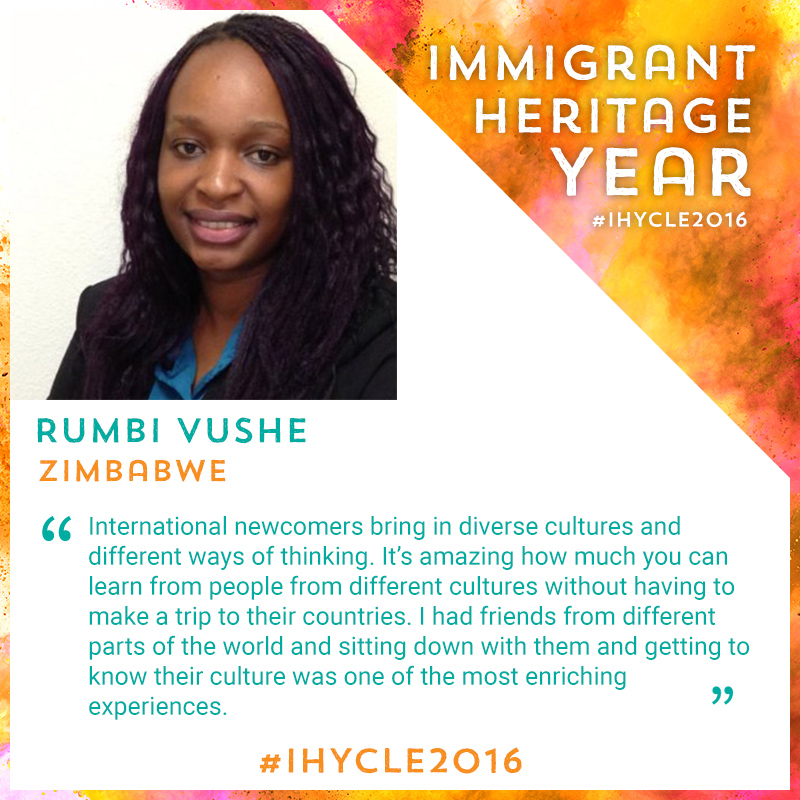
Rumbi Vushe
What is your hometown?
Gweru, Zimbabwe in Africa
What are some unique or experiences or memories for you, growing up?
Growing up, every Christmas holiday my family and I would make a road trip to the rural areas to see my grandparents. Other extended family members would also visit and my grandparents would make so much food and we would sit around the fire to eat. We would go back home with a truck filled with fresh maize, peanuts, sweet potatoes, and wild fruits.
What brought you to Cleveland?
I came to Cleveland in 2014 as an intern through the Summer on the Cuyahoga (SOTC) Program. I was a Research Analyst Intern at Austen BioInnovation Institute in Akron.
What were your first thoughts about coming to the US? Did those change?
I was nervous about being away from home and the long plane ride did not make it any better. Two Smith students were already waiting for me when I landed at Bradley Airport. When I arrived at the beautiful Smith campus and met other international students who had come for orientation, I didn’t feel alone. I felt at home.
How have people that you’ve met made you feel welcomed?
I feel welcomed when people show a genuine interest in getting to know where I come from and my culture.
Are there any traditions or customs that you continue to practice?
Each time we meet as Zimbabweans we make our staple meal which is corn-meal (sadza), vegetables (kale) and stew.
What do you love about Ohio?
I came to Ohio during summer 2014 and I loved the museums, botanical garden, food trucks and live music.
Why is it so important to welcome International Newcomers?
International Newcomers bring in diverse cultures and different ways of thinking. It’s amazing how much you can learn from people from different cultures without having to make a trip to their countries. I had friends from different parts of the world and sitting down with them and getting to know their culture was one of the most enriching experiences. I had the opportunity to appreciate how culture shapes who you are and I also gained deeper awareness of world issues.
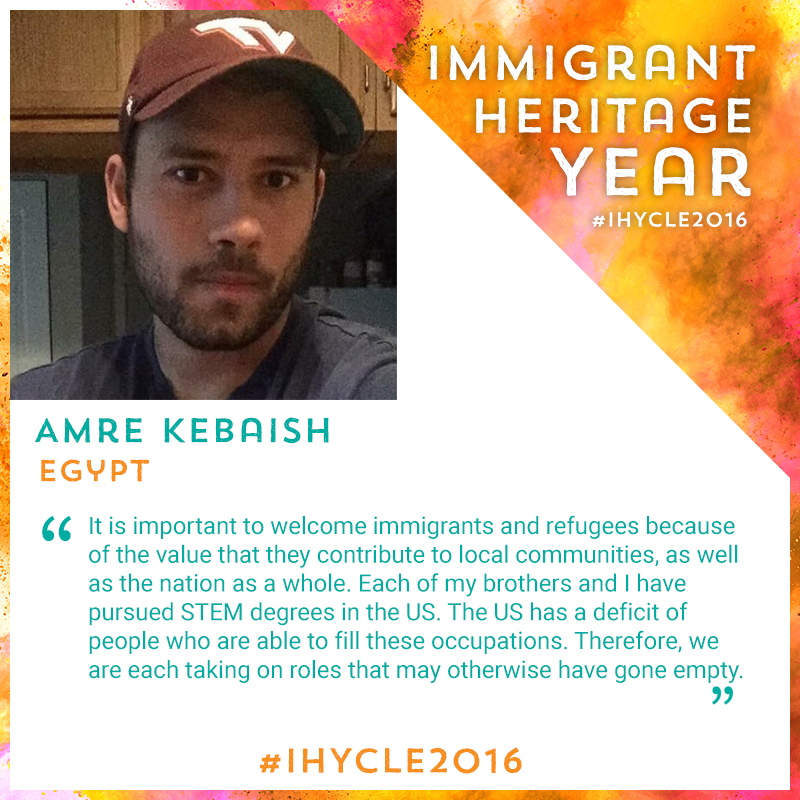
Amre Kebaish
Where are you from?
I was born in Al-Sharkia, Egypt, an agricultural state, which is located about 50 miles northeast of Cairo. Both my parents were born and raised in Al-Sharkia, but father also lived much of his life in the Maadi neighborhood in Cairo after my grandparents separated. As a result, I spent much of pre-school years living between Cairo and Al-Sharkia where my father owned a farm. In the 1980s, my uncle was attending medical school in Toronto, Canada. At the time, my father was in college and would visit him during the summer. They would travel south of the border to the U.S., where my uncle eventually did his residency, and they both applied for green cards. By the 1990s, my family started our Migration process to the U.S.
What was it like growing up?
I have memories of when I was about three years old and living in Egypt. I spent the majority of my time at my father’s farmhouse. My dad would survey the farm and supervise the workers and my mom would do things around the house. At the time, my parents weren’t concerned about living in a big city with better schools. However, I do recall spending a year in preschool, which I did not like very much. I spent most of my time playing with my brother around the farm and teasing our nanny. The last memory I have of living in Egypt at that age is when my parents tried to start teaching me a bit of English. This was in preparation for our move to Virginia, which would follow in a few months.
We moved to Fairfax county, which encompasses many of the suburbs south of Washington D.C. As I grew up, we ended up traveling between the U.S. and Egypt about once a year. The majority of my elementary school life was spent in the US. I attended middle school and parts of high school in Egypt because my parents didn’t want us to lose the Arabic language and understand how the farm works. We returned to the US when I was in 10th grade so that we could attend superior US high schools and colleges.
In the U.S., I grew up closely with cousins. We enjoyed partaking in western holidays like Halloween, Thanksgiving and even Christmas, despite my Muslim background. We were introduced to a lot of Christian traditions through my cousins’ Catholic mother. When we moved back to Egypt, we had a very well defined schedule. We would spend the week in Cairo attending school and weekends on the farm. During the weekends, we would spend time with my dad and learn how he managed the farm and his employees. We learned a lot about the different crops that he grew. His main crops were mangos in the summer and tangerines during the winter. He would later start growing bananas and oranges as well.
What brought you to Cleveland?
I had never imagined myself living in Cleveland or anywhere outside of the D.C. area. When I graduated college from Virginia Tech, however, I didn’t have a job lined up and started applying online. Eventually I came across an application to work at Hyland Software Inc. In the fall of 2014, I was hired as a software developer.
What were your first thoughts about coming to the US? Did those change?
When I first came to the US, I didn’t know what to think about it because I was so young. I was afraid of change and of moving to a new place. After spending my first few years living in the US, I knew I preferred living in the US more than living in Egypt. I still enjoy going back to Egypt, but I consider my permanent residence to be in the states.
What challenges did you face as an International Newcomer transitioning here?
The biggest challenge I faced was when I moved back to Egypt in my teenage years. My parents had decided that it would be beneficial to move back for a couple of years so that my brothers and I could relearn Arabic and understand more of the cultural heritage. At the time, we celebrated Easter and Christmas, but we had no understanding of the Muslim holidays.
Trying to relearn Arabic was very difficult when I moved back to Egypt. When I was three, Arabic was the only language I spoke. When my family came to America, I wouldn’t go back to Egypt for another year and a half. In that time, I lost a lot my Arabic speaking ability and English became my primary language.
Another challenge was that changing schools meant that I lost all of my friends from elementary school in the US and had to make new friends in Egypt. Later, when I moved back to the US, I would attend high school with a lot of the friends I had in elementary school, but the friendship we had was lost. Often times, I didn’t feel like I fit in with either culture.
What is your occupation?
I am a software developer for Hyland Software, Inc.
How have other Clevelanders made you feel welcome?
When I first moved to Cleveland, I had a single friend in the area. He was a coworker I met in my training classes at work. He couldn’t make it to the first birthday I celebrated in Cleveland, so I went out on my own. It was a Tuesday night, so I expected to eat dinner alone and go home because I didn’t know anyone else. Instead, I ended up meeting a group of great people, and they welcomed me into their group of friends. Later on, one of my friends would introduce me to my girlfriend. I have always felt welcomed at her family’s house.
What traditions do you continue to practice?
I still speak in Arabic with my parents and celebrate Eid Al-Adha and Eid El-Fitr, which are the two main Muslim holidays.
What do you love about Cleveland?
I like that Cleveland is a smaller metropolitan area. Compared to D.C., life is much less hectic. I don’t feel like I need to schedule an hour of my day to spend in rush-hour traffic. The people are also much nicer.
Why is it so important to welcome International Newcomers and Displaced Personss?
It is important to welcome International Newcomers and Displaced Personss because of the value that they contribute to local communities, as well as the nation as a whole. I feel that there is a misconception that people come to the US to make money to send it back home. That is not necessarily the case. For my family, at least, my mom owns a daycare and has never sent dime back to Egypt. Additionally, much of the money that we make from the farm in Egypt is sent to the US. In this way, my family has had a positive impact on the economy of the US.
Furthermore, each of my brothers and I have pursued STEM degrees in the US. The US has a deficit of people who are able to fill these occupations. Therefore, we are each taking on roles that may otherwise have gone empty.
Why is it important to travel abroad?
It is important to get a sense of other cultures and to experience the way other people live. This is true for countries of all levels of development. Every culture has something unique and interesting to offer.
The Dealership Debuts a Co-work Community For Entrepreneurs
The Shaker Heights Development Corporation (SHDC) and The Economic Community Development Institute (ECDI) announce a new partnership at The Dealership, a hub for entrepreneurship activity in Shaker Heights.
The Dealership, located at 3558 Lee Rd., is a co-work, event and office space for entrepreneurs, freelancers, creatives and small businesses. The Dealership offers members short/long-term desk space, office rental, high-speed fiber internet, 24/7 building access, conference and training rooms.
As the co-work operator, ECDI will offer services for all stages of small business development, office space, small business training, one-on-one technical assistance, networking events, and access to capital services.
“We are thrilled to partner with ECDI at The Dealership. They bring a proven track record of serving and working with small businesses and entrepreneurs in all stages of the business life cycle,” says Nick Fedor, Executive Director of SHDC. “ECDI will be a great resource for current tenants, future tenants and the broader small business community.”
Carrie Rosenfelt, Executive Director of ECDI’s Northern Ohio region says, “This partnership presents an opportunity to create a vibrant hub of small business activity in Shaker Heights. Our goals for the partnership include strengthening the entrepreneurial ecosystem and increasing economic prosperity and sustainable economic growth.”
The “Dealership Debut” is on Thursday, December 1 from 4-7 pm. The event will include remarks from Mayor Leiken, a showcase of local businesses, interactive community-building activities and a business pitch competition.
The pitch competition, presented by Huntington Bank, is open to all Shaker Heights based businesses. A first place prize of $2,500 and a second place prize of $500 will be awarded.
For additional information regarding office space please contact Nick Fedor at 216.491.1425 or [email protected]
For additional information regarding co-work space, events or the business plan competition, please contact: Alexis Coffey at: 216.912.5655 or [email protected]
About Shaker Heights Development Corporation
Shaker Heights Development Corporation is a 501 c3 nonprofit organization dedicated to enhancing Shaker’s commercial districts. SHDC envisions an enriched Shaker Heights community that seamlessly blends our innovative history into a vibrant future by fostering entrepreneurial opportunities and stimulating sustainable economic growth. Learn more atwww.shakerdevcorp.com.
About ECDI
The Economic and Community Development Institute (ECDI) is Ohio's largest non-profit economic development organization with offices in Cleveland, Akron, Toledo, and Columbus. ECDI's mission is “to invest in people to create measurable and enduring social and economic change.” Since inception, ECDI has provided small business owners with more than $35 million in startup or expansion capital. Over 1,680 loans have been disbursed to innovative businesses, and over 6,100 jobs created or retained in the state of Ohio. Programs and services have been supported by over $63 million in federal, state, local and private funds and have proven to spur local economic development. For more information visit www.ecdi.org.

shark&minnow Awards Global Cleveland on #GivingTuesday
Strategic marketing and business consulting firm, shark&minnow, committed to giving back this holiday season. In honor of #GivingTuesday– a global day where businesses and communities come together to celebrate generosity through giving initiatives, shark&minnow launched their 2nd Annual #sharkATTACK contest.
As the winning Greater Cleveland non-profit organization, Global Cleveland was selected to receive a day of complimentary strategy and marketing consulting services.
"Cleveland has a proud history of being a place of inclusion and diversity,” says Hallie Bram Kogelschatz, CEO of shark&minnow. “We are so proud to partner with Global Cleveland to help them ideate around continuing this legacy.”
shark&minnow is a business & marketing consultancy that makes the complex simple. Core offerings include research & insights, strategic planning, design & marketing communications. For more information visit sharkandminnow.com.
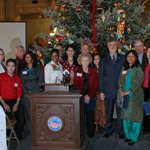
Cleveland Multicultural Holiday Celebration
You’re invited to the 7th Annual Cleveland Multicultural Holiday Celebration on Wednesday, December 14, 2016 at the Global Center for Health Innovation, 1 Saint Clair Avenue, NE. The International Community Council-Worldwide Intercultural Network (ICC-WIN) presents this gala event in partnership with the City of Cleveland and with Global Cleveland as a Community Partner. Premier sponsor of the event is US Bank. This is annual signature event of ICC-WIN and provides an opportunity for outstanding international networking!
The event features international foods, international dancer performances, and international fashion show with 20+ cultures represented. There will be a silent auction featuring international handicrafts. Door open at 6 PM and the program continues to 9 PM.
The cost is $15 per person with discounted parking available at City of Cleveland City Hall lots. To register please go to: www.icc-win.org
This event started as a small gathering in the Rotunda of Cleveland City Hall to a major gathering of hundreds of people in the Cleveland Convention Center. Please join me on Wednesday, December 14th and be a part of this wonderful celebration of our multicultural diversity!
Written By: Kenneth J. Kovach, President and ICC-WIN Board of Director

Addressing equity, diversity, and inclusion as a Spark Fellow
Global Cleveland is a proud member of Welcoming America, a nonprofit dedicated to helping local governments and nonprofit organizations build a welcoming infrastructure in more than 100 communities across the United States.
Pictured above, Ohio Fellows: Left Patricia Y. Hernández, Senior Attorney, Advocates for Basic Legal Equality, Inc. and right Melissa Bertolo, Welcome Dayton Program Coordinator, City of Dayton Human Relations Council
In August, I was chosen as one of eight fellows for Welcoming America’s Spark Fellowship (1 of 3 chosen from the State of Ohio). The Spark Fellowship, to advance racial equity, is a two-year fellowship, funded by the W.K. Kellogg Foundation. This intensive fellowship asks fellows to develop programming in our communities to raise awareness of disparities and to develop a strategy for change.
Although, the mission of GC is to attract, welcome, and connect International Newcomers to social and economic opportunities, the Spark Fellowships asks that, while advancing International Newcomer inclusion, we help close the gap in racial equity. This is something that has always been central to our work at Global Cleveland. From the inception of our organization, it’s been clear that our role to create a welcoming place of opportunity for all individuals regardless of race, ethnicity, creed, or sexual orientation.
I am honored to have been selected to represent Global Cleveland and our Greater Cleveland region, in order to address equity, diversity, and inclusion in our welcoming work. The Welcoming Framework incorporates strategies that create more inclusive communities, engaging both International Newcomers and receiving communities. In the past, and moving forward our work will be across the following areas: leadership and communications, equitable access, economic opportunity and education, civic engagement, and safe and connected communities.
In April, I attended my first in person meeting with the 7 other Spark Fellows and staff members at Welcoming America. I look forward to reconnecting with my Fellows, next month at the National International Newcomer Integration Conference, which will be held in December. These interactions help me learn and share best practices that are essential to engaging communities in ways that allow for greater understanding, particularly among people who may have concerns about or are unaware of the changing demographics of our community.
I am thankful to Welcoming America and the W.K. Kellogg Foundation for the opportunity to dive deeper into both racial equity and International Newcomer integration work. I am even more grateful to work with a team of colleagues who are supportive and understanding of my desire to participate in this fellowship.
More information about the fellowship and my fellow fellows can be found here.
Written By: Jazmin Long

Cleveland: My New Home
I was born in Shenyang, a city in the Northeast part of China with about 8 million people, and have lived there for the first 19 years of my life. Summer is not very hot, but winter gets unbelievably cold. Shenyang has a long history: it was once the capital of China during Qing Dynasty; it had suffered from war but has recovered from it; it has been an important industrial center in transition; it has 41 ethnic minority groups living in the city, and the city government legally recognizes five religious beliefs--Buddhism, Taoism, Islamism, Catholicism and Protestantism. If I were to describe the characters of Shenyang, I would say it is very open, diverse, and tolerant. It has a place for everyone, and it has always welcomed people from different cultures.
My whole family lives there, and so do many of my childhood friends. High school was one of the times most unforgettable for me, as it probably is for many of you. The different part of my story is that I was living in a dormitory--since all students were required to do so. I remembered well those days with countless laughter and fights, when 8 of us adolescent girls of different characters all sharing the same dorm.
At the age of 19, I passed the National Higher Education Examination and was accepted by a university in Shanghai. Arriving in Shanghai, I was so surprised, or you may even say shocked, by the prosperity of this city. With a population of 2.5 billion, Shanghai is truly the most populous economic center of mainland China. After spending 4 years in Shanghai, I still didn't experience all aspects of the city. It has countless shops, restaurants, cultural sites, entertainment facilities, an amazing extensive public transportation system, and a very quirk yet balanced coexistence of this “modern new world” and the “old relics”. I love this city so much, and would definitely recommend it to anyone who wants to see what modern China looks like.
Pursuing further education in Canada is probably one of the best decisions I’ve ever made. Living in Windsor, Ontario allowed me to experience North American life and to see other possibilities in my life. The friendly, open-minded Canadian people around me has inspired me to slow down my pace, and to switch my life focus from earning big money to spending time with the people and the things I love. I can feel the change: I became more mellow and considerate. This is also when and where I met my husband.
Upon accepting his new job, my husband and I moved to Cleveland together in April 2016. While he worked as a technical support person for a software company, I found a job as a program associate person at Global Cleveland. Half a year later, I am deeply attached to both the city, and this organization. Cleveland is also an open, diverse, and tolerant city with great vitality, just like my hometown Shenyang. Every day, I am learning more about the cultural, historical aspects of this city, and getting amazed by the theaters, the magnificent buildings in downtown area, and the friendly people I met. It is reassuring for me, as an International Newcomer, to realize that there is a large Migration group here in Cleveland, and I feel very engaged because of all the existing Chinese communities and organizations. Cleveland had its time when the manufacturing industry is prosperous and relied on, and then inevitably experienced the loss of job and the economic downturn when stepping into the new age—surprisingly again, just like my hometown. Like most people I met, I see the possibilities and opportunities here in Cleveland. And I have no doubt that with all the friendly hardworking people, the people with good will and a hope for better future, this city will rise again.
Global Cleveland, a nonprofit with the mission of attracting, welcoming and connecting International Newcomers to economic and social opportunities in Cleveland and Cuyahoga County, is working together with many other nonprofits of the same goal towards Cleveland’s revival. Every day, the people at Global Cleveland work hard to make Cleveland a friendlier place for people from other cities, states, and countries. We talk to individual international students and International Newcomers who have been here for decades; we educate employers and companies on the importance of Migration and assist them with the international hiring process; and we work closely with colleges and universities to present workshops, events and seminars on a variety of Migration-related topics. I feel very lucky to be part of this team, and I am proud to contribute in this process of “making a difference”.
Cleveland is my new home now. My husband and I had purchased a house, brought in our Canadian cats, and adopted a dog from the Summit Humane Society—so pretty much settled in. We are enjoying our little multi-cultural home, as well as our life in Cleveland. Like most other Clevelanders, we have high hopes in this city and expect that, someday, we will witness a more prosperous, more diverse, and more living Cuyahoga County.
Written By: Wenzhu Sun
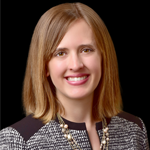
My Life As An International Newcomer Living in Germany
Three months ago, my husband and I packed up our lives in Cleveland and made the move across the Atlantic to Düsseldorf, Germany. We are both lifelong Clevelanders, and though we love our hometown, we also love traveling, learning languages, and experiencing a different culture. Plus I believe that living in other countries gives you a sense of perspective for the world around you, where you come from, and it allows you to really understand your own heritage and background.
The move to Dusseldorf was not our first international move, so we felt ready for the challenges that come with such a large shift in your daily life. This time around we had my husband’s company supporting us in the move. They sent us a to-do list covering everything from the visa application to registering with city hall upon our arrival. The list was long, but we felt it was manageable.
It wasn’t until we were sitting in the German Consulate in Chicago that I realized we were becoming International Newcomers. The German government has been recruiting young, professional workers to emigrate to Germany to make up for their population loss and low birth rates for the last several years. We fit right into that category, and just like that we were officially International Newcomers.
Our first week as International Newcomers was a struggle. Between awkward cultural mishaps and German bureaucracy, we were wiped. We had to register with the city of Düsseldorf, open a bank account, apply for health insurance, register our dog with the city (he’s an International Newcomer, too, after all), get new cell phone plans, set up our Internet and settle into our apartment. We also had to do all of this in a particular order, because you know how Germans are with their love for orderliness. “Ordnung muß sein,” as they say here. Or, “there must be order.”
We were able to make our way through most of the above with broken German and assistance from my husband’s company, but it took a full week of crisscrossing the city and making repeated mistakes.
Just as my frustration with German bureaucracy was at a boiling point, we stumbled upon a government agency that helped Displaced Personss right down the street from our new apartment. I’m not 100% certain about what services they provide, but there was a steady stream of people coming in and out every day.
I realized not only how lucky we were that we had my husband’s company guiding us through the move, but that we at least had some language skills in our pocket. Not to mention that it was our choice to move to Germany. We weren’t compelled by a lack of opportunity or daily threats to our lives owing to dissident political beliefs or terrorism, like so many of today’s Displaced Personss and migrants are. We also arrived on a date of our choosing without the fear of being rejected at the border. We weren’t greeted by xenophobes threatened by our existence. We didn’t have to cram ourselves into a rickety old wooden boat destined to sink. Instead, we comfortably boarded an international flight and watched Key and Peele’s Keanu.
You know that saying, “walk a mile in their shoes”? I think my husband and I walked about a tenth of a tenth of a mile in the shoes of Displaced Personss and migrants, and even that was especially difficult. These types of experiences are what makes living in other countries worth it. This shift in perspective, this new insight builds compassion and understanding.
In my mind, this experience also reinforces why we need to be welcoming in our own communities and help Cleveland’s newest populations set down roots and bring them into the social fabric of our town. Inspired to help? Start with Global Cleveland, Displaced Persons Response or the Cleveland Displaced Persons Bike Project. Want to do more? Ask around, because the work never stops.
Written By: Melanie Furey

Altogether or Nothing!
Last week I was invited to present THE CLEVELAND STORY in Slovenia. For those of you who know it’s not Slovakia. That’s another amazing country a few hours to the north. Slovenia is where my mom was born, where both of my dad’s parents were born, and if you’ve heard me say or write this before here it is again. As a guest of an NGO (non-government organization or in America, non-profit) called SLOGA and in collaboration with the US Embassy I was invited to present the story of economic integration, security, and community building all through the lens of Migration. Cleveland and Cuyahoga County have a lot to share in so many ways: 1200 Displaced Personss came to NE Ohio last year, we saw over 2500 new US Citizens sworn in at our US Federal Courthouse, and between our 14 institutions of higher learning, close to 8000 students came here to study from a nation outside the US. While the work of harnessing this amazing energy is an ongoing lesson in better and better practices every day, it gave me a chance to talk about so much of the great work underway in Cleveland, Cuyahoga County, and Northeast Ohio TODAY.
From meeting with the civic leadership in Ljubljana (Cleveland’s sister city) to sharing a program with the US Ambassador Slovenia, Robert Hartley, the good work of our community and the many people engaged on so many levels were the common bridges. If you travel to Ljubljana you will see the core of the city are three beautiful often traveled bridges. These and the constant reminders of the beautiful places of worship via the ongoing neverending bells ringing (all day and all night) remind you of the special place that is the capitol. Every person I met with knew of Cleveland, and knew what a warm community we are. I especially appreciated learning from our partners in welcome from Greencard Voices (Minneapolis, MN), Welcoming America (Atlanta,GA) and International Rescue Committee (Miami, FL) and how we could borrow some tools and ideas for our great metropolis.
What challenged me most was the basic exercise of language. Having attended Slovenian language school for 9 years and having been raised by parents who were fluent didn’t make up for the fact that my translation was slow at first, and my desire to fully participate wasn’t always met with my command to do so. But over the course of a few days, something began to move inside my head and heart that made me understand my roots to this people and to this land. There was something equally subconscious and immensely apparent all at once. When I actually ordered a Turkish coffee with the right grammar and inflection, and I was answered as if I spoke this beautiful hard to master language everyday, I was ecstatic. Herein lies my personal lesson: we are all connected to our past and to each other. And while we don’t always have the perfect word or conjugation, the desire to connect and time to put in to this relationship is important. The more we recognize this, build on it, grow our city and our county and country from the inside out, understand that the cavalry isn’t coming because the cavalry is already here, support entrepreneurs, help people start businesses that inevitably welcome and employ native born Ohioans, welcome Displaced Personss who are fleeing hell to come here and start anew, the more we will grow and develop in a way for all of us.
On this day, we at Global Cleveland stand with our sisters and brothers of all faiths, geographies, and cultures. We do so because the act of welcoming for us is natural to who we are on our best days, and because we recognize that competitive, thriving, growing, dynamic communities are ones that celebrate, foment, encourage, and instigate true cultural, racial, and religious diversity.
I’m going to work on my Slovenian. I’m going to cross more of my own city’s bridges. I’m going to welcome more people from Latvia, Puerto Rico, El Salvador, Slovenia, Vietnam, India, China, Central African Republic, and Somalia and all points in between. As the Cleveland Public Library so boldly says on its Superior entrance: US is them. We all have a lot of work to do as we make this place we are from all it is and will be.
Written By: Joe Cimperman, Global Cleveland President