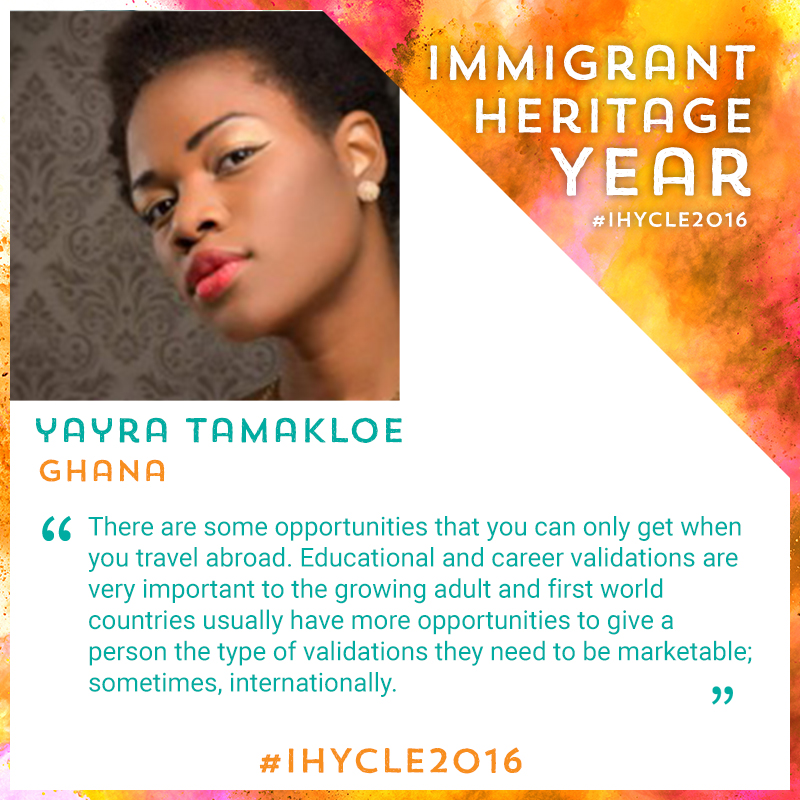
Yayra Tamakloe
Where are you from?
I am from Ghana, the volta region specifically Whuti. I was born in Tema however and grew up half my life in Koforidua.
What was your childhood
It was very interesting, I have had equal experiences of living in the city, town and village. So if anything I would say my childhood was very educative. My dad however was super strict, we would eat little to no processed foods, curfew was at 6pm and all my friends and classmates feared him (mostly the boys....lol)
What brought you to Cleveland?
Kent State University's Fashion program brought me to the Cleveland area.
What were your first thoughts about coming to the United States? Did those change?
I thought it was like what we saw on TV but I was so wrong. There are as much problems as there are opportunities here. I am just a little disappointed that the media doesn't show the whole truth so we can well prepare ourselves when we make decisions to travel to different countries.
What challenges did you face as transitioning here?
I had some personal and social problems during my transition which made it a little more difficult. However in regards to fitting into the society, it was quite easy. I just didn't and still don't understand how and why some things are done in America.
What is your occupation?
I am a full time Fashion Design student at Kent State and I work at Red Lobster
How have other Clevelanders made you feel welcomed?
People in the Cleveland area are quite welcoming. Considering I am specifically in Kent, it is beautiful to see people from all over the world living on one campus. It was my heart.
What traditions or customs do you continue to practice?
In regards to my culture, I still cook traditional foods (my jolly is the best...lol), I dance, sing, speak..etc. Essentially I have kept every aspect my culture.
Why is it so important to welcome International Newcomers and Displaced Personss?
You have no idea what they have been through or what the had to leave behind to be here. Personally I want to do more in regards to making International Newcomers and Displaced Personss feel welcomed. It’s not easy living in two worlds and the only people who can tell you first hand are International Newcomers and Displaced Personss.
Why is it important to travel abroad?
There are some opportunities that you can only get when you travel abroad. Educational and career validations are very important to the growing adult and first world countries usually have more opportunities to give a person the type of validations they need to be marketable; sometimes, internationally.

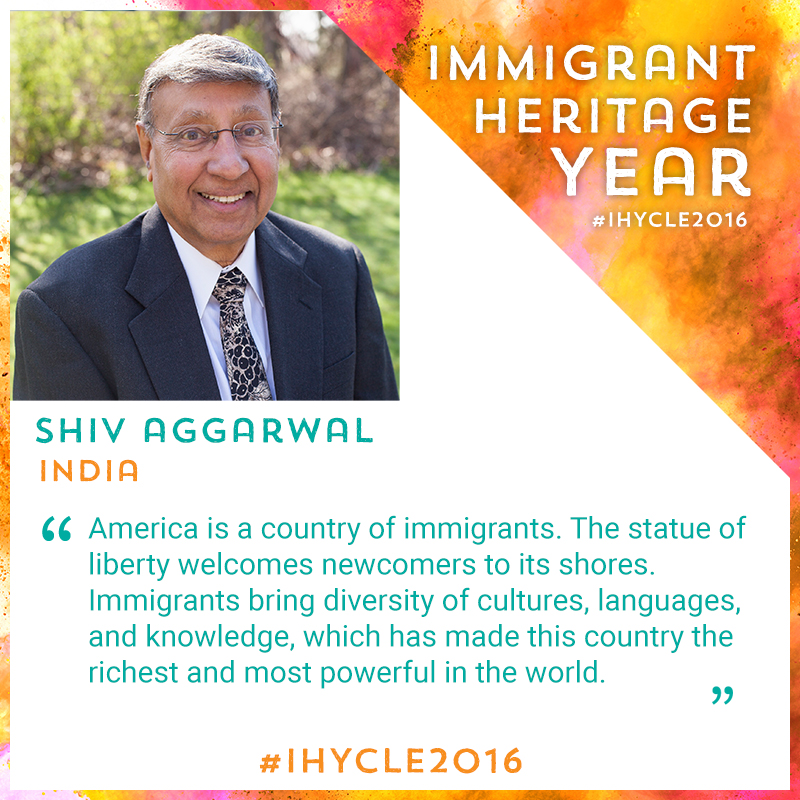
Shiv Aggarwal
Where are you from?
DELHI - India
What was your childhood like?
I was born and raised in the historical city of Delhi (capital of India). It was a multi-racial, multi-religious city. I had friends of all religions and we learnt to understand each other's points of view. Being one of the youngest siblings in a large family, I learnt to respect elders. I grew up in a disciplined environment and was taught to be kind, don't use abusive language, and conduct daily activities in a timely manner.
What brought you to Cleveland?
After completing my MBA from University of Missouri, I worked in Chicago for a year. There I met the Executive Director of Greater Cleveland Neighborhood Centers, who asked me to work with him in the Buckeye-Woodland area. When I came here to explore the possibility, I was very much impressed with the neighborhood and the city. Then I decided to join and work at the East End Neighborhood House.
What were your first thoughts about coming to USA. Did those change?
When I was studying in India, I was always interested to go abroad for further studies. As we were living in British India, my family was influenced with British education system. My brothers went to England for further studies, and my father insisted that I should go to England. I was pursuing under-graduate studies in a college, established by American Jesuits. I was very much impressed with education system and regularly interacted with American professors.They were a great influence in my life. Then I did my graduate work in an institution modeled on US educational system. Thus I came to USA for further education. I believe that I made the right decision, and I still think the same way as I spent the better part of my life here.
What challenges did you face as transitioning here?
Initially, life in USA posed many challenges and required a great deal of adjustment. I iknew English very well, but American English was a little different, and then the accent was a hurdle. It was difficult to understand each other, and repeated sentences to be understood. The terminology was very different; such as some one asked "Hang on to the keys", literally I hanged them on the wall key board; or terms such as rake, mop,rags were new to me.
What is your occupation?
With degrees of MSW and MBA, I decided to pursue my profession leading to Social Work management; and specialized in Community Organization. I developed and managed in Collinwood as Executive Director of a largest neighborhood based multi-service center of Cleveland.
How have other Clevelanders made you feel welcomed?
I find that Cleveland is the friendliest city. As a new comer, I experienced that Cleveland, business, civic, & political leadership was very helpful. Many people invited me for dinners, and made me a part of their family during Thanksgiving, singing Christmas carols, special occasions as birthdays, weddings, bar mitzvahs, etc. As much as I was, they were very interested in learning about my culture.
What traditions or customs do you continue to practice?
I am a Hindu and Hinduism is a way of life, which I practice on a daily basis. We are taught to love fellow beings, tolerant to their feelings, and be sensitive to their customs. I have attended churches, jewish temples, quakers and bnai brith meetings. I have given the same values to my children and they practice regularly. We celebrate two important events with the family. One is Diwali (festival of lights - victory of truth over evil) and the second is Thanksgiving.
What do you love about Cleveland?
I think that Cleveland is the best location in the nation; major and important cities are within a 400 miles radius. Cleveland is a city which is identified by its neighborhoods - such as Little Italy, Little Poland, Little Hungary, German Village, Lithuanian Village, Slavic Village, Asian Plaza, ethnic cultural garden. We enjoy many ethnic festivals. It is a global village where we find ethnic cuisine, folklores, and people wearing sarees, kimonos, dashikis, etc. I think that Cleveland is unique in many respects.
Why is it so important to welcome International Newcomers and Displaced Personss?
America is a country of International Newcomers. The statue of liberty welcomes newcomers to its shores. International Newcomers bring diversity of cultures, languages, and knowledge, which has made this country the richest and most powerful in the world. America is the most compassionate and charitable country, and it accepts International Newcomers from all walks of life. After Hungarian revolution, an influx of Displaced Personss came to Buckeye area. It was , indeed, an opportunity for me to help them in adjusting to new environment, learn English. Many of them were doctors, scientists, and other professionals. Initially, they earned basic minimum to survive, but eventually excelled in their professions and contributed immensely in the american society.
Why is it important to travel abroad?
Traveling broadens the horizon and outlook. We learn the customs, traditions, lifestyle and history of other countries. I have been traveling for over 50 years; besides sight seeing, my motivation is to interact and communicate with local people. For example , in a Frankfurt YMCA, I met with students and exchanged ideas - they were going on a day's bicycle trip, I rented a bicycle and joined them; it was a great experience. In another instance, while walking to see Windmills in Amsterdam, I saw a few children playing. I sat down with them, taught them and sang american children's songs. On the way back from seeing windmills, their parents invited me to have dinner, since it was getting late, they asked me spend night with them. It was a great experience to learn about their life style.
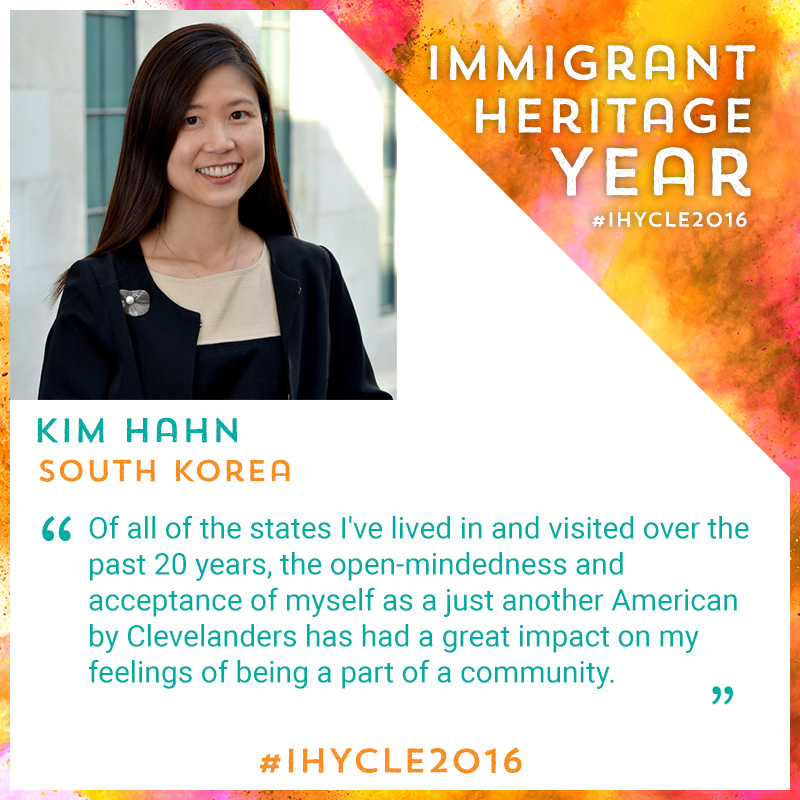
Kim Hahn
Where are you from?
I am from Seoul, South Korea.
What was it like growing up?
I grew up with both my parents and people around me all having extremely high expectations for my educational outcome. It was those expectations that ultimately became my greatest motivation for me to have achieved what I have right now.
What brought you to Cleveland?
I currently live in Kent but do make it a point to get out to Cleveland often. I came to Kent when I got a job as an associate professor at Kent State University in 2011.
What were your first thoughts about coming to America? Did those change?
One of my first thoughts was that it was so spacious and spread out as compared to Korea. Everything here was bigger and so many different choices that I have to make for everything. My intent was to go back to Korea after my 2 years of graduate studies was completed. That obviously changed because I never went back to Korea.
What challenges did you face as an International Newcomer transitioning here?
My biggest challenge was communicating with people with cultural backgrounds vastly different from where I grew up.
What is your occupation?
I am an Associate professor and the Associate Director of the Fashion School at KSU
How have other Clevelanders made you feel welcomed?
Yes, very much. Of all of the states I've lived in and visited over the past 20 years, the open-mindedness and acceptance of myself as a just another American by Clevelanders has had a great impact on my feelings of being a part of a community.
What traditions or customs do you continue to practice?
Korea's New year’s day traditions I continue to follow with my kids. They like to dress up in traditional clothes, hear our parental advice and then receive an envelope of cash.
What do you love about Cleveland?
It is a large city with metropolitan features and culture but also filled with smaller town-like community events. I also love spring and fall here. I love going to all of the different metro parks with my family.
Why is it so important to welcome International Newcomers and Displaced Personss?
I think it is important that all new International Newcomers and Displaced Personss benefit from the same experiences that I have been fortunate to have had. The kindness that has been extended to me by Ohioians is something that convinced me to stay and share my skills and culture.
Why is it important to travel abroad?
Traveling abroad make you expose to so many different things. You learn to be open-minded, responsible, and aware of the cultural diversity of the other people from around the world in your community.
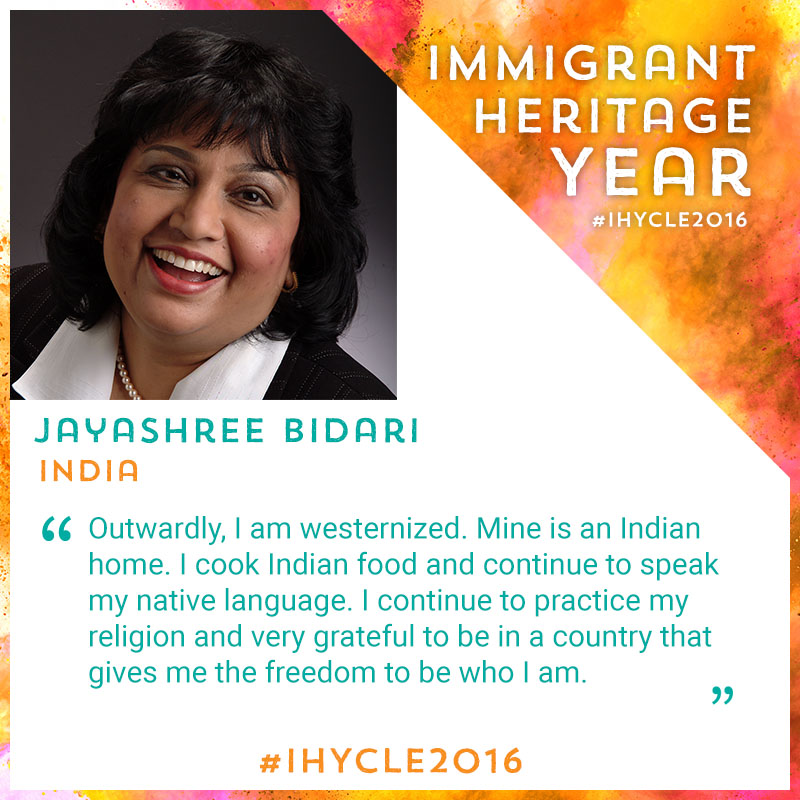
Jayashree Bidari
Where are you from?
Bangalore, India
What was your childhood like?
It was a good childhood. I grew up in a big city where we had an opportunity to go to good schools and engage in extra curricular activities.
What brought you to Cleveland?
I got married and my husband was working in Cleveland.
What were your first thoughts about coming to the United States? Did those change?
I felt very lonely and homesick. I did not drive. I had no friends. It took me a few years to start driving. Once I learnt how to drive and got a car, my world opened up. I made new friends and started getting involved in community activities.
What challenges did you face as transitioning here?
Loneliness, not knowing anyone, having to figure out how to do things, unable to understand American accent. I was wearing a saree and felt I could not join mainstream. My neighbors were very welcoming and friendly. I went to a block party and everyone knew how to say my name. I had a hard time remembering everyone's names and associating the name with the person. Everyone looked the same to me. I had a Master's degree majoring in Political science from India. It was not a marketable skill. I had to go back to school.
What is your occupation?
I work in the area of tax planning. I work with Business owners and Physicians to cut their taxes. I am also a comedienne.
How have other Clevelanders made you feel welcomed?
Once I was able to break my cultural barriers and learnt to mainstream, I felt very welcomed. I had many mentors who have guided me in my career.
What traditions or customs do you continue to practice?
Outwardly, I am westernized. Mine is an Indian home. I cook Indian food and continue to speak my native language. I continue to practice my religion and very grateful to be in a country that gives me the freedom to be who I am.
What do you love about Cleveland?
What is there not to love about Cleveland? It has everything a big city offers and still has the friendly atmosphere. You can afford to lead a good lifestyle. I love the Lake, the beaches and the metro parks.
Why is it so important to welcome International Newcomers and Displaced Personss?
My American friends would always tell me that they could not do what I did- leave my family and come and start a new life in a new country. Every new International Newcomer and Displaced Persons would feel lonely and lost. Lending a hand, guiding them in making decisions would help them to mainstream and contribute to our community.
Why is it important to travel abroad?
You learn so much when you step out of your comfort zone and going to another country would broaden one's outlook and knowledge .
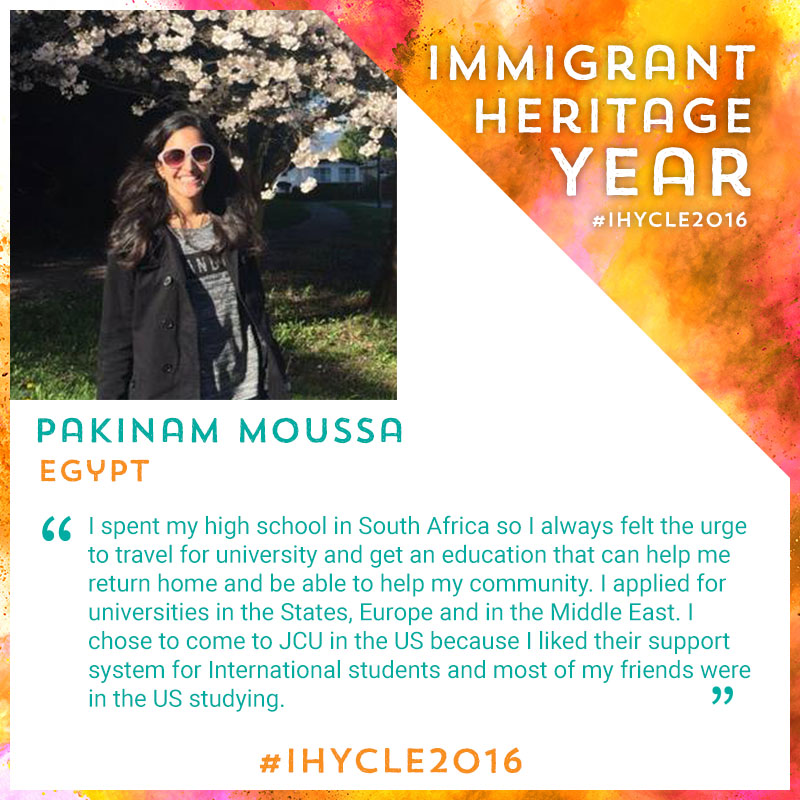
Pakinam Moussa
Name:
Pakinam Moussa
Occupation:
John Carroll University student
Where are you from?
Egypt
What was it like growing up?
I grew up on a farm in Egypt and lived with my family. I am the oldest of three sisters. My parents valued education so much so I had to commute to school for an hour every day because of the good reputation my school had. Family in Egypt means extended family as well and there was a huge emphasis on spending summer time with them and celebrating successes with them.
Why did you decide to leave your home country and study in the United States of America?
I spent my high school in South Africa so I always felt the urge to travel for university and get an education that can help me return home and be able to help my community. I applied for universities in the States, Europe and in the Middle East. I chose to come to JCU in the US because I liked their support system for International students and most of my friends were in the US studying.
What were your first thoughts about coming to the United States of America?
When I first arrived in the US, I arrived in Atlanta then NYC then settled in Cleveland for University. I was shocked by how different each city is, shocked in a good way! I loved Cleveland because of the similarity in the Midwestern culture shared with back home.
Why should we welcome International Newcomers and Displaced Personss?
I believe that welcoming International Newcomers and Displaced Personss adds more to our diversity and sense of learning about the world around us. Welcoming them is also a humane thing to do since it is hard to say NO to those who have no place to go to. If their homes were okay, they would have never left.
Why is it important to travel abroad?
It is very important to travel abroad because you simply see another culture from its people’s perspective. Additionally, you get to make friends from diverse backgrounds and go on adventures that only add to your skills, memories and intellect. I had the chance to spent my high school years abroad in south Africa, my current college years in the US and I also travelled on semester at sea and to other youth forums in different countries. This time spent abroad made me more independent and more open to any challenges. Most importantly, it made me eager to learn about our differences than be afraid of them. and love to know more people who
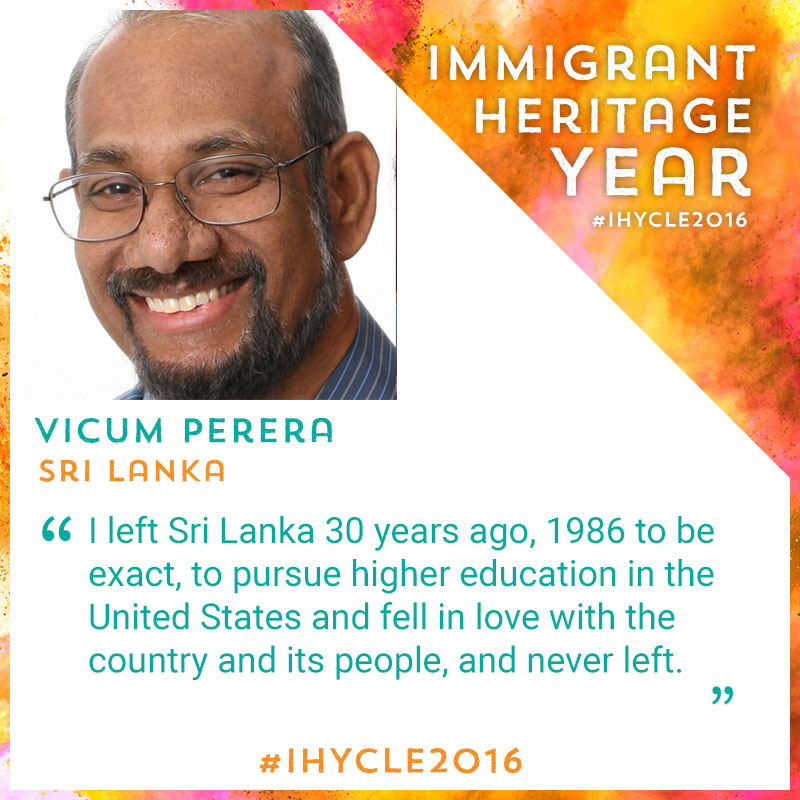
Vicum Perera
Where are you from?
My native country is Sri Lanka, the country that elected the world’s first female head of state back in the 1960s. I left Sri Lanka 30 years ago, 1986 to be exact, to pursue higher education in the United States and fell in love with the country and its people, and never left.
What was your childhood like?
My family back ground in Sri Lanka was middle class and my father was a government servant. We did not have much in wealth and power but the childhood in Sri Lanka was magical. The country is blessed with the natural resources and the people are simple, unassuming, and helpful. In fact, Sri Lanka was recently listed along with the United States as one of the top five most generous countries.
What brought you to Cleveland?
My education brought me to the United States and to the State of Indiana. Once I finished my doctoral degree moved to Ohio and my employed at the Kent State University brought me to this part of the world.
What were your first thoughts about coming to the United States? Did those change?
In Sri Lanka, the United States is highly regarded as a world leader and is ranked at the top in favorable consideration. In fact, coming to the United States or to a European country in itself is considered as an achievement. This premises itself had created some animosity towards the United States among some political and social leaders to generate a half-hearted resentfulness. So, there is a bit of love-hate relationship towards the United States in theory. Coming to the United States and living among the Americans changed many of my views and I came to appreciate the many great cultural norms the American have. The Americans are the most generous people in the world and their ability to come together in many situations to achieve common goals to further the humanity is unbelievable. The freedom to move up to ones’ natural potential in itself is not possible anywhere else in the world!
What challenges did you face as transitioning here?
Transitioning into the cultural and behavioral norms of the United States was the biggest challenge that I faced. This includes the difference in the English accent and the associated difficulty in communicating well. In Sri Lanka, communication is not regarded as an asset and one has to bow to the authority of the elders and not speak up one’s mind. You are expected to tolerate incorrect notions and opinions of the elders and not contradict those regardless how absurd the notions are. So, the learning curve in expressing one’s ideas was a big challenge and doing so effectively is a remarkable hurdle to overcome.
What is your occupation?
I have a PHD in Mathematics and work as a Mathematician at the Kent State University. I work at the Trumbull campus of Kent State University as an Associate Professor for over 18 years.
How have other Clevelanders made you feel welcomed?
I have always felt welcomed and there are many great folks who go out of their way to be helpful. The activities and other cultural events organized in the area are quite remarkable. City of Cleveland is doing a great job in this regard. I have attended the South Indian musical event, Thyagaraja Festival at Cleveland State University and have myself participated in hosting several Sri Lanka cultural events in the area.
What traditions or customs do you continue to practice?
My native country consists of a majority of practicing Buddhist who adheres to the nonviolent behavior towards humans and all living beings. The diversity is accepted and valued. Diverse opinions and religious doctrines are accepted and not ridiculed or challenged. These practices, obviously, have a natural home in the United States. The Buddhist practices of Sri Lanka are continued by the northeast Ohio Sri Lankan community and our family also take part in these activities even though I myself grew up in Sri Lanka as a catholic in a mixed religious family.
What do you love about Cleveland?
Except for the bitter cold during the winter season, the city and its people are warm and welcoming. I love the activities and resources available to the diverse cravings and appetite of the citizens. Educational and medical facilities available in the area are truly world-class and Cleveland is truly a world leader in this regard.
Why is it so important to welcome International Newcomers and Displaced Personss?
It is important to treat diversity as strength and not as a weakness. Everyone has something to contribute to the melting pot. Recognizing one’s strengths and abilities and using those skills to the common good of everyone is a challenge but a mark of a great leader. There is a story in Sri Lankan about seven folks who try to make a soup. Each one withheld his contribution to the soup hoping the others will contribute their ingredients and not contributing himself would not be a problem. Well, at the end all seven did not contribute and the soup was just a pot of boiling water! To make the melting pot truly so, each one should be allowed to contribute and benefit.
Why is it important to travel abroad?
The world is a diverse place with a diverse norms, values, cultural practices, foods and beliefs. All these have made the World a remarkable place. Bio-diversity, plants and animals and the natural beauty varies. Many countries and places that I have visited in the world are simply beautiful. I have yet to visit a place that is NOT so. Traveling is obviously one of the ways to witness this diversity.
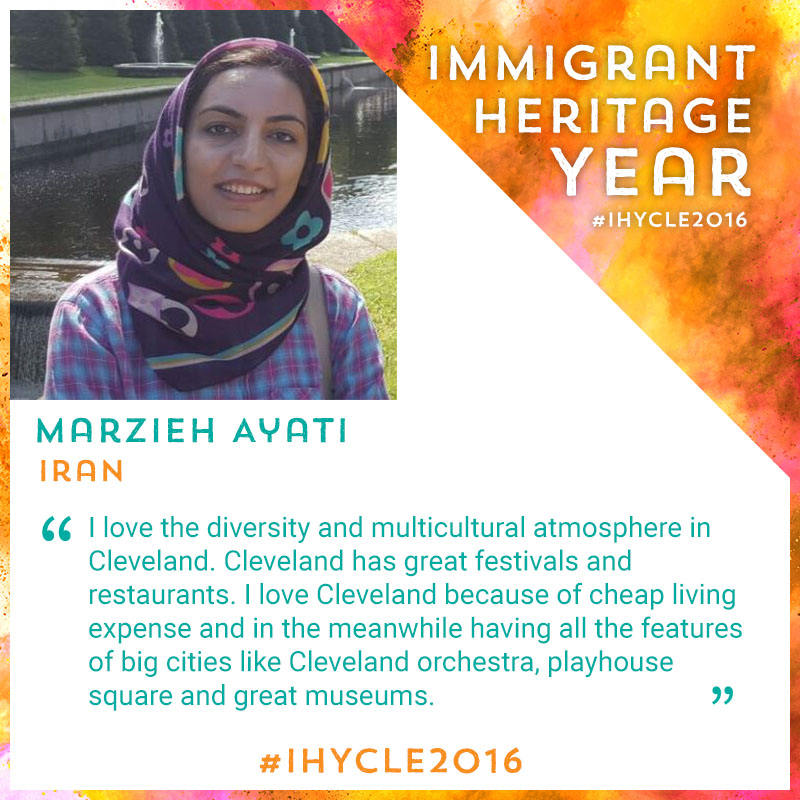
Marzieh Ayati
Where are you from?
Iran
What was your childhood like?
I had a fun and great childhood in Iran. I have an educated family who supports me to continue my study.
What brought you to Cleveland?
Graduate school brought me to Cleveland. I am a research assistant and a phd student of computer science at Case Western Reserve University.
What were your first thoughts about coming to the United States? Did those change?
Lots of things were in contrast with my expectations: I am from Tehran which is capital of Iran. It is mostly like NYC, lots of tall building and nightlife. So I thought all US cities are like that. I came to Cleveland in the winter and I rarely saw people in the street. Old apartments around school, no ring bells, traffic lights hang on the wires not bars. I thought it was a dead city. Later, I figured out some buildings are connected to each other from inside. Moreover, I thought there would not be any gender inequality in US. But what I am seeing and hearing now is different. Right now, there are just a few girls in the computer science program. However, in Iran half of my classes were girls.
What challenges did you face as transitioning here?
New language and new culture are the biggest challenges. Even in the school. The first days at school were so shocking and funny for me. Students were eating in the class, putting their foot on the desk in front of professor or even call the professor by their first name. In Iran, we have more discipline at school. We even stand up when the instructor enters the class. Another challenging thing was that I could not find a topic to connect to American people. Back home, we usually talk about religion and politics. Here, I have been told not to talk about them at all. So here people usually talk about their pets, calories/diets and sports and I had no idea about them.
What is your occupation?
I am a research assistant and phd student of Computer science at Case Western Reserve University.
How have other Clevelanders made you feel welcomed?
Clevelanders are the most welcomed people I have seen in these years. I have never felt discriminated in any communities here, although I am wearing scarf and have an accent. I felt so welcomed in this diverse community.
What traditions or customs do you continue to practice?
I am Muslim. So I am trying to practice my religion and I am wearing scarf as well. I also celebrate traditional Iranian holidays like new year (it is the beginning of Spring which is March 21st), Yalda night which is longest night of the year.
What do you love about Cleveland?
I love the diversity and multicultural atmosphere in Cleveland. Cleveland has great festivals and restaurants. I love Cleveland because of cheap living expense and in the meanwhile having all the features of big cities like Cleveland orchestra, playhouse square and great museums.
Why is it so important to welcome International Newcomers and Displaced Personss?
Diversity helps to improve the community. People from different background and different culture add values to the society. Regarding Displaced Personss, we should keep it in our mind that nobody likes to run away from home if home is a safer place. We should put ourselves in their shoes. Give and it will be given to you.
Why is it important to travel abroad?
It is a great experience that opens our mind. Traveling to different countries helps us not to stereotype and judge people based on their ethnicity, religion and culture.
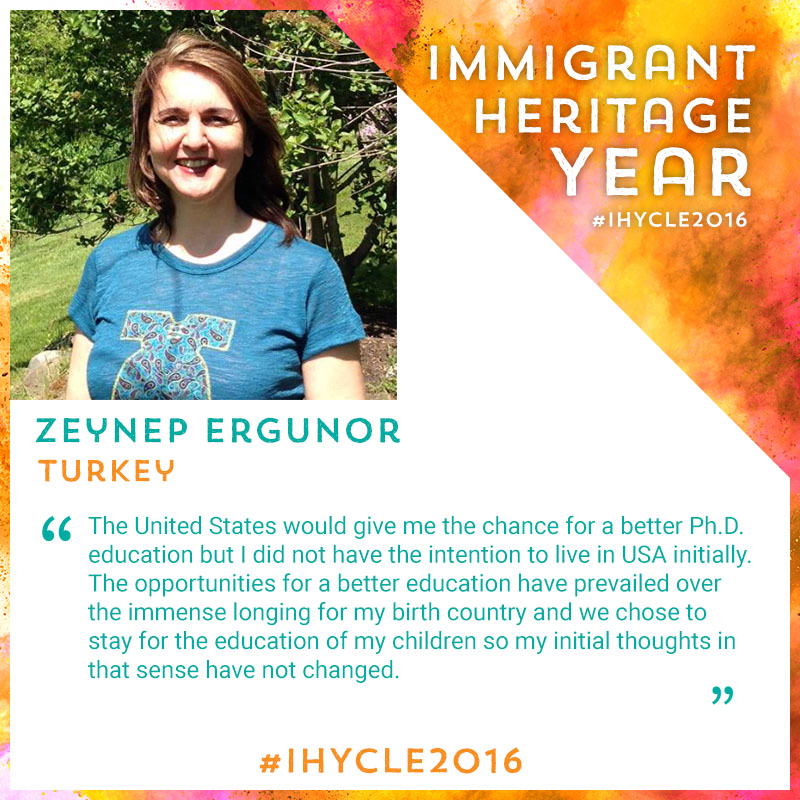
Zeynep Ergungor
Where are you from?
I am from Istanbul, Turkey
What was your childhood like?
I grew up steps away from the sea, living with my family of 5, with 2 siblings. I was a tomboy, playing on the streets the whole day with a bunch of friends.
What brought you to Cleveland?
My husband and I came to Cleveland in 2000, when he found his job after we were done with our Ph.D.’s in Michigan. I worked at a local university for a while and then started working in the private sector.
What were your first thoughts about coming to the United States? Did those change?
The United States would give me the chance for a better Ph.D. education but I did not have the intention to live in USA initially. The opportunities for a better education have prevailed over the immense longing for my birth country and we chose to stay for the education of my children so my initial thoughts in that sense have not changed.
What challenges did you face as transitioning here?
The day-to-day use of the English language was one of the challenges, it took me quite a while to understand the phrase ‘For here or to go’ at fast-food restaurants for example. Missing my family and friends was –and is- the biggest hurdle for me. The culture is quite different, it might be difficult sometimes to find ways not to offend or not get offended.
What is your occupation?
I am a chemical engineer and work as a product engineer at a company in Kent.
How have other Clevelanders made you feel welcomed?
Clevelanders are always quick to greet when they run into you.
What traditions or customs do you continue to practice?
We celebrate certain holidays observed in Turkey by getting together with friends. The most important one is the Turkish Republic Children’s day on April 23rd which we have been celebrating with other international communities in the last two years where group of children perform traditional songs or dances. We intend to increase the number of participant countries in the coming years.
What do you love about Cleveland?
Not the weather! I love the lake, although I wish I found more ways to enjoy it. Cuyahoga National Park, Playhouse Square, Cleveland Orchestra and Cleveland Museum of Art are great assets. Downtown Cleveland changed tremendously in the last 16 years and we enjoy the restaurant scene more and more.
Why is it so important to welcome International Newcomers and Displaced Personss?
Every person we meet is a new experience in our life, International Newcomers and Displaced Personss are the best example for an even more enriched experience. A majority of them is here to have a better life and they work hard to make that happen for themselves and more so for their children, a society would only benefit from ambitious people.
Why is it important to travel abroad?
Per the famous proverb: He who travels has stories to tell…
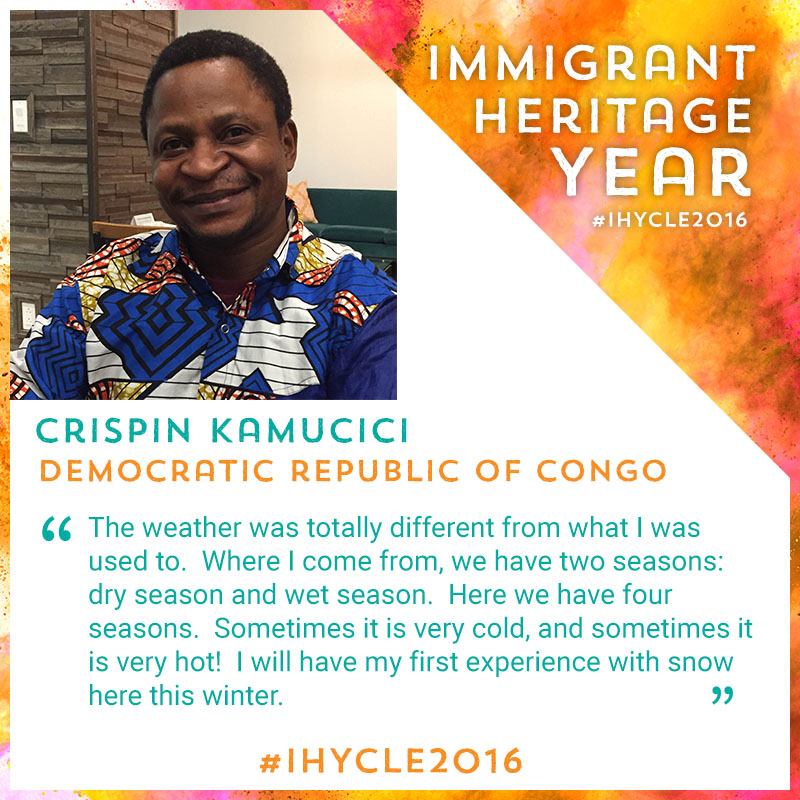
Crispin Kamucici
Where are you from?
I am from the Democratic Republic of Congo.
What was it like growing up?
I grew up in a Christian family; I have two brothers, and five sisters. I lived in several places during my youth. I was living between Burundi and Congo.
What brought you to Cleveland?
I came to Cleveland with my family as a Displaced Persons through UNHCR’s resettlement program.
What were your first thoughts about coming to the US? Did those change?
First, when I knew I was coming to the US, I thought it would be very hard for me and my family of 12 to adjust culturally, but also I thought the US was a land of much opportunity. I thought we could make it here. The adjustment was not as difficult as I thought because of the people we met here. The US is indeed a country of much opportunity, and I still believe that we will make it.
What challenges did you face as an International Newcomer transitioning here?
The biggest challenge has been cultural. There is a kind of freedom in this country that makes people a bit crazy. As a Christian and as a minister, I realized that people are not really interested or open to the change that the Word of God can bring into their lives.
The weather was the second biggest challenge. The weather was totally different from what I was used to. Where I come from, we have two seasons: dry season and wet season. Here we have four seasons. Sometimes it is very cold, and sometimes it is very hot! I will have my first experience with snow here this winter.
What is your occupation?
I am fortunate to work for Margaret Wong & Associates, which is the best Migration law firm in the area. I am also passionate about preaching the Gospel of the Kingdom of God.
How have other Clevelanders made you feel welcome?
We were warmly welcomed through Catholic Charities. We connected quickly with other Displaced Personss and people from the Congolese community through our interpreter. We joined a church, and the pastor was very helpful for us. Now we are connecting slowly to other members of the community who are not Displaced Personss, International Newcomers, or Africans. We are beginning to connect to Americans.
What traditions do you continue to practice?
I was raised in a Pentecostal family, so I raise my family that way. The traditions that we practice are based on the Word of God. We love each other and we believe this is the best tradition to practice, based on the Word of God.
What do you love about Cleveland?
Cleveland is a multicultural city. It has a good educational and health system compared to where I’m coming from and there are a lot of recreational areas.
Why is it so important to welcome International Newcomers and Displaced Personss?
First of all, they bring in cultural diversity. They also contribute to the economy of the city because they are an additional workforce. Most of them have experienced a lot of hardships in their life, making their experiences helpful if people will listen to them. I have noticed that people here don’t value the opportunities they have here. If they listen to Displaced Personss and International Newcomers, they can change their thinking, and maybe even their behavior.
Why is it important to travel abroad?
You learn new things. Also, you share your own experiences. You gain, and the others gain too.
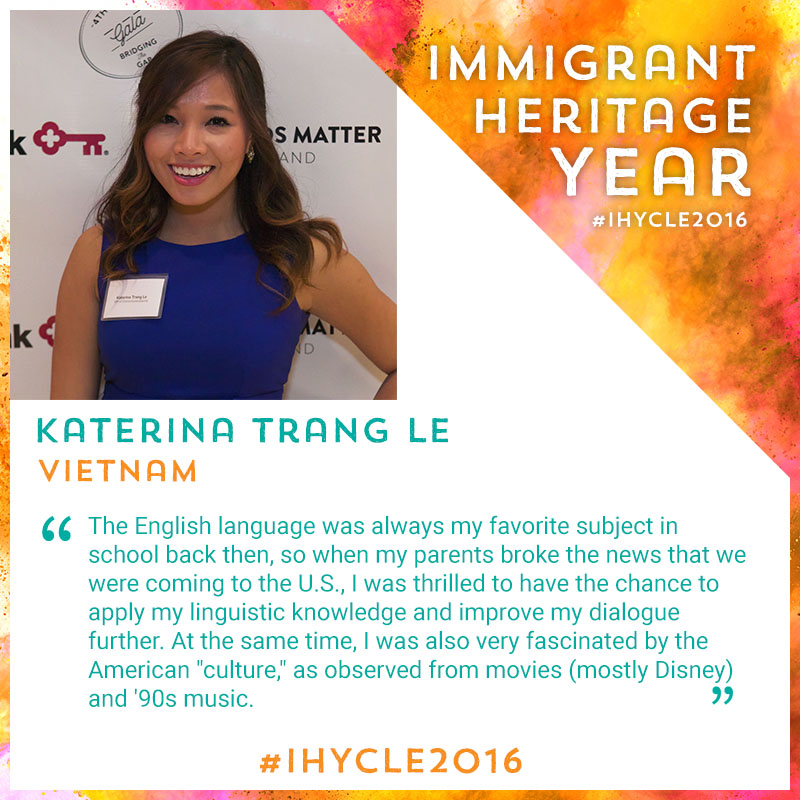
Katerina Trang Le
Where are you from?
Ho Chi Minh City, Vietnam.
What was your childhood like?
I grew up in a middle class family in the second most populated city in my country. Education was not optional, it was considerably the most important aspect of my childhood. Even though my parents never finished high school, they did everything in their power to ensure my younger brother and I receive the highest academic quality to succeed in life. Disappointing your parents was quite frankly not a choice, so growing up, focusing on school was the only thing that I knew of.
What brought you to Cleveland?
My immediate family and I emigrated from Vietnam to the U.S. in 2008. We lived in Minnesota for two short months with the majority of my dad's side of the family. It was during the recession of 2008, the job market wasn't looking so great for my non-English-speaking parents. We had a few relatives who happened to have lots of connections in Cleveland, so we left Minneapolis with a leap of faith. Eight years later, I'm genuinely glad that we made that move.
What were your first thoughts about coming to the U.S.? Did those change?
The English language was always my favorite subject in school back then, so when my parents broke the news that we were coming to the U.S., I was thrilled to have the chance to apply my linguistic knowledge and improve my dialogue further. At the same time, I was also very fascinated by the American "culture," as observed from movies (mostly Disney) and '90s music. It was more of an excitement realizing that my life was about to turn onto a whole new chapter. Having lived in this country in the past 8 years, I can honestly say that those feelings haven't worn of and I'm proud to call this city and this country my second home.
What challenges did you face as transitioning here?
The diversity! It was one of those good challenges that I was glad to stumble upon. Cultural diversity was certainly not a thing back home. I found it rather fascinating to learn about cultural differences and embrace them. And Cleveland has been amazing at showing me the rope of diversity!
What is your occupation?
I am a Senior Talent Sourcing Specialist at Alexander Mann Solutions, a UK-based Recruitment Process Outsourcing firm with a global client service center located right in the heart of downtown Cleveland.
How have other Clevelanders made you feel welcomed?
With their undying loyalty, sportsmanship, genuine, and down-to-earth hospitality!
What traditions or customs do you continue to practice?
Eating delicious homemade Vietnamese food (a bowl of pho for chilly winter days is my comfort food), celebrating Lunar New Year
What do you love about Cleveland?
Cleveland State University and downtown! As a proud alumna, I credit all the opportunities presented to me, the friendships I've made, the people I've met, and most importantly my Cleveland pride and love to CSU. It wasn't until college that I truly got to see what Cleveland had to offer. I love spending time in downtown, for work, the gym, hanging out with friends, participating in a public event, and as of late, checking out the newly renovated Public Square under holiday lights!
Why is it so important to welcome International Newcomers and Displaced Personss?
Natives, International Newcomers, Displaced Personss, whatever your classification might be, I believe that at the core, we are all human beings. Why limiting one's self to only knowing your own bubble when you can learn about how big our world actually is at the comfort of living in such a diverse city?
Why is it important to travel abroad?
Because "Travel makes one modest. You see what a tiny place you occupy in the world."